Ultimate Guide to Best Kitchen Countertop Materials
Choosing the right kitchen countertop material affects both how your kitchen works and how it looks. With several strong options available, knowing each material’s durability, care needs, and visual character makes it easier to choose a surface that fits your lifestyle. This guide walks through the best kitchen countertop materials — from granite and quartz to marble and engineered stone — so you can compare performance, maintenance, and cost before you commit. Whether you’re remodeling or building new, this overview gives the practical details you need to pick the right countertop.
Key Takeaways
- Granite, quartz, marble, and engineered stone are top countertop choices, each with different durability and care requirements.
- Granite is durable and heat resistant but needs periodic sealing to protect against stains and moisture.
- Quartz is a non-porous engineered stone that resists stains and requires minimal maintenance, available in many colors and patterns.
- Marble delivers timeless, elegant looks and good heat resistance but is porous and calls for regular sealing and careful cleaning.
- Engineered stone blends natural stone and resin for strong stain resistance, durability, and easy upkeep without sealing.
- Typical material cost ranges: granite ($40–$175), quartz ($50–$150), marble ($50–$100) per square foot — installation not included.
- Choose materials based on durability, maintenance, budget, environmental impact, and how they fit your kitchen’s design.
- Professional installation is recommended for precise fitting and to avoid damage, especially with heavy stone slabs.
- Routine cleaning with suitable products and quick spill cleanup will extend the life of any countertop surface.
Choosing Durable and Cost-Effective Stone Surfaces
Durability and value are the top concerns when picking a countertop. The best kitchen countertop materials should stand up to daily use while fitting your budget. Granite, quartz, and marble are common picks — each brings different strengths. Granite is prized for toughness and heat resistance, making it ideal for active kitchens. Quartz, an engineered option, is non-porous and low-maintenance, with a wide color range. Marble offers unmatched elegance but demands more care due to its porosity.
Industry pros often point out clear trade-offs among these stones depending on the application and desired look.
Granite, Quartz, & Marble Countertop Comparison
For bathroom and kitchen counters, granite stands out for durability and one-of-a-kind patterns, quartz for low maintenance and color variety, and marble for classic, upscale appeal.Granite Vs Quartz Bathroom Countertops: Everything You Need To Know, 2023
Classic Stoneworks specializes in custom fabrication and installation of premium stone surfaces. With experience in granite, quartz, and marble, they deliver craftsmanship and finishes tailored to your project. Explore their portfolio to see examples of their work.
What Are the Key Properties of Popular Kitchen Countertop Materials?
Knowing each countertop’s core properties helps you match material to use. Below is a quick comparison of the most popular choices:
This table summarizes durability, upkeep, and typical price ranges so you can quickly see which material aligns with your needs.
How Does Granite Compare in Durability and Maintenance?
Granite is widely valued for its strong performance. It tolerates heat and resists scratches, making it a practical choice for serious cooks. That said, granite is porous enough that periodic sealing is recommended to maintain stain and moisture resistance. Compared with quartz, which is non-porous and nearly maintenance-free, granite asks for a bit more attention.
Its natural patterns and long lifespan keep granite a popular investment for homeowners who want durable, stylish counters.
The long-standing appeal of natural stone — especially its heat resistance — remains a practical advantage in residential kitchens.
Choosing Kitchen Countertops: Natural Stone & Heat Resistance
Natural stone remains a top high-end countertop choice for its heat tolerance. Stainless steel, once mainly commercial, is also seeing more use in homes.
Choosing kitchen countertops, 2002
What Are the Benefits and Styles of Quartz Countertops?
Quartz has become a go-to for homeowners seeking low upkeep without sacrificing style. As an engineered surface, it’s non-porous, resists stains and bacteria, and never needs sealing. Quartz comes in a wide palette of colors and patterns, so it’s easy to match modern or traditional designs.
Because quartz is manufactured for strength, it resists chipping and cracking under normal use — a practical choice for busy households.
How Do Marble Countertops Perform: Pros, Cons, and Care Tips?
Marble is prized for its refined look and distinctive veining, but it carries trade-offs.
Pros:
- Aesthetic Appeal: Marble brings a timeless, luxurious look to any kitchen.
- Heat Resistance: It tolerates hot cookware when handled carefully.
Cons:
- Porosity: Marble is more prone to staining than granite or quartz.
- Maintenance: It needs regular sealing and careful cleaning to keep its finish.
To protect marble, clean spills quickly and use pH-neutral cleaners to avoid etching or dulling the surface.
What Makes Marble Aesthetic Appeal Unique?
Marble stands out because each slab is one-of-a-kind. Natural veining and color variation give marble a sculptural quality that elevates kitchen design. Its classic elegance pairs well with both traditional and contemporary styles, making it a favorite for homeowners who value a high-end look.
When you want a statement surface, marble’s natural patterns can be the centerpiece of a room.
How Should You Maintain and Protect Marble Surfaces?
Keeping marble looking its best takes consistent care. Key steps include:
- Regular Cleaning: Wipe surfaces with a soft cloth and a pH-neutral cleaner.
- Sealing: Apply a quality sealant every six months to reduce staining risk.
- Immediate Spill Management: Blot spills right away, especially acidic liquids like lemon juice or vinegar.
Following these practices will help preserve marble’s beauty and performance over time.
What Are Engineered Stone Options and Their Advantages?
Engineered stone mixes natural stone with resins to create a dense, non-porous surface. That means better stain resistance and easier cleaning compared with many natural stones — no sealing required. Engineered stone also comes in a broad range of colors and patterns, offering more design flexibility, and it stands up well to chips and everyday wear.
How Is Engineered Stone Composed and Fabricated?
Most engineered stone is roughly 90–93% crushed natural stone blended with resins and pigments, then formed into slabs and cured under heat and pressure. This controlled process produces consistent slabs that can be cut to size and shaped to fit complex layouts, which is why engineered stone is popular for modern kitchens. Learn more about the buying process and fabrication details.
What Are the Durability and Maintenance Benefits of Engineered Stone?
Engineered stone’s non-porous surface resists staining and is easy to clean with mild soap and water. Because it doesn’t require sealing and is less likely to chip, it’s a practical choice for high-traffic kitchens where low maintenance matters.
How Can You Compare Costs and Choose the Best Durable Countertop Material?
When comparing countertop costs, factor in both upfront price and long-term value. Consider:
- Material Cost: Look at the price per square foot for each option.
- Installation Costs: Professional installation varies by material and project complexity. Visit contact us for installation inquiries.
- Maintenance Expenses: Account for sealing, special cleaners, or repairs over time.
Balancing these elements will help you decide which material delivers the best durability and value for your budget.
What Is the Cost Range for Granite, Quartz, and Marble Countertops?
Typical material cost ranges are:
These figures refer to material costs only; installation and edgework will add to the total. Use these ranges to set realistic expectations while budgeting your project.
Which Countertop Materials Offer the Best Value for Durability?
For a balance of durability and low upkeep, quartz and granite are often top choices:
- Quartz: Non-porous and low-maintenance, making it a strong long-term investment.
- Granite: Natural beauty and toughness make it durable, though it needs occasional sealing.
To discuss options or contact us for a consultation, visit our site.
Your final choice should reflect how you use your kitchen, the look you want, and your maintenance tolerance. Use the kitchen visualizer tool to preview your choices in your space.
Frequently Asked Questions
What are the environmental impacts of choosing different countertop materials?
Countertop materials have different environmental footprints. Quarrying natural stone like granite and marble can disrupt habitats and carries transport emissions. Engineered stone can include recycled content and is often produced with fewer volatile chemicals, making it a more sustainable option in some cases. Choosing locally sourced materials and asking about recycled content can reduce the environmental impact of your project.
How do I choose the right countertop material for my cooking habits?
Think about how you use the kitchen. If you cook and bake frequently, durable, heat-resistant materials like granite or quartz are smart choices. If you want a showpiece and are willing to care for it, marble offers beauty at the cost of extra maintenance. For busy homes or families with kids, quartz’s stain resistance and ease of cleaning make it particularly practical.
Can I install countertops myself, or should I hire a professional?
Countertop installation is a precise job that often requires specialized tools and experience. Heavy stone slabs need safe handling and exact cutting for appliances, sinks, and seams. Hiring a professional reduces the risk of costly mistakes, ensures proper support and leveling, and typically produces a cleaner, longer-lasting result. Contact a professional through Classic Stoneworks for expert installation.
What are the best practices for cleaning and maintaining kitchen countertops?
Cleaning and care depend on the material. For granite and marble, use pH-neutral cleaners and avoid acidic or abrasive products. Seal natural stone as recommended to guard against stains. For quartz and engineered stone, mild soap and water are usually sufficient. Wipe up spills quickly — especially oils and acids — and use cutting boards and trivets to protect the surface.
What trends are emerging in kitchen countertop materials?
Current trends include sustainable materials (recycled content, low-VOC products), bold colors and dramatic veining, textured and matte finishes, and functional integrations like built-in charging areas. Homeowners are also favoring materials that balance aesthetics with low maintenance.
How do I ensure my countertop choice complements my kitchen design?
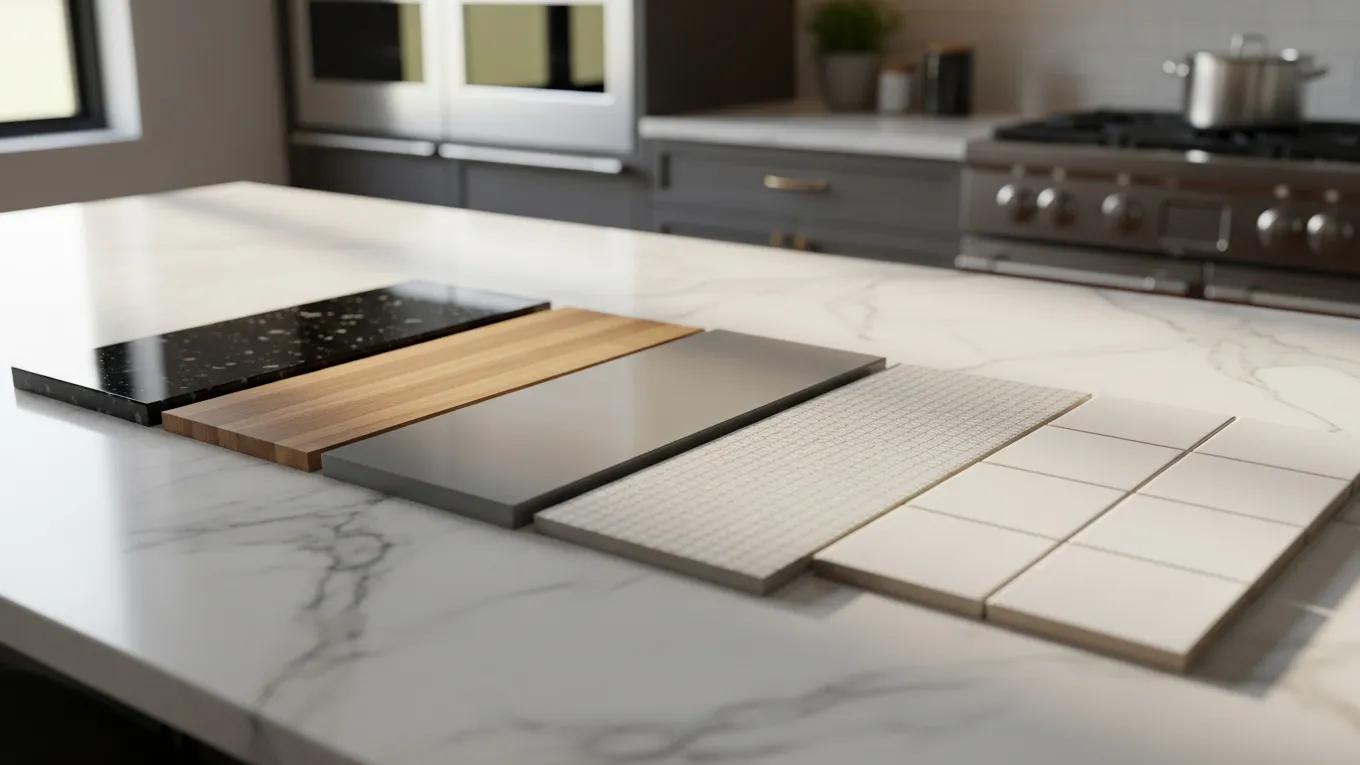
Match the countertop to your kitchen’s overall style and color palette. Sleek, neutral quartz or engineered stone suits modern kitchens, while marble or richly patterned granite complements traditional or transitional designs. Bring samples home and view them next to your cabinets and flooring to see how light and texture interact before deciding. Use the kitchen visualizer and bathroom visualizer tools to help with your decision.
Conclusion
Choosing the right countertop makes a big difference in both daily use and long-term enjoyment of your kitchen. Understanding the strengths and care needs of granite, quartz, marble, and engineered stone helps you pick a surface that fits your routine, style, and budget. Evaluate durability, maintenance, and cost to find the countertop that will serve your kitchen well for years. Explore our premium selections to find the best match for your project.