Why the Right Bathroom Countertop Matters: Materials, Design, Durability, and Cost
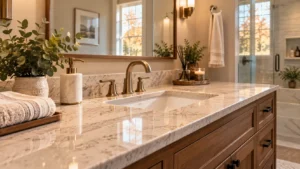
Your bathroom countertop is where form meets daily function. The material you choose affects durability, care needs, and the overall look—and those choices shape everyday use and long‑term value. This guide breaks down how the most common options—engineered quartz, granite, marble, and large‑format porcelain—perform for stain resistance, porosity, heat tolerance and visual flexibility so you can match material traits to your routine. We’ll also cover how finish, edge profile and sink integration influence cleaning and longevity, and give straightforward selection and care advice. Read on for the best materials for durability and style, a side‑by‑side comparison, the top 2025 vanity trends, New England installation cost factors, and material‑specific maintenance plans. Throughout we link features like integrated sinks and waterfall edges to material recommendations to help you plan a cohesive, long‑lasting vanity.
In This Guide:
- › Explore the best bathroom countertop materials for durability and style.
- › Compare quartz, granite, marble, and porcelain side-by-side for performance.
- › Discover the top bathroom countertop design trends for 2025.
- › Understand bathroom countertop installation costs in New England.
- › Learn how to maintain different bathroom countertop materials.
- › Find out why Classic Stoneworks is your ideal choice in New England.
What Are the Best Bathroom Countertop Materials for Durability and Style?
A great bathroom countertop balances durability, stain and heat resistance, upkeep, and the aesthetic you want. Durability is driven by porosity and hardness; style comes from finish, pattern scale and color range. Those factors determine whether a surface suits a busy family bath or a low‑use powder room. Below we define the selection criteria and highlight the top materials that meet 2025 vanity trends in New England. With these criteria in hand you’ll be ready to choose a material that fits daily use, cleaning preferences and the visual impact you’re after—starting with engineered quartz and natural granite.
Homeowners evaluating countertops should weigh four selection criteria:
- Durability: Hardness and scratch resistance affect long‑term wear.
- Porosity and Stain Resistance: Lower porosity means fewer stains and less sealing.
- Maintenance Level: How often sealing or specialty cleaners are needed.
- Aesthetic Flexibility: Available colors, finishes and pattern variation.
Those criteria point to a few reliable choices: quartz for low maintenance and consistent looks, granite for natural variation and heat resistance, marble for classic luxury with more care, and porcelain for strength and large‑format slabs. Each material is examined in the sections that follow.
What Makes Quartz Countertops Ideal for Bathroom Vanities?
Engineered quartz is a non‑porous mix of natural quartz and resin binders, which gives it strong stain resistance and very low maintenance compared with many natural stones. Because it’s manufactured, quartz offers consistent colors and convincing marble looks without the sealing demands of porous materials. Its resistance to moisture and bacteria makes it a solid choice for sinks and humid New England bathrooms where durability and hygiene matter. For busy households or anyone who wants marble aesthetics with minimal upkeep, quartz is often the practical choice.
How Do Granite Countertops Combine Natural Beauty with Resilience?

Granite is a naturally formed igneous stone known for high hardness, good heat resistance and unique veining—no two slabs are identical. Porosity varies by quarry and color; many granites benefit from periodic sealing to reduce staining in wet areas, but they hold up well against hot styling tools and everyday wear. Granite’s tactile depth and one‑of‑a‑kind patterns add lasting visual value and can boost resale appeal in some markets. If you choose granite, plan for occasional sealing and prompt spill cleanup to keep the surface looking its best.
How Do Quartz, Granite, Marble, and Porcelain Compare for Bathroom Countertops?
A side‑by‑side look helps you see how each material scores for durability, porosity, maintenance, cost and ideal uses so you can match material attributes to the room’s function. The table below summarizes key performance points, and the short pros/cons after it help guide decisions based on budget and upkeep tolerance.
| Material Type | Durability & Hardness | Porosity & Maintenance | Typical Cost Range (material only) |
|---|---|---|---|
| Engineered Quartz | High scratch & stain resistance; consistent finish | Non‑porous; low maintenance; no sealing | Moderate |
| Granite | Very hard; heat‑resistant; unique patterns | Moderately porous; periodic sealing recommended | Moderate–High |
| Marble | Softer; susceptible to etching and scratches | Porous; frequent sealing; avoid acidic cleaners | High |
| Porcelain Slab | Extremely durable; scratch & heat resistant | Non‑porous; low maintenance; thin edges can be brittle | Moderate–High |
The table shows quartz and porcelain as the lowest‑maintenance choices, granite as a durable natural option with occasional sealing needs, and marble as a high‑care, high‑impact choice. Below are concise pros and cons to help you decide by homeowner profile.
The pros and cons below turn the table into quick decision points:
- Engineered Quartz — Pros: Non‑porous, no sealing, wide color and marble‑look options.
- Granite — Pros: Natural heat and scratch resistance, unique slabs; Cons: Needs periodic sealing and spill attention.
- Marble — Pros: Timeless veining and luxury appeal; Cons: Prone to etching and staining, higher maintenance.
- Porcelain Slab — Pros: Large‑format continuity and low upkeep; Cons: Edge repairs are harder and installation requires careful handling.
With these trade‑offs in mind, you can weigh use case and maintenance willingness to find the best fit for your vanity.
What Are the Pros and Cons of Each Bathroom Countertop Material?
Each material’s strengths and limits are predictable: quartz minimizes upkeep, granite delivers natural character and heat tolerance, marble brings classic luxury at the cost of more care, and porcelain offers modern, large‑format durability. If low maintenance and consistent looks matter most, quartz is usually the best value. If you want unique natural character and strong heat resistance, granite is a solid choice. Marble is best where appearance outweighs maintenance, and porcelain serves contemporary designs that benefit from large slabs and minimal sealing. Compare these trade‑offs against budget, daily use and expected lifespan to pick the right match for your space.
Which Material Offers the Best Value for Bathroom Vanity Tops?
Value combines upfront cost, expected lifespan and routine maintenance. A material that reduces replacement frequency or service needs can be the smarter long‑term pick. Engineered quartz often represents strong lifecycle value because of its moderate price, low upkeep and wide aesthetic options—especially for busy homes. Granite can offer excellent long‑term value when properly sealed and cared for, and porcelain can be cost‑effective when installation and edge detailing are done to the slab’s strengths. Consider how much maintenance you’ll accept, how the material reacts to acids or staining, and whether details like integrated sinks or waterfall edges are priorities when choosing for value.
What Are the Top Bathroom Countertop Design Trends for 2025?
2025 trends favor tactile finishes, bold yet timeless palettes, and integrated details that both simplify cleaning and elevate visual impact. Expect matte and honed surfaces that hide fingerprints, marble‑look quartz that offers classic appeal without high maintenance, and integrated sinks or waterfall edges that create continuous, sculptural vanities. These trends reflect material capabilities—porcelain enables dramatic, large‑format looks while engineered quartz delivers predictable veining and saturated colors—so match your design choices to fabrication realities and long‑term care. Below are the key trends with practical pros and cons to translate style into lasting performance.
Top 2025 countertop trends include:
- Matte and Honed Finishes: Softer sheen that masks fingerprints and fits contemporary styling.
- Bold Colors and Dark Palettes: Deep tones paired with warm metals for dramatic contrast.
- Integrated Sinks and Waterfall Edges: Seamless lines and sculptural forms that simplify cleaning.
How Do Matte Finishes and Bold Colors Enhance Bathroom Countertops?
Matte and honed finishes reduce glare and help hide water spots and fingerprints—useful in high‑traffic bathrooms where polished surfaces show wear. Deep colors—navy, charcoal, saturated greens—create strong focal points and pair well with brass or matte black fixtures, letting the vanity anchor the room’s palette. Marble‑look quartz and large‑format porcelain can reliably deliver these finishes over time; natural stone may age differently depending on finish. When choosing finish and color, consider room light levels and your cleaning habits so the look remains as intended with normal use.
Why Are Integrated Sinks and Waterfall Edges Gaining Popularity?
Integrated sinks and waterfall edges create a clean, minimalist look and make daily cleaning easier by removing seams and ledges where grime collects. Integrated sinks require precise templating and can limit mounting options, while waterfall edges use a continuous slab down the cabinet face and increase slab usage and fabrication precision. Porcelain slabs and engineered quartz are particularly well‑suited to seamless integrations. Work with a fabricator early so slab selection, edge profile and installation logistics are coordinated—doing so reduces surprises at templating and results in a vanity that looks and performs as planned.
How Much Does Bathroom Countertop Installation Cost in New England?
Installation cost in New England varies with material price per square foot, fabrication complexity (integrated sinks, waterfall edges, custom edges), removal of existing counters, and local labor rates. Typical cost elements include material per square foot, fabrication and templating, installation labor, sink cutouts or integrated sink work, and any plumbing or cabinet adjustments. The table below outlines common cost drivers so homeowners can estimate small single vanities up to larger double‑vanity jobs. After the table we explain how Classic Stoneworks handles local quoting and consultations to move you from estimate to installation.
| Cost Component | What It Covers | Impact on Final Price |
|---|---|---|
| Material (per sq ft) | Raw slab or engineered slab cost | Major variable; quartz vs marble differ significantly |
| Fabrication & Edge Work | Cutouts, sink integration, edge profiles | Increases with complex edges and integrated sinks |
| Installation Labor | On‑site templating, removal, setting, seams | Regional labor rates and accessibility affect cost |
| Additional Trades | Plumbing adjustments, cabinet modifications | Adds to timeline and total budget |
Knowing these categories helps translate a desired look into a realistic budget: a straightforward quartz single‑vanity install sits at the lower end, while marble with integrated sinks and waterfall edges will be at the higher end. For homeowners in Londonderry and throughout New England, accurate quotes require clear inputs—dimensions, sink preference, edge profile and photos of the space—so preparing those items speeds up precise estimates.
What Factors Influence the Cost of Bathroom Countertop Installation?
Key cost drivers include the chosen material and market price, slab yield for the cuts you need (which affects waste), complexity of the edge profile, sink type (undermount vs integrated) and any removal or plumbing work. Smaller vanities often have lower total costs but a higher per‑square‑foot price because of fixed fabrication fees; double vanities increase material and fabrication but can lower per‑square‑foot labor when done in one install. Jobsite conditions—tight stairways, long carries or multi‑floor work—add labor time, so sharing photos and access details upfront helps fabricators scope time and price accurately. That foresight makes it easier to compare estimates and anticipate where costs can rise based on design choices.
How Can Homeowners Get Accurate Quotes for Installation in Londonderry, NH?
To get a reliable quote, bring or record the vanity’s dimensions, preferred materials, sink style (undermount, integrated or vessel), desired edge profile and photos of the existing cabinet and plumbing. An on‑site templating visit produces the most accurate measurements and reduces change orders. Use visualizer tools or visit a slab gallery to shortlist slabs before templating so the pattern and color match expectations. Sharing these details with a local fabricator increases the chance of a fixed, accurate quote and a smooth installation.
Classic Stoneworks offers local consultations across New England and guides homeowners through templating, fabrication and installation to reduce surprises and ensure a proper fit. Contact us to schedule a consultation or slab viewing.
How Should You Maintain Different Bathroom Countertop Materials?
Proper maintenance preserves appearance and performance: cleaning methods, sealing schedules and prompt spill response differ by material and determine longevity. Daily habits—wiping with a pH‑neutral cleaner, avoiding abrasive pads and cleaning acidic spills quickly—cut down on long‑term damage for every surface. The table below summarizes recommended cleaners, sealing frequency and expected lifespan so you can set a tailored maintenance plan and know when to call a professional.
| Material | Recommended Cleaners | Sealing Frequency | Expected Longevity |
|---|---|---|---|
| Engineered Quartz | Mild, pH‑neutral cleaners; avoid bleach | No sealing required | 15–25+ years with care |
| Granite | Mild soap and water; stone cleaner | Every 1–3 years depending on porosity | 20+ years with resealing |
| Marble | pH‑neutral stone cleaner; avoid acids | Every 6–12 months recommended | 10–20 years with careful care |
| Porcelain Slab | Mild detergents; manufacturer cleaners | No sealing required | 20+ years; durable surface |
These guidelines show quartz and porcelain are low‑maintenance choices for busy homes, granite performs well with scheduled sealing, and marble needs more frequent attention and acid avoidance. Following these practices minimizes staining, etching and edge damage. The sections below outline daily cleaning steps and when to call a pro for restoration or resealing.
What Are the Best Practices for Cleaning and Caring for Quartz and Granite?
For engineered quartz, wipe with a soft cloth and a pH‑neutral cleaner or mild dish soap and warm water; avoid bleach and abrasive pads that can dull resin surfaces. Clean granite daily with mild soap and water or a stone cleaner, and test sealing annually with a water drop test—if water soaks in rather than beading, plan to reseal. Both materials benefit from quick spill cleanup—especially oils and pigments—and using trivets for hot tools to protect the finish. Regular, gentle care preserves the surface and reduces the need for professional restoration.
Classic Stoneworks offers maintenance packages and consultations for New England homeowners who want a simple, reliable care plan—contact us to learn more.
How Do Marble and Porcelain Countertops Require Special Attention?
Marble is sensitive to acids—citrus, vinegar and some cosmetics can etch the surface—so prompt cleanup and using coasters and trays in high‑contact spots help protect the finish. Frequent sealing and avoiding abrasive pads are recommended; professional stone restoration can reduce visible etching or staining when needed, but prevention is the best strategy. Porcelain slabs resist staining and are highly durable, yet thin edges and seams need careful handling during installation and occasional manufacturer‑recommended cleaners for grout or joints. For both materials, a regular maintenance routine and professional help for deep stains or edge chips will extend service life and restore appearance when DIY methods aren’t enough.
Why Choose Classic Stoneworks for Your Bathroom Countertop Needs in New England?
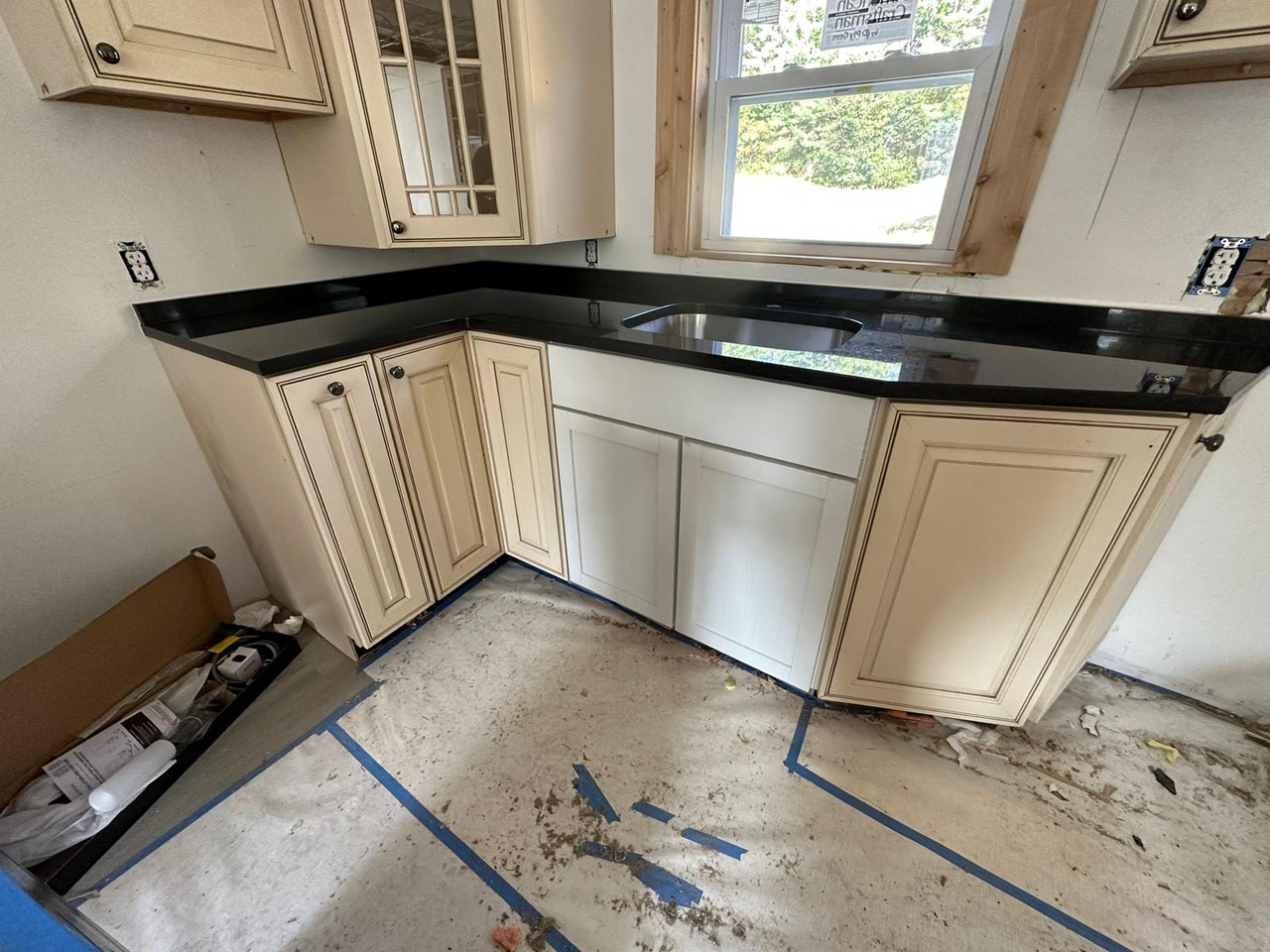
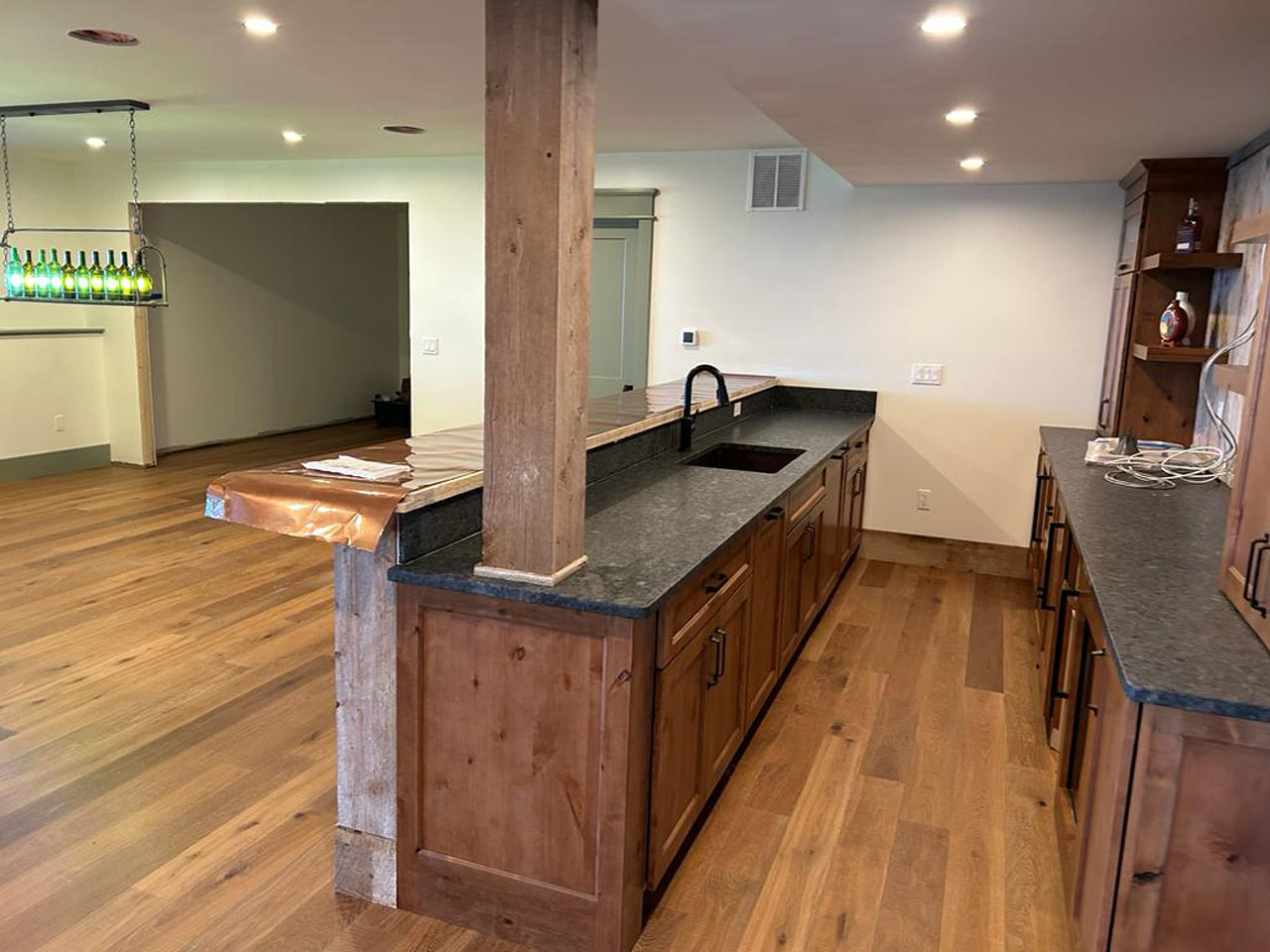
Classic Stoneworks is a New England stone services provider based in Londonderry, NH, specializing in fabrication and installation of countertops, vanities, jacuzzis, fireplace surrounds, shower walls, backsplashes and bartops. We work with premium materials—Quartz, Granite, Marble and Porcelain—and offer an indoor slab gallery and visualizer tools so homeowners can preview selections and reduce uncertainty. Our team coordinates templating, fabrication and installation to deliver tight fits for integrated sinks, waterfall edges and precise edge profiles. For homeowners who want local expertise, our process combines hands‑on slab selection with digital visualization to streamline decisions and minimize surprises during installation.
What Sets Classic Stoneworks Apart in Fabrication and Installation Quality?
We focus on precise fabrication, careful templating and professional installation practices that reduce seam visibility and ensure an accurate fit around plumbing and cabinetry. Our process includes workmanship guarantees and a customer‑first approach to scheduling and selection, helping clients align material choices with real‑world installation considerations in New England homes. The indoor slab gallery lets you inspect slabs in controlled light, and our visualizer tool helps preview edge profiles and sink styles before fabrication. That combination of tactile selection and exacting fabrication produces consistent outcomes and fewer post‑installation adjustments.
How Can the Indoor Slab Gallery and Visualizer Tools Help You Design Your Bathroom?
Visiting an indoor slab gallery lets you see and touch actual slabs under controlled lighting—revealing true color, veining scale and finish in a way photos can’t. Our visualizer tool complements that by testing slab options against your uploaded bathroom photos, edge choices and sink styles so you can preview the finished proportions. Bring photos and fixture samples to the gallery visit to speed selection and help fabricators plan slab cuts around veining and pattern. Classic Stoneworks pairs these tools with local fabrication and installation guidance so you move from concept to accurate templating and a successful installation.
If you’re ready to plan your vanity, contact us to schedule a slab viewing or a consultation with our team.
Frequently Asked Questions
1. What are the key factors to consider when choosing a bathroom countertop material?
Focus on durability, porosity, maintenance and aesthetic flexibility. Durability covers hardness and scratch resistance; porosity affects stain risk and sealing needs. Maintenance varies—quartz needs minimal upkeep while marble requires more regular sealing. Aesthetic flexibility relates to available colors, finishes and patterns that fit your design. Balancing these factors helps you select a countertop that meets both function and style goals.
2. How do I maintain my marble countertop to prevent damage?
Clean marble with a pH‑neutral stone cleaner and avoid acidic substances like vinegar or citrus that can etch the surface. Seal marble every 6 to 12 months to reduce staining, and clean spills promptly—especially oils and pigments. Use coasters and trays in high‑use areas to protect the finish. For visible etching or deep stains, consult a professional restorer.
3. Are there eco-friendly options for bathroom countertops?
Yes. Recycled glass countertops use post‑consumer glass and offer a sustainable, distinctive look. Bamboo and reclaimed wood are other eco options (best suited to vanities where moisture is controlled). Several manufacturers also offer counters made from recycled or salvaged materials—consider lifecycle, maintenance and overall environmental impact when choosing.
4. What are the advantages of integrated sinks in bathroom countertops?
Integrated sinks create a seamless look and simplify cleaning by removing seams and ledges where grime collects. They reduce areas where mold and bacteria can form and produce a cohesive, modern appearance since the sink and countertop are the same material. Integrated sinks require precise fabrication, so plan with your fabricator early.
5. How can I estimate the cost of my bathroom countertop installation?
Estimate cost by considering material type, fabrication complexity (edge profiles, integrated sinks), and local labor rates. Include potential plumbing adjustments and removal of existing counters. Providing dimensions, preferred materials and photos of your space will yield more accurate local quotes from fabricators.
6. What are the latest trends in bathroom countertop design for 2025?
2025 trends emphasize tactile finishes, bold colors and integrated details. Matte and honed surfaces hide fingerprints and feel contemporary. Deep color palettes create strong focal points. Integrated sinks and waterfall edges continue to trend for their seamless look and easier cleaning, balancing style with practicality.
7. How does the choice of edge profile affect my bathroom countertop?
Edge profile influences both look and durability. Profiles like bevel, eased or waterfall change the vanity’s style; some profiles are more chip‑resistant than others. Smoother, simpler edges collect less grime and are easier to clean. Consider both aesthetics and function when choosing an edge profile.
Conclusion
Choosing the right bathroom countertop balances durability, maintenance and visual appeal so your space stays functional and beautiful for years. Knowing how quartz, granite, marble and porcelain perform helps you make confident decisions that fit your lifestyle and design goals. Factor in current trends and practical maintenance steps to protect your investment. Explore our premium countertop options or contact Classic Stoneworks to find the best fit for your renovation.