What Are the Hottest Bathroom Countertop Design Trends for 2025?
Bathroom countertops are no longer an afterthought; they define the room’s character while solving real durability and maintenance needs. This guide will walk you through the leading 2025 trends so you can choose a surface that looks current and performs for years. You’ll discover which materials top designers prefer, why certain finishes are rising, and which innovative features—like integrated sinks and floating vanities—deliver both style and daily convenience. We’ll also cover sustainable options, precise maintenance routines tailored to finish and material, and how custom stone fabrication turns design ideas into finished, long-lasting vanities. Dive in for concise comparisons, feature-by-feature recommendations, and local New England context to help you plan a bathroom that balances beauty, resilience, and resale value. First, we’ll explore the most popular materials, then finishes, followed by design features, sustainability, fabrication process, maintenance practices, and where you can see real examples in New England.
What Are the Most Popular Bathroom Countertop Materials in 2025?

Bathroom countertop materials in 2025 favor durability, low maintenance, and a strong visual palette; quartz leads for non-porous convenience while natural stones remain prized for unique veining and luxury. Designers are also specifying large-format porcelain slabs and recycled-content surfaces to meet contemporary aesthetics and environmental goals. Here’s a quick summary of the top materials and why they’re chosen today, followed by a detailed comparison table to help match use-case to material performance and cost. Review the table to compare durability, cleaning needs, look, and typical applications, then explore the following subsections to delve into each material’s practical advantages for your bathroom.
Top materials and one-line reasons:
- Quartz: Non-porous, low-maintenance, wide range of consistent patterns and marble-look options.
- Marble: High-luxury veining and one-of-a-kind slabs for statement vanities.
- Granite: Durable, heat-resistant, and available in bold natural textures.
- Porcelain: Thin large-format slabs with excellent water resistance and thermal stability.
- Recycled glass / sustainable surfaces: Eco-minded options that provide texture and color with varying maintenance needs.
This comparison helps prioritize material selection before moving into design specifics and finishes.
| Material | Durability | Maintenance | Look | Typical Cost Range | Best Use Cases |
|---|---|---|---|---|---|
| Quartz | Very high; engineered non-porous | Easy daily wipe; no sealing | Consistent color/pattern; marble-look options | Mid–High | Family baths, busy vanities |
| Marble | Medium; softer and porous | Requires sealing; careful stain management | Dramatic veining, high-end aesthetic | High | Powder rooms, luxury master baths |
| Granite | High; scratch and heat resistant | Low; periodic sealing recommended | Natural, varied textures and patterns | Mid–High | High-use baths, practical luxury |
| Porcelain | Very high; low porosity, heat resistant | Minimal; grout/edge attention | Ultra-thin slabs, contemporary minimalism | Mid | Modern vanities, integrated countertop-splash systems |
| Recycled glass | Medium; durable but susceptible to chips | Gentle cleaners; occasional polish | Speckled, colorful surfaces with depth | Mid | Statement vanities, eco-focused projects |
Why Is Quartz the Top Choice for Modern Bathroom Vanities?
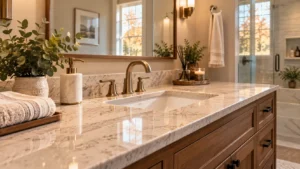
Quartz is engineered from natural minerals bound with resins, which makes it non-porous, stain-resistant, and consistent in pattern—attributes that simplify daily care and reduce long-term maintenance. Its manufacturing process allows for marble-look and bold-color options without the sealing or delicate treatment natural marble requires, so you get premium looks with practical resilience. For busy family bathrooms or high-traffic powder rooms, quartz’s scratch and stain resistance deliver clear longevity benefits, while for designers it provides predictable slab matching and color control. Understanding quartz’s balance of aesthetics and function leads naturally into when natural stone is still the right choice for luxury-focused projects.
How Do Natural Stones Like Granite and Marble Enhance Bathroom Luxury?
Natural stones like marble and granite offer unique veining and surface individuality that engineered materials cannot replicate, and that visual uniqueness often justifies their premium placement in master suites and high-end powder rooms. Marble, with its dramatic veining, signals luxury, but it requires careful sealing and mindful daily habits to avoid etching and stains, while polished granite trades some delicacy for robust scratch and heat resistance. Choosing the right finish (polished, honed) and anticipating maintenance helps determine if natural stone is the ideal choice for a given bathroom’s traffic and use. The trade-offs between marble’s aesthetics and maintenance point directly to finish selection and practical cleaning tips covered later.
What Role Does Porcelain Play in Contemporary Bathroom Countertops?
Porcelain slab technology has advanced to produce large-format, very thin tops with excellent water resistance and thermal stability, making it an ideal choice for minimalist and modern vanity designs that favor seamless surfaces and fine edges. Because porcelain is manufactured, it can mimic stone, cement, or even metal while remaining virtually non-porous and easy to clean; its dimensional stability also enables precise integrated elements. Fabrication and edge treatment require experienced shops due to thin slab handling and templating, which connects to custom fabrication decisions and expected installation timelines. These technical advantages point to porcelain as a top pick for contemporary aesthetics with low maintenance demands.
How Are Sustainable Materials Influencing Bathroom Countertop Choices?
Recycled glass, reclaimed stone, and low-impact engineered surfaces are gaining traction among homeowners who balance design with lifecycle impact, offering colorful, textured alternatives to both natural and fully engineered slabs. These materials often incorporate post-consumer content and lower processing emissions, but you’ll want to weigh potential trade-offs such as varied durability or different repair profiles compared with quartz or granite. Certifications and transparent supply chain claims help evaluate true environmental benefits; when sustainability is a priority, pairing recycled materials with low-maintenance finishes extends their practical lifespan. Choosing sustainable countertops often leads to specifying finishes and fabrication methods that minimize waste and maximize durability.
Which Bathroom Countertop Finishes Are Trending in 2025?
Finishes set the tactile and visual tone of a vanity more than almost any other choice; matte and honed textures are rising because they reduce glare and hide water spots, while textured and soft-touch surfaces add warmth and safety in wet areas. Designers are moving away from high-gloss surfaces for everyday bathrooms, preferring understated finishes that read as modern and sophisticated. Here’s an explanatory overview followed by a table comparing finish characteristics so you can match finish to material and bathroom type. Review the table to see how each finish performs in cleanability, slip/water behavior, and what material pairings work best.
Current finish winners and short benefits:
- Matte/Honed: Reduces glare, hides minor wear, creates understated elegance.
- Textured/Soft-Touch: Adds tactile warmth and improved grip in damp settings.
- Polished/Glossy: High shine for dramatic installations but shows spots and reflections.
These distinctions inform specific cleaning routines and finish-based product recommendations later in the maintenance section.
| Finish | Texture | Slip/Water Behavior | Cleanability | Visual Effect | Best Material Pairings |
|---|---|---|---|---|---|
| Matte / Honed | Smooth but non-reflective | Hides water spots; moderate grip | Requires gentle cleaners to avoid buildup | Soft, modern | Quartz, marble, porcelain |
| Textured / Soft-Touch | Subtle surface relief | Improved tactile grip | More attention to pores; periodic deep clean | Warm, tactile | Porcelain, recycled glass |
| Polished / Glossy | High reflectivity | Shows water and fingerprints | Easy wipe but shows spots | Luxurious, bright | Marble, granite |
| Leathered | Slight pebbled texture | Camouflages wear; dry-hand grip | Requires soft brush for grooves | Natural, rustic | Granite, some quartz |
What Are the Benefits of Matte and Honed Finishes for Bathroom Surfaces?
Matte and honed finishes reduce glare and provide a calm, contemporary look that blends well with spa-like bathroom schemes while hiding small water marks that polished finishes reveal instantly. Functionally, these finishes make countertops feel softer and more tactile, and they’re especially useful in spaces with variable lighting where reflections can be distracting. Care-wise, they tolerate everyday wiping but benefit from gentle, pH-neutral cleaners and periodic professional care to avoid residue buildup. Choosing a matte or honed finish often leads to specifying materials and edge profiles that complement the understated look, which we’ll discuss when examining integrated sinks and edge choices.
How Do Textured and Soft-Touch Finishes Impact Bathroom Design?
Textured and soft-touch finishes introduce a tactile dimension that makes a bathroom feel inviting and can enhance safety under damp conditions, and they work particularly well in spa-like schemes where sensory experience matters as much as visual appeal. These finishes can warm up otherwise cool materials like porcelain and recycled glass, creating a layered design where touch enhances visual contrast. They do require a cleaning regimen that addresses surface grooves and may need occasional deeper cleaning tools that preserve rather than polish the relief. The preference for texture therefore influences both the daily maintenance plan and the selection of compatible hardware and lighting to highlight the finish’s depth.
Why Are Glossy Finishes Becoming Less Popular in Bathroom Countertops?
Glossy, high-shine finishes emphasize reflection, which can dramatize veining and color but also magnify water spots, fingerprints, and minor surface wear, which can make them less practical for everyday bath spaces. Many homeowners and designers now prefer subtlety and low-maintenance finishes that read as refined without the constant upkeep that gloss demands. That said, polished surfaces still make sense in low-use powder rooms or in designs where dramatic reflection amplifies lighting and high-contrast materials. Understanding when gloss remains appropriate helps define the overall finish strategy for a bathroom and points to better long-term finish choices for active family baths.
What Innovative Design Features Are Shaping Bathroom Countertops?
Innovative features such as integrated sinks, floating vanities, and bold-pattern tops are shifting how countertops function and how bathrooms feel, blending seamless hygiene benefits with spatial optimization and visual drama. Integrated sinks improve hygiene and cleaning by removing horizontal seams, floating vanities open floor space and simplify cleaning beneath the vanity, and bold colors or dramatic marble-look patterns serve as the room’s focal point. Here’s a practical comparison table of leading design features showing benefits, typical materials, installation complexity, and maintenance impact to help select features that match both lifestyle and budget.
| Design Feature | Benefit | Typical Materials | Installation Complexity | Maintenance Impact |
|---|---|---|---|---|
| Integrated sink | Seamless cleaning; fewer joints | Quartz, porcelain, marble | High: precise templating | Low: fewer grout lines |
| Floating vanity | Perceived space, easy floor cleaning | Thin porcelain, engineered quartz | Medium: strong wall framing | Neutral: underside access aids cleaning |
| Bold-pattern tops | Strong focal point, high visual value | Quartz, marble-look porcelain | Low–Medium: slab selection | Variable: pattern hides wear or shows stains |
| Full-height backsplash | Protects walls; cohesive look | Porcelain, quartz | Low | Low: simplifies wiping |
How Do Integrated Sinks Create Seamless and Easy-to-Clean Bathroom Surfaces?
Integrated sinks—whether monolithic same-slab integrations or precision-fitted undermounts—eliminate many seams where grime tends to accumulate, making daily cleaning faster and reducing bacterial harborage. Fabrication requires accurate templating and precise finishing, which is why we recommend experienced fabricators to ensure water-tight joins and consistent edge work. From a maintenance standpoint, integrated sinks paired with non-porous materials like quartz or porcelain minimize staining and simplify routine wipe-downs. Understanding fabrication specifics leads directly into the custom fabrication process and choices that affect both installation timelines and long-term results.
What Are Floating Vanities and How Do They Enhance Bathroom Space?
Floating vanities mount to the wall and leave clear floor area beneath, which visually expands small bathrooms and simplifies mopping and floor cleaning while providing modern, minimalist aesthetics. Structurally, these vanities require secure wall framing and careful coordination of plumbing to maintain accessibility and serviceability. Floating designs pair well with thin-profile countertops like porcelain slabs or engineered quartz with edge reinforcement to avoid overhang sag. Choosing a floating vanity often dictates plumbing placement and slab selection and therefore benefits from early coordination with your trusted fabricator.
How Are Bold Colors and Dramatic Patterns Transforming Bathroom Countertops?
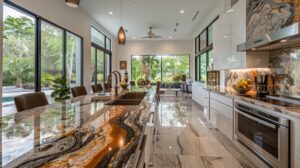
Bold colors and dramatic marble-look patterns are being used as anchor elements in modern bathrooms, creating statement vanities or focal islands that define the room’s palette and energy. Successful use of bold tops depends on balancing them with restrained surrounding materials—softer finishes, neutral cabinetry, and simplified hardware—to avoid visual clutter and maximize long-term appeal. While dramatic patterns can increase perceived value and design impact, you’ll want to consider resale sensitivity and choose options that complement rather than overwhelm the overall home aesthetic. These styling choices naturally influence material selection, finish, and maintenance decisions.
How Does Sustainability Influence Bathroom Countertop Trends in 2025?

Sustainability shapes selection through recycled-content surfaces, long-life low-maintenance materials, and factory practices that reduce waste; these considerations drive homeowners toward materials that combine environmental benefits with practical durability. Lifecycle thinking—choosing a surface that lasts longer and requires fewer resources to maintain—often trumps lowest upfront cost in sustainable decision-making. Here, we list common eco-friendly materials, explain trade-offs, and offer guidance on certifications or transparency markers to look for when evaluating sustainable claims. This framing helps you prioritize both environmental impact and functional performance.
Common eco-friendly materials and brief notes:
- Recycled glass countertops: Eye-catching and reusable but may chip; requires thoughtful edge detailing.
- Recycled-content quartz: Uses reclaimed materials in engineered formats for durable, lower-waste surfaces.
- Sustainably quarried or reclaimed stone: Preserves character while reducing demand for new extraction.
These options reflect a spectrum of performance and environmental impact, which influences finish choices and maintenance plans covered later.
What Are the Most Eco-Friendly Bathroom Countertop Materials Available?
Recycled glass and recycled-content engineered surfaces offer strong environmental narratives by repurposing materials that would otherwise be waste, and they can deliver premium aesthetics when fabricated thoughtfully. Low-impact porcelain and responsibly sourced natural stone with documented supply chains are also viable for those prioritizing sustainability, though stone’s extraction impact must be weighed against longevity and reparability. When assessing eco-claims, you’ll want to look for transparency around recycled content percentages and manufacturing energy intensity; these indicators provide a clearer picture of true environmental performance. Evaluating these trade-offs helps align sustainable priorities with expected in-service lifespan.
How Do Low-Maintenance Surfaces Support Sustainable Bathroom Design?
Low-maintenance surfaces like quartz and porcelain reduce the need for harsh chemicals, frequent restoration, or premature replacement, thereby lowering lifetime environmental costs associated with care and replacement cycles. Choosing non-porous, durable materials extends useful life and minimizes resource use over decades, which is a primary sustainability win. For practical specification, pair these materials with finishes that resist surface wear and require only gentle cleaners to maintain appearance. This lifecycle-oriented approach connects environmental goals with material and finish selection.
Why Are Homeowners Prioritizing Sustainable and Durable Countertops?
Homeowners increasingly consider lifetime cost and environmental impact alongside immediate aesthetics; durable countertops that minimize replacement and aggressive cleaning regimes score highly for both household budgets and ecological concerns. Resale markets also reward long-lasting, easily maintained choices, so prioritizing durability can be an investment in both sustainability and home value. To make these decisions actionable, we’ve provided a short buyer checklist that balances recycled content, maintenance needs, finish durability, and local fabrication options—items addressed in our maintenance and fabrication sections.
Sustainability checklist:
- Verify recycled content percentage: Ensure the material includes meaningful reclaimed inputs.
- Prioritize non-porous, low-maintenance materials: Reduces chemical use and replacement frequency.
- Ask about fabrication waste practices: Local fabricators can often repurpose offcuts and reduce transport emissions.
These steps lead naturally into the benefits and process of custom fabrication, especially with locally based fabricators that can reduce transport and timeline impact.
How Can Custom Stone Fabrication Elevate Your Bathroom Countertop Design?
Custom stone fabrication translates design intent into a precise, finished vanity by handling templating, slab selection, edge profiling, and professional installation, ensuring both visual continuity and functional performance. The process yields tailored solutions such as integrated sinks, complex edge profiles, and exact cutouts for plumbing while enabling you to select unique slabs that match their design vision. Here’s a stepwise overview of the fabrication workflow, followed by practical benefits; after that, we’ll explain how local New England expertise and visualizer tools streamline decisions and installations. The fabrication walkthrough clarifies homeowner touchpoints so you know what to expect at each phase.
Fabrication delivers these primary benefits:
- Precise fit and seamless joints for improved hygiene and appearance.
- Custom edge profiles and integrated sinks for cohesive styling.
- Ability to select single slabs for consistent veining or bold pattern placement.
What Is the Custom Stone Fabrication Process for Bathroom Vanities?
Custom fabrication typically follows these stages: initial consultation to define scope, slab selection and approval, on-site templating to capture exact dimensions, shop fabrication that includes cutting and edge finishing, and final installation with quality checks and sealing as needed. Timelines vary by material and project complexity, but clear homeowner touchpoints—slab review, template sign-off, and pre-install inspections—keep projects on schedule and reduce surprises. During fabrication, precise measurements and experienced edge work determine how integrated sinks and complex profiles will perform long-term. Knowing these steps helps you prepare for choices and scheduling discussions with their fabricator.
How Does Classic Stoneworks’ New England Expertise Influence Design Outcomes?
Classic Stoneworks, a stone fabrication and installation company based in Londonderry, NH, brings local New England experience to material recommendations, indoor slab gallery selection, and project timing, which helps you match design intent to regional climate considerations and style preferences. Local fabrication shortens lead times and reduces logistical complexity for installations across New England, while an indoor slab gallery makes it easier to select true-to-life slabs and finishes under controlled lighting. This local knowledge supports better decisions around sealing, finish choice, and slab selection to withstand regional humidity and usage patterns, which ultimately improves long-term satisfaction and durability.
How Can Visualizer Tools Help You Plan Your Bathroom Countertop Design?
Visualizer tools allow you to preview materials, finishes, and edge profiles in a simulated bathroom setting so choices are made with confidence and fewer revisions during fabrication and install. The typical use-case is straightforward: choose a slab or finish, apply it to a virtual vanity, adjust lighting and hardware, then narrow selections before visiting a slab gallery or templating appointment. Visualizer previews reduce decision anxiety, speed approvals, and help fabricators stage slab cuts for best veining placement. Trying a visualizer early in the process complements in-person slab selection and ensures the final countertop aligns with both design intent and fabrication constraints.
What Are the Best Maintenance Practices for Trending Bathroom Countertops?
Maintenance regimens should be tailored to both material and finish: quartz requires gentle daily cleaning and avoids abrasive pads; natural stone benefits from periodic sealing and spill management; honed and textured finishes need specific care to prevent residue buildup. A concise comparative approach helps you set simple, effective routines that preserve appearance and performance. Here, we present direct comparisons, practical cleaning steps for delicate finishes, and recommendations for how integrated sinks change daily maintenance. These practices minimize long-term repairs and protect your countertop investment.
Key maintenance comparisons and quick tips:
- Quartz vs Natural Stone: Quartz is non-porous and largely maintenance-free; natural stone often needs sealing.
- Honed/Matte care: Use pH-neutral cleaners and soft cloths; avoid polishers that can alter texture.
- Integrated sinks: Wipe seams and drainage areas regularly to prevent buildup and maintain hygiene.
How Do Quartz and Natural Stone Countertops Compare in Maintenance Needs?
Quartz is engineered to be non-porous and resists staining and microbial growth, so daily maintenance is usually a wipe with a mild cleaner and soft cloth; abrasive pads and high-alkaline cleaners should be avoided to protect resin binders. Natural stones like marble and some granites can require periodic sealing to repel stains and may react to acidic cleaners, which makes immediate spill cleanup and appropriate sealant schedules essential. For long-term preservation, schedule a yearly inspection for natural stone and rely on manufacturer recommendations for quartz; these practices protect finish integrity and keep the vanity looking new. Comparing these needs helps you determine which material best fits your household’s maintenance tolerance.
What Cleaning Tips Keep Matte and Honed Finishes Looking Their Best?
Matte and honed finishes hide scratches and glare but are more prone to showing residue buildup if cleaned with waxy or oily products, so a simple regimen of daily wiping with a dilute, pH-neutral cleaner and a microfiber cloth is ideal. For weekly maintenance, use a soft brush with mild detergent to lift trapped grime from subtle surface reliefs, then rinse and dry to avoid streaks. Avoid abrasive pads and harsh acidic cleaners that can alter the finish’s texture; when in doubt, test a product on a discreet area or consult a professional restorer. These protocols extend finish life and preserve the intended tactile quality.
How Do Integrated Sinks Simplify Bathroom Countertop Maintenance?
Integrated sinks eliminate many seams where grime and mold gather, so routine cleaning typically focuses on the sink basin and perimeter rather than crevices at joint lines, reducing overall cleaning time and improving hygiene. Materials like quartz and porcelain paired with integrated sinks provide especially low-maintenance combinations because they resist staining and can be wiped clean without special sealants. For soap-scum-prone areas, a non-abrasive citrus-free cleaner and soft sponge remove buildup without harming the surface or finish. The cleaning simplicity of integrated sinks often tips the scale in their favor for those prioritizing low upkeep.
Where Can You See Examples of the Latest Bathroom Countertop Trends in New England?
New England homeowners can view applied trends in local portfolios and slab galleries that show real installations—from matte quartz vanities to integrated-porcelain tops and floating designs—which makes your design decisions far easier when you see materials in context. Classic Stoneworks maintains a portfolio and indoor slab gallery where regional projects demonstrate how national trends translate to New England homes, and in-person or gallery visits reveal true color, veining, and finish behavior under controlled lighting. (classicstoneworks.net)
What Are Some Recent Classic Stoneworks Bathroom Countertop Projects?
Classic Stoneworks’ recent projects illustrate prominent trends: a matte quartz vanity with an integrated sink for a busy family bath, a floating vanity paired with a thin porcelain slab for a compact master bathroom, and a dramatic marble-look quartz used as a statement powder-room top. Each example solved a client challenge—durability for family use, visual expansion in a small footprint, and a high-impact aesthetic for guest spaces—with material and finish choices aligned to lifestyle needs. (classicstoneworks.net)
How Do Local Trends in Londonderry, NH Reflect National Bathroom Design Movements?
Local New England preferences blend national leanings toward matte finishes and quartz durability with regional desires for materials that handle seasonal humidity and rugged use; you’ll often select finishes and sealants mindful of these conditions. Practical adjustments include specifying finishes and edge profiles that resist moisture and choosing fabrication partners who understand local plumbing and installation constraints. Observing local project galleries helps you anticipate how a surface will perform year-round and confirms whether a trending look will age gracefully in the New England environment. (classicstoneworks.net)
How Can You Get a Custom Quote for Your Bathroom Countertop Project?
To get a custom quote, prepare basic vanity dimensions, preferred materials and finishes, and photographs or layout sketches to speed initial recommendations and slab matching, then schedule a slab gallery visit or templating appointment to finalize selections. (classicstoneworks.net)
This final reminder highlights practical next steps: use a visualizer to narrow selections, view slabs in person to confirm finish and veining, then schedule templating to lock measurements for an accurate custom quote and installation. (classicstoneworks.net)
Frequently Asked Questions
What are the key factors to consider when choosing a bathroom countertop?
When selecting a bathroom countertop, consider durability, maintenance requirements, aesthetics, and cost. Durability is crucial, especially in high-traffic areas, so materials like quartz or granite are often preferred. Maintenance needs vary; for instance, quartz is low-maintenance, while natural stones like marble require more care. Aesthetics should align with your overall bathroom design, and cost will depend on the material and installation complexity. Balancing these factors ensures you choose a countertop that meets both functional and design needs.
How can I ensure my bathroom countertop is eco-friendly?
To ensure your bathroom countertop is eco-friendly, look for materials with recycled content, such as recycled glass or quartz made from reclaimed materials. Additionally, consider sustainably sourced natural stones that minimize environmental impact during extraction. Certifications from reputable organizations can also indicate a product’s sustainability. Finally, choose low-maintenance surfaces that reduce the need for harsh cleaning chemicals, further supporting an eco-friendly approach to your bathroom design.
What are the advantages of using integrated sinks in bathroom countertops?
Integrated sinks offer several advantages, including seamless design and easier cleaning. By eliminating seams where grime can accumulate, integrated sinks reduce the risk of bacterial growth and make daily maintenance simpler. They also provide a modern aesthetic, as they can be crafted from the same material as the countertop, creating a cohesive look. Additionally, integrated sinks can enhance the overall functionality of the bathroom by maximizing space and minimizing clutter.
How do I maintain different finishes on my bathroom countertop?
Maintaining different finishes requires tailored care. For matte and honed finishes, use pH-neutral cleaners and soft cloths to avoid buildup and preserve texture. Textured finishes may need more attention to prevent grime from settling in grooves, while polished surfaces should be wiped regularly to avoid water spots. Always follow manufacturer recommendations for specific cleaning products and techniques to ensure longevity and maintain the appearance of your countertop.
What trends are emerging in bathroom countertop design for small spaces?
In small bathrooms, trends are leaning towards floating vanities and integrated sinks that create a sense of openness and maximize floor space. Light-colored materials and bold patterns can also enhance visual interest without overwhelming the space. Additionally, using large-format tiles or slabs minimizes grout lines, contributing to a cleaner look. These design choices help create a modern, airy feel while ensuring functionality in compact areas.
How can I choose the right color for my bathroom countertop?
Choosing the right color for your bathroom countertop involves considering the overall color scheme and style of your bathroom. Neutral colors like whites, grays, and beiges can create a timeless look, while bold colors can serve as a statement piece. Consider the lighting in your bathroom, as it can affect how colors appear. Additionally, think about the maintenance of lighter versus darker colors, as stains may be more visible on lighter surfaces. Sample swatches in your space can help visualize the final look.
What are the benefits of custom stone fabrication for bathroom countertops?
Custom stone fabrication allows for tailored solutions that meet specific design needs, such as unique dimensions, integrated sinks, and personalized edge profiles. This process ensures a precise fit and seamless joints, enhancing both aesthetics and hygiene. You can select from a variety of materials and finishes that align with your vision, while skilled fabricators can address complex installation requirements. Ultimately, custom fabrication elevates the overall quality and uniqueness of your bathroom countertop design.
Conclusion
Choosing the right bathroom countertop can significantly enhance both the aesthetic and functional aspects of your space, with options like quartz, marble, and sustainable materials leading the way in 2025. Understanding the benefits of various materials, finishes, and innovative design features empowers you to make informed decisions that align with your lifestyle and environmental values. By exploring local examples and utilizing visualizer tools, you can confidently select a countertop that meets your needs and elevates your bathroom’s design. Start your journey today by visiting our gallery and scheduling a consultation to bring your vision to life.