Quartz vs Granite Countertops: Which Is Better for You?
Choosing a countertop often means choosing between quartz and granite. Both offer distinct advantages and visual appeal and are widely specified by homeowners and designers. This article reviews key material properties, durability, maintenance, cost, and environmental impact for quartz and granite so you can determine which material best fits your needs.
Selecting the right countertop can be complex; a structured approach helps ensure optimal design and performance. Learn more about the buying process to make informed decisions.
Scientific Methods for Kitchen Countertop Material Selection
Material selection is a primary decision that affects kitchen design performance. In the study’s first phase, a literature review examined whether scientific methods exist to guide designers in material selection for kitchens. Because kitchen design offers many material alternatives, the research concentrated specifically on scientific methods used for countertop material selection to obtain more accurate results.
An analytical approach on material selection for increasing design performance in interior architecture projects, DA Yazıcıoğlu, 2014
Key Takeaways
- Quartz countertops are non-porous, stain-resistant, and require no sealing, making them low maintenance.
- Granite countertops offer unique natural patterns and superior heat resistance but need regular sealing.
- Quartz is generally more expensive upfront but provides greater design flexibility and easier upkeep.
- Granite is durable and heat-resistant but can chip and requires more maintenance than quartz.
- Both materials increase home resale value, with granite appealing for natural beauty and quartz for modern aesthetics.
- Installation and fabrication costs vary based on material quality, design complexity, and geographic location.
- Quartz countertops often incorporate recycled content, offering a more environmentally friendly option than granite.
- Granite quarrying has higher environmental impact, but its longevity can offset initial sustainability concerns.
- Choosing between quartz and granite depends on personal preferences, budget, lifestyle, and kitchen use requirements.
What Are the Key Material Properties of Quartz and Granite Countertops?
Quartz and granite are both durable but differ in composition and behaviour. Quartz is engineered from crushed quartz mixed with resin, producing a non‑porous surface that resists stains and bacteria. Granite is a natural stone formed from cooled magma; it offers unique patterns and colours but generally requires sealing to prevent staining.
Quartz‘s non‑porous construction often makes it less prone to chips and cracks. Granite remains popular for its natural variation and superior heat resistance. Understanding these material properties helps you make a practical, informed choice for your project. Explore our portfolio to see examples of both materials in real kitchens.
How Does Quartz Countertop Durability Compare to Granite?
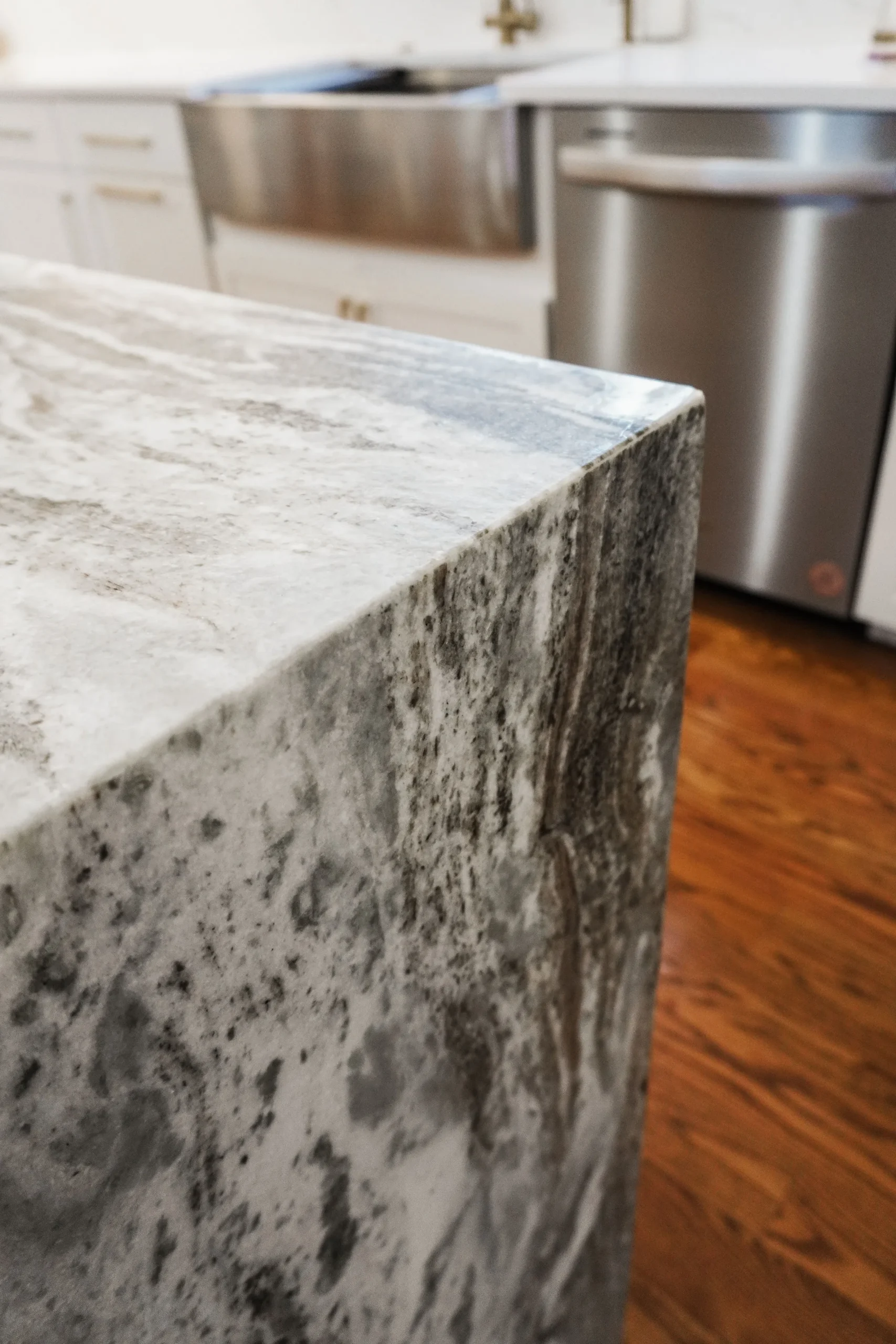
Several factors determine durability. Quartz is engineered to resist scratches and chips, making it well suited to high‑traffic kitchens. Granite is also durable but can be more susceptible to chipping if heavy objects are dropped on it.
Both materials tolerate heat, though granite holds a slight advantage. Consider your cooking habits and household use when choosing. Both options provide long service life; quartz typically requires less ongoing maintenance.
What Are the Aesthetic and Design Characteristics of Quartz and Granite?
Aesthetics differ between the two. Quartz offers consistent colours and patterns because it is engineered, allowing for more predictable matching and customization. It is available in polished, honed, or textured finishes.
Granite displays the natural character of stone with unique veining and colour variation. Each slab is one‑of‑a‑kind, which appeals to homeowners seeking a distinct, natural look. The decision often comes down to personal design preference. Use our kitchen visualizer or bathroom visualizer tools to preview your options.
How Do Maintenance Requirements Differ Between Quartz and Granite Countertops?
Maintenance is a key consideration. Quartz‘s non‑porous surface requires no sealing and usually needs only mild soap and water for routine cleaning.
Granite requires more attention: periodic sealing is recommended to prevent stains, and prompt cleaning of spills is important because the stone is porous. Match maintenance needs to your lifestyle when selecting a material.
What Is the Granite Countertop Maintenance Routine?
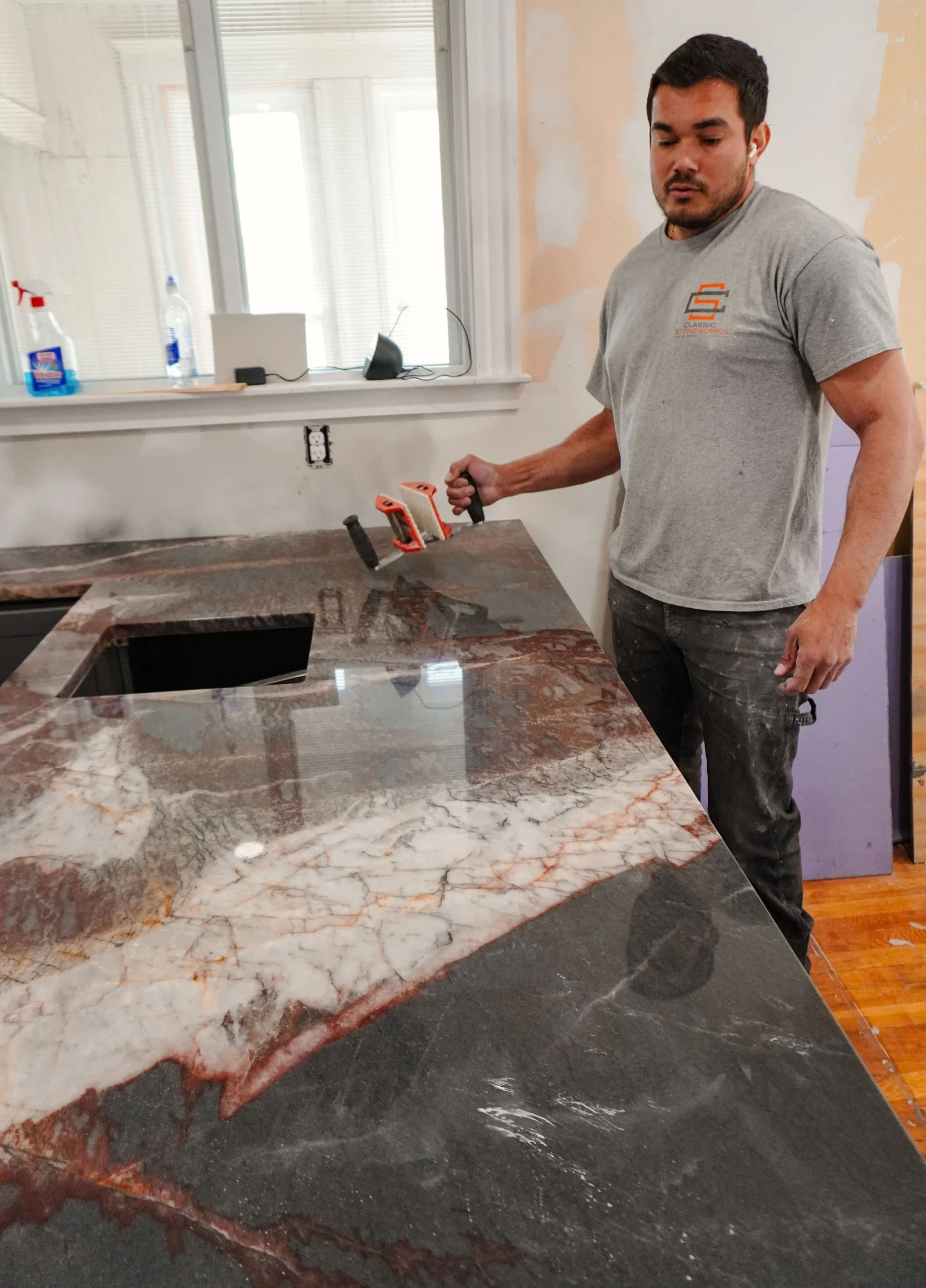
Maintaining granite involves a few consistent steps to preserve its appearance and longevity. Follow these guidelines:
- Daily Cleaning : Use a soft cloth and mild soap to clean the surface regularly.
- Sealing : Seal the countertop every 6 to 12 months to protect against stains.
- Avoid Harsh Chemicals : Steer clear of abrasive cleaners that can damage the surface.
Following this routine helps granite remain attractive and functional for many years.
Why Is Quartz Considered Low Maintenance?
Quartz is considered low maintenance because its non‑porous surface removes the need for sealing. Spills clean up easily and the surface resists common household substances.
Simple cleaning with soap and water meets most routine needs, which makes quartz practical for busy households. Its low‑maintenance profile is a strong advantage for owners seeking convenience without sacrificing appearance.
What Are the Cost Considerations for Quartz vs Granite Countertops?
Cost is a major factor. Quartz generally has a higher upfront price due to manufacturing and material costs, while lower maintenance can reduce long‑term expenses.
Installation costs also affect the budget and vary with project complexity and location. Account for both material and installation when planning your project. Learn more about installation services on our buying process page.
How Does the Cost of Quartz Countertops Compare to Granite?
The cost of quartz countertops typically ranges from $50 to $150 per square foot, depending on quality and brand. Granite usually ranges from $40 to $100 per square foot. While quartz may cost more initially, its durability and lower maintenance can reduce lifetime costs.
When evaluating price, include material and installation. Obtain multiple quotes to compare value and ensure a sound investment.
What Factors Influence Installation and Fabrication Costs?
Several factors can influence the installation and fabrication costs of quartz and granite countertops:
- Material Quality : Higher quality materials will generally cost more.
- Fabrication Complexity : Intricate designs or custom cuts can increase labor costs.
- Labor Rates : Installation costs can vary based on geographic location and contractor rates.
Understanding these factors helps homeowners budget accurately for their countertop project.
Which Installation and Custom Fabrication Services Are Available for Stone Countertops in New England?
In New England, homeowners can access a range of installation and custom fabrication services for stone countertops, from standard installations to bespoke solutions.
- Custom Fabrication : Tailored designs to fit specific kitchen layouts. See examples in our portfolio.
- Professional Installation : Expert installation services to ensure proper fitting and finish.
- Repair Services : Options for repairing chips or scratches in existing countertops.
Classic StoneWorks provides custom fabrication and professional installation of high-quality quartz and granite countertops for kitchen and bathroom remodels and new construction throughout the New England area.
How Does Custom Stone Fabrication Enhance Countertop Quality?
Custom fabrication improves quality by ensuring a precise fit and refined finish. Accurate templates and careful fabrication produce tighter joints and a more cohesive appearance.
Investing in custom work enhances both appearance and function. Integrated sinks, backsplashes, and other tailored details increase longevity and allow homeowners to achieve a personalized result.
What Should You Expect During the Installation Process?
Installation for quartz and granite typically follows several key steps:
- Site Preparation : Ensuring the area is ready for installation, including removing old countertops.
- Template Creation : Taking precise measurements to create a template for the new countertops.
- Fabrication : Cutting and finishing the stone according to the template specifications.
- Installation : Securing the countertops in place and ensuring proper alignment.
Knowing these steps helps homeowners prepare and set realistic expectations for timeline and outcome.
What Are the Environmental and Sustainability Considerations for Quartz and Granite?
Environmental performance matters. Quartz countertops often incorporate recycled content and can have a lower production impact than quarrying natural stone. Many manufacturers report reduced waste in engineered surfaces.
Granite extraction and transport are energy intensive, though the stone‘s durability and long service life can offset some initial environmental costs. Weigh sourcing and longevity when assessing sustainability.
How Do Quartz Countertops Reflect Environmental Trends?
Manufacturers increasingly use recycled materials and more efficient processes in quartz production to reduce waste and support circularity. This trend responds to growing demand for lower‑impact building materials.
Further research into material impacts commonly uses Life Cycle Assessment to quantify sustainability.
Life Cycle Assessment for Sustainable Countertop Materials
The Life Cycle Assessment (LCA) is a key analytical tool that provides the scientific basis for sustainability engineering. This study performed a cradle‑to‑gate LCA of a product intended for use in countertops. The functional unit was 1 m2 of finished panel and the system boundary covered raw materials, packaging, and production. The impact assessment used EPD (2018) in SimaPro PhD software; impact categories included Acidification, Eutrophication, Global Warming, Photochemical Oxidation, Abiotic Depletion (elements), Abiotic Depletion (fossil fuels), Water Scarcity and Ozone Layer Depletion.
A life cycle assessment study on a new countertop material, E Silva, 2021
What Is the Sustainability Profile of Granite Countertops?
Granite has a mixed sustainability profile. Quarrying and transport require substantial energy and can impact local environments. At the same time, granite‘s longevity reduces the need for frequent replacement.
Consider supplier practices when selecting granite. Responsibly sourced stone from operations with mitigation measures reduces environmental impact and supports a more conscious choice.
How Do Quartz and Granite Countertops Compare in Pros and Cons for Kitchen Use?
When assessing quartz and granite for kitchens, compare their advantages and limitations to match performance with expected use.
Pros of Quartz Countertops
- Non-Porous Surface : Resistant to stains and bacteria, making it easy to clean.
- Variety of Designs : Available in numerous colors and patterns for customization.
- Low Maintenance : No sealing required, simplifying upkeep.
Cons of Quartz Countertops
- Heat Sensitivity : Can be damaged by high heat, requiring caution with hot pots.
- Cost : Generally more expensive than granite.
Pros of Granite Countertops
- Natural Beauty : Unique patterns and colors enhance aesthetic appeal.
- Heat Resistance : Can withstand high temperatures without damage.
- Durability : Long-lasting and can handle heavy use.
Cons of Granite Countertops
- Porous Nature : Requires sealing to prevent stains and bacteria growth.
- Maintenance : More upkeep needed compared to quartz.
Weighing these pros and cons against your budget, design goals, and daily use will guide you to the most suitable choice.
What Are the Advantages of Choosing Quartz Countertops?
Quartz offers several practical advantages that appeal to many homeowners.
- Durability : Engineered to withstand daily wear and tear, making them ideal for busy kitchens.
- Design Flexibility : Available in a wide range of colors and patterns, allowing for personalized design choices.
- Low Maintenance : Easy to clean and does not require sealing, saving time and effort.
Those benefits make quartz a common choice for homeowners seeking a balance of style and practicality.
What Are the Benefits and Limitations of Granite Countertops?
Granite has distinct benefits and some limitations to consider when planning a kitchen.
Benefits of Granite Countertops
- Aesthetic Appeal : The natural beauty of granite adds value and elegance to any space.
- Heat Resistance : Granite can handle hot cookware without damage, making it suitable for cooking environments.
- Longevity : With proper care, granite can last a lifetime, making it a worthwhile investment.
Limitations of Granite Countertops
- Maintenance Requirements : Regular sealing is necessary to maintain its appearance and prevent staining.
- Cost : While generally less expensive than quartz, high-quality granite can still be a significant investment.
Knowing these benefits and limitations helps homeowners select the material that best fits their needs and lifestyle.
If you are ready to explore options or have questions, contact us today for personalized assistance.
What are the best practices for cleaning quartz and granite countertops?
For quartz, use a soft cloth and mild soap for daily cleaning and avoid harsh chemical cleaners. For granite, clean daily and reseal every 6 to 12 months to reduce staining risk. Use a pH‑balanced cleaner formulated for stone to maintain surface integrity. Consistent care preserves appearance and extends service life.
Can quartz and granite countertops be repaired if damaged?
Yes. Quartz chips are often repaired with a colour‑matched resin filler. Granite repairs typically require professional services to polish scratches or fill chips with epoxy. Significant damage may require replacement of the affected section. Consult a qualified fabricator or installer for the appropriate repair approach.
How do quartz and granite countertops affect home resale value?
Both quartz and granite can increase resale value. Granite is traditionally associated with luxury and natural beauty, while quartz appeals with modern aesthetics and low maintenance. Local market preferences influence buyer interest; investing in quality surfaces generally delivers a positive return.
What are the environmental impacts of quartz and granite countertops?
Quartz can be more environmentally favourable when it contains recycled content and is produced with efficient processes. Granite extraction involves quarrying and transport that raise energy use and environmental impact. Granite‘s long lifespan can offset some initial impacts, so evaluate sourcing and lifecycle when considering sustainability.
Are there any health concerns associated with quartz and granite countertops?
Both materials are safe for home use when sourced from reputable manufacturers. Some engineered quartz may include resins that emit VOCs during manufacturing; choose products that meet recognised safety standards. Natural granite does not emit VOCs but can contain trace radon in rare cases; proper testing and ventilation address potential risks.
What styles and colors are available for quartz and granite countertops?
Quartz offers a broad palette of colours and patterns, from solid tones to complex designs that mimic natural stone. Granite provides inherent veining and colour variation, making each slab unique. Both materials suit a range of interior styles, from contemporary to traditional.
Frequently Asked Questions
What are the long-term durability differences between quartz and granite countertops?
While both quartz and granite are durable, their long-term performance can vary. Quartz, being engineered, is less prone to chipping and cracking, making it ideal for high-traffic areas. Granite, although naturally strong, can chip if heavy objects are dropped on it. Over time, granite may require more maintenance due to its porous nature, which can lead to staining if not sealed regularly. Ultimately, both materials can last for many years, but quartz may offer a slight edge in everyday durability.
How do quartz and granite countertops perform in terms of heat resistance?
Granite countertops are known for their superior heat resistance, allowing them to withstand hot pots and pans without damage. In contrast, quartz countertops can be sensitive to high temperatures due to their resin content, which may warp or discolor if exposed to extreme heat. Homeowners should use trivets or hot pads on quartz surfaces to protect them from heat damage. If heat resistance is a primary concern, granite may be the better choice for your kitchen.
What are the color and pattern options available for quartz and granite countertops?
Quartz countertops offer a wide variety of colors and patterns, including solid colors and intricate designs that can mimic natural stone. This versatility allows for greater customization to match any kitchen decor. Granite, on the other hand, features unique veining and color variations inherent to the natural stone, making each slab one-of-a-kind. While both materials provide aesthetic appeal, quartz offers more consistent options, while granite showcases natural beauty and individuality.
Can quartz and granite countertops be installed over existing surfaces?
Yes, both quartz and granite countertops can be installed over existing surfaces, but it depends on the condition of the underlying material. If the current countertop is stable and in good condition, a new layer can be placed on top, which can save time and reduce waste. However, it’s essential to consult with a professional installer to assess the suitability of the existing surface and ensure proper installation techniques are followed for optimal results.
What are the common misconceptions about quartz and granite countertops?
One common misconception is that granite is always more durable than quartz. While granite is strong, quartz’s engineered nature makes it less prone to chipping and cracking. Another misconception is that quartz is not as aesthetically pleasing as granite; however, quartz offers a wide range of colors and patterns that can be customized to fit any design preference. Understanding these differences can help homeowners make more informed choices when selecting countertops.
How do the environmental impacts of quartz and granite countertops compare?
Quartz countertops often have a lower environmental impact due to their use of recycled materials and more efficient manufacturing processes. In contrast, granite extraction involves energy-intensive quarrying and transportation, which can increase its carbon footprint. However, granite’s longevity can offset some of these initial environmental costs. When considering sustainability, it’s essential to evaluate the sourcing practices of both materials and their lifecycle impacts to make an informed decision.
Choosing between quartz and granite requires weighing maintenance, appearance, cost, and environmental considerations. Quartz delivers low maintenance and broad design options; granite delivers natural beauty and strong heat resistance. Consider your lifestyle and priorities to select the best material. For personalized guidance, contact us today.
Conclusion
Choosing between quartz and granite involves evaluating maintenance needs, aesthetic preferences, cost, and environmental impact. Quartz offers low maintenance and versatile design options, while granite provides unique natural beauty and excellent heat resistance. Understanding these factors will help you make an informed decision that aligns with your lifestyle. For personalized assistance in selecting the perfect countertop, contact us today.