Stone Countertops Pros and Cons: A Complete Guide to Natural Stone Surfaces
Choosing countertops ranks among the most important decisions in any kitchen or bathroom renovation. Stone surfaces—both natural and engineered—dominate today’s market because they deliver the combination of beauty, durability, and long-term value that homeowners demand. But understanding the true pros and cons of stone countertops helps you make confident decisions aligned with your lifestyle, budget, and aesthetic vision.
At Classic Stoneworks, we’ve installed hundreds of natural stone countertops across New Hampshire, Massachusetts, and Southern Maine. We understand which materials suit different applications and how to match stone characteristics to real-world use. This guide presents an honest, balanced assessment of stone countertops—both the compelling advantages and the practical considerations—so you can move forward with clarity and confidence.
Key Takeaways:
- Why Homeowners Choose Stone Countertops
- Timeless Beauty That Never Goes Out of Style
- Durability That Lasts Decades
- Unique Character in Every Slab
- The Advantages of Natural Stone Countertops
- Heat Resistance for Real-World Cooking
- Increased Home Value and Buyer Appeal
- Wide Range of Colors and Patterns
- Potential Drawbacks of Stone Countertops
- Maintenance Requirements and Sealing Needs
- Initial Investment and Installation Costs
- Porosity and Staining Concerns
- How Stone Countertops Compare to Engineered Alternatives
- Granite vs. Quartz: The Key Differences
- Marble vs. Porcelain: Weighing Aesthetics and Practicality
- Making the Right Choice for Your Project
- When to Choose Natural Stone
- When Engineered Materials Make More Sense
- FAQ: Stone Countertop Questions Answered
Why Homeowners Choose Stone Countertops
Stone countertops dominate residential and commercial installations because they deliver benefits that alternative materials simply cannot match. Understanding these core advantages explains why stone remains the gold standard decades after first gaining popularity.
Timeless Beauty That Never Goes Out of Style
Stone countertops transcend temporary design trends. Whether you choose classic granite, elegant marble, or contemporary quartz, stone surfaces maintain aesthetic relevance decade after decade. This timelessness protects your renovation investment—you won’t need to replace counters because they look dated in five years.
Natural stone formed over millions of years carries inherent depth and complexity that manufactured materials struggle to replicate. Even engineered quartz, which mimics natural stone patterns, draws its appeal from emulating authentic geological beauty. When you install stone countertops, you’re choosing materials with proven staying power in both performance and design.
Durability That Lasts Decades
Properly installed and maintained stone countertops routinely last 20-30+ years, often outlasting the cabinets beneath them. This exceptional longevity comes from stone’s fundamental hardness and resistance to wear—qualities formed under extreme geological pressure that no countertop alternative matches.
Stone surfaces resist scratching from knives (though cutting boards remain recommended), don’t chip easily like laminate, and maintain their finish through years of daily use. Unlike solid surface materials that can melt or burn, or wood butcher block that requires regular refinishing, stone maintains structural integrity with minimal intervention. This durability translates directly into long-term value.
Unique Character in Every Slab
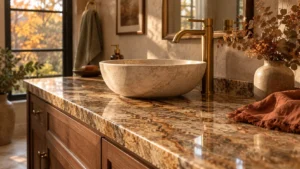
No two natural stone slabs are identical. Each piece of granite, marble, or quartzite carries distinctive veining, mineral deposits, and color variations that make your countertops genuinely unique. This organic variability appeals to homeowners seeking authentic materials with individual character rather than uniform, factory-produced surfaces.
While some prefer the predictability of engineered quartz where every slab looks nearly identical, others value natural stone’s variation as a feature, not a flaw. The key is viewing your actual slab before fabrication to ensure the specific patterns and colors match your expectations—a service every reputable fabricator provides.
The Advantages of Natural Stone Countertops
Beyond general appeal, natural stone delivers specific performance advantages that impact daily use and long-term satisfaction. These benefits explain why stone remains the preferred choice for discerning homeowners and professional builders alike.
Heat Resistance for Real-World Cooking
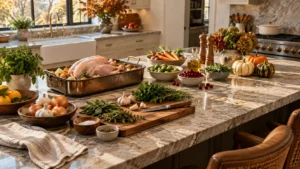
Granite options and other natural stones formed under extreme heat, making them naturally equipped to handle hot cookware without damage. You can place a roasting pan straight from a 450°F oven directly on granite counters without scorching, melting, or discoloration—a practical advantage during intensive cooking sessions.
This heat resistance exceeds laminate, wood, and solid-surface materials by orders of magnitude. While engineered quartz offers good heat resistance, manufacturers still recommend trivets for extremely hot items to protect polymer binders. Natural stone’s superior heat tolerance provides genuine peace of mind and convenience in busy kitchens.
Increased Home Value and Buyer Appeal
Real estate professionals consistently cite stone countertops as a key feature that increases home value and accelerates sales. Granite or quartz counters signal quality and move properties from “standard” to “upgraded” in buyer perception, justifying higher asking prices and generating stronger offers.
Studies suggest stone countertops can return 80-100% of their cost in increased home value, with the exact percentage depending on local market conditions and overall home price point. Even if you’re not selling soon, knowing your renovation investment maintains value provides financial security and justifies choosing premium materials.
Wide Range of Colors and Patterns
Stone countertops offer extraordinary variety—from pure white Carrara marble to jet-black absolute granite, from neutral beige limestone to dramatic blue quartzite. This range ensures you can find stone that matches any design vision, whether traditional, contemporary, rustic, or transitional.
Natural stone also coordinates beautifully with diverse cabinet finishes, backsplash materials, and flooring choices. The depth and complexity in stone patterns create visual interest without overwhelming other design elements, serving as either a subtle neutral foundation or a bold statement piece depending on your selection.
Potential Drawbacks of Stone Countertops
Honest decision-making requires understanding not just benefits but also practical considerations and potential drawbacks. While stone countertops excel in many areas, they demand certain commitments that don’t suit every homeowner or application.
Maintenance Requirements and Sealing Needs
Most natural stone countertops require periodic sealing to maintain stain resistance and prevent moisture penetration. Granite typically needs resealing annually, while marble countertops may require sealing every 3-6 months depending on use intensity and the specific stone’s porosity.
Sealing isn’t complicated—most homeowners complete it themselves in under an hour using readily available stone sealers—but it represents ongoing maintenance that engineered quartz doesn’t require. If you prefer truly zero-maintenance surfaces, quartz or porcelain may suit your lifestyle better. However, many homeowners find annual granite sealing a small price for natural stone’s beauty and performance.
Follow detailed natural stone maintenance guidelines to preserve your investment and prevent avoidable damage.
Initial Investment and Installation Costs
Stone countertops represent a significant upfront investment, typically ranging from 60-150+ per square foot installed, depending on material type, edge profile complexity, and regional labor rates. This exceeds laminate, tile, or butcher block by substantial margins.
However, evaluating cost requires considering lifespan and performance. Stone countertops lasting 25+ years cost less annually than cheaper materials requiring replacement every 7-10 years. Stone also maintains home value better than budget alternatives, recovering much of its cost when you sell. Still, the initial cash outlay can strain renovation budgets, making material choice partly a financial planning decision.
Professional installation is essential—stone’s weight, fragility during handling, and precision requirements make DIY installation impractical for most homeowners. Factor professional fabrication and installation costs into your budget from the beginning.
Porosity and Staining Concerns
Natural stone’s porosity varies by type—dense granites are minimally porous, while marble and limestone absorb liquids more readily. Porous stone can stain from wine, oil, coffee, or acidic foods if spills aren’t cleaned promptly, especially when sealers wear down between applications.
Lighter-colored stones show staining more visibly than darker materials, making maintenance vigilance more critical. Marble also etches (dulls) when exposed to acidic substances like lemon juice or vinegar, creating permanent marks that require professional restoration to remove. These characteristics don’t disqualify natural stone, but they do require awareness and appropriate material matching to your lifestyle.
If you’re concerned about staining, choose denser stones like absolute black granite or opt for non-porous quartz countertops that never require sealing and resist staining inherently.
How Stone Countertops Compare to Engineered Alternatives
Understanding the distinctions between natural and engineered stone helps clarify which category suits your priorities. Both deliver excellent performance, but each excels in different areas.
Granite vs. Quartz: The Key Differences
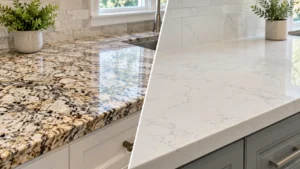
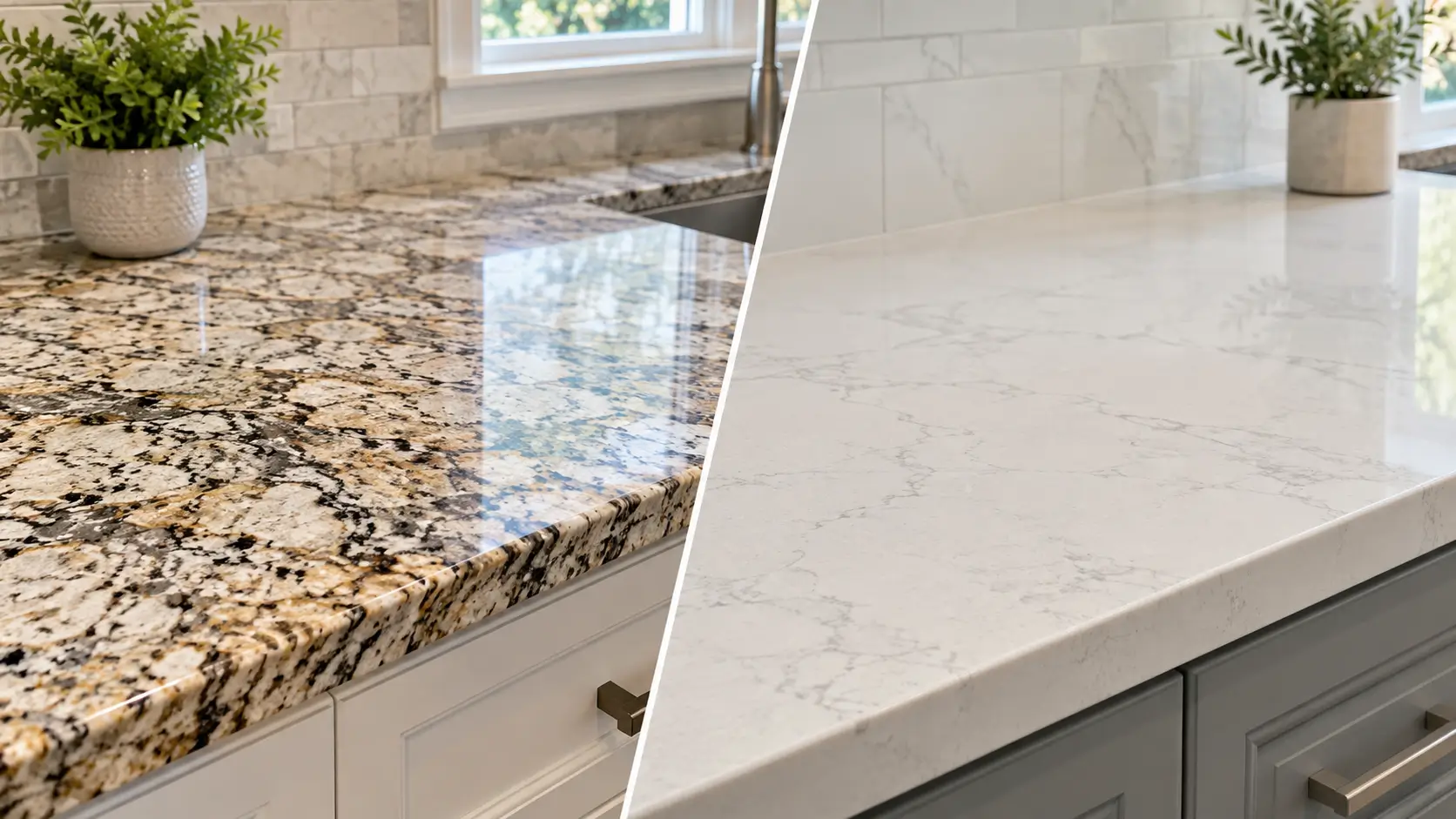
The granite vs quartz comparison represents the most common decision point for modern kitchen renovations. Granite offers authentic natural beauty with unique patterns and superior heat resistance. Quartz provides consistent appearance, zero sealing requirements, and superior stain resistance.
Granite suits homeowners who value natural authenticity, don’t mind minimal annual maintenance, and appreciate each slab’s unique character. Quartz fits those prioritizing low maintenance, predictable appearance, and maximum stain resistance. Both materials deliver 20+ year lifespans and comparable costs, making the choice largely about priorities rather than one being objectively superior.
Many designers use both materials in the same kitchen—granite for perimeter counters where heat resistance matters most, and quartz for islands where food prep and staining risks are highest. This hybrid approach captures each material’s strengths while minimizing weaknesses.
(H3) Marble vs. Porcelain: Weighing Aesthetics and Practicality
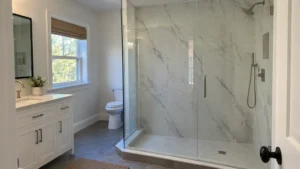
Marble represents peak natural stone elegance, offering luminous beauty and centuries of prestige in fine homes. However, marble’s softness, tendency to etch, and staining vulnerability make it impractical for intensive kitchen use. Marble works beautifully in bathrooms with lower exposure to acids and staining agents, or as dedicated baking surfaces where its cool temperature benefits pastry work.
Large-format porcelain slabs mimic marble’s aesthetics while delivering superior durability, zero maintenance, and better stain and scratch resistance. Porcelain costs more upfront but requires no sealing and maintains its appearance indefinitely. For homeowners who love marble’s look but worry about its fragility, porcelain offers a compelling practical alternative.
Consider your realistic maintenance commitment and use patterns when choosing between aesthetic appeal and practical performance. There’s no wrong answer—only the right fit for your specific situation.
Making the Right Choice for Your Project
Armed with balanced information about stone countertops’ pros and cons, you can now apply these insights to your specific project. Different scenarios favor different materials based on use patterns, budget, and priorities.
When to Choose Natural Stone
Natural stone makes the most sense when you value authentic materials with unique character, want maximum heat resistance for serious cooking, and don’t mind minimal annual maintenance. Granite particularly suits homeowners who appreciate natural variation and seek long-term durability with proven performance.
Natural stone also makes sense for historically appropriate renovations where authentic materials matter, or when achieving a specific luxury aesthetic that engineered materials cannot quite replicate. If you’re working with designers or architects who specify natural stone for coherent design vision, trust their expertise—they understand how materials interact within the complete design.
Choose natural stone when you’re committed to your home long-term and can amortize the initial investment over decades of use. The emotional satisfaction of cooking and living with authentic natural materials provides intangible value that cost calculations cannot capture.
When Engineered Materials Make More Sense
Engineered quartz makes more sense for families with young children where spills happen frequently, busy professionals who minimize home maintenance time, or rental properties where simplified care reduces management burden. Quartz’s zero-sealing requirement and superior stain resistance deliver genuine practical advantages in high-use, high-mess environments.
Engineered materials also suit those who prefer consistent, predictable appearance without natural stone’s inherent variation. If selecting slabs and accepting natural differences creates decision anxiety, quartz’s uniformity may provide peace of mind worth its trade-offs.
Budget-conscious renovators can sometimes achieve higher square footage with mid-grade quartz than with premium exotic granite, making engineered stone a smart value choice. Prioritize your actual needs and lifestyle over abstract material preferences—the best countertop is the one you’ll enjoy using for decades.
Ready to discuss which stone countertop material best fits your kitchen or bathroom project? Schedule a consultation with Classic Stoneworks to explore materials, ask questions, and receive expert guidance tailored to your specific needs.
FAQ: Stone Countertop Questions Answered
What are the main advantages of stone countertops?
Stone countertops offer timeless beauty, exceptional durability, and superior heat resistance. Natural stone like granite and marble adds unique character since no two slabs are identical. Stone surfaces increase home resale value, withstand decades of use, and provide authentic luxury that engineered materials cannot fully replicate. Heat resistance allows placing hot cookware directly on granite surfaces without damage.
What are the disadvantages of natural stone countertops?
Natural stone countertops require periodic sealing to maintain stain resistance, typically once per year for granite and more frequently for marble. Porous stones can stain from wine, oil, or acidic foods if spills aren’t cleaned promptly. Initial costs are higher than laminate or tile, and professional installation is essential. Marble scratches and etches more easily than harder stones, requiring careful maintenance.
Do stone countertops need to be sealed?
Most natural stone countertops require sealing to protect against stains and moisture penetration. Granite typically needs annual sealing, while marble may need sealing every 3-6 months depending on use. Denser stones like absolute black granite are naturally less porous and may need less frequent sealing. Engineered quartz never requires sealing because it’s non-porous by design.
Are stone countertops worth the investment?
Yes, for most homeowners. Stone countertops deliver 20-30+ years of performance, increase home resale value by 5-10%, and provide daily enjoyment that justifies the initial investment. Granite and quartz both offer excellent value relative to their durability and aesthetics. Marble suits homeowners who prioritize beauty and accept higher maintenance. The decision depends on your budget, lifestyle, and long-term home plans.
Which stone countertop material is best for kitchens?
Granite and quartz are best for kitchens due to their durability and low maintenance. Granite offers natural beauty with excellent heat resistance and long-term value. Quartz provides superior stain resistance and requires no sealing, making it ideal for busy families. Marble works best as a dedicated baking surface rather than primary kitchen counters due to its tendency to etch and stain. Consider your cooking habits and maintenance willingness when choosing.