What Makes Modern Countertops Stand Out Today: Trends, Materials, and Design Insights for 2025
Modern countertops combine refined aesthetics with engineered performance to deliver surfaces that look intentional and function reliably in busy kitchens and baths. This guide explains which materials, finishes, and fabrication choices define contemporary countertops in 2025, and it shows how durability, maintenance, and sustainability shape selection decisions for homeowners and builders. Many readers wrestle with balancing style, upkeep, and budget; this article addresses those trade-offs by outlining top materials, signature design elements, maintenance best practices, and emerging sustainable and smart solutions. You will also find a practical decision checklist, comparative tables for quick reference, and regional considerations for New England installations. The article closes with a clear walkthrough of custom stone fabrication and installation, plus local portfolio and visualizer options to help homeowners preview modern designs. Throughout, target concepts like engineered quartz countertops, porcelain slab benefits, waterfall island design, and low maintenance countertops 2025 are integrated to help you make an informed choice.
What Are the Top Modern Kitchen Countertop Materials in 2025?

Modern countertop materials prioritize non-porosity, consistency of appearance, and the ability to support integrated details like waterfall edges or seamless sinks. Materials that meet these demands combine physical performance—heat and scratch resistance—with visual flexibility to support honed marble looks, bold veining, or deep, moody palettes. Below is a ranked list of leading materials in 2025 and one-line benefits for each to guide initial selection.
- Engineered quartz countertops: Non-porous and low maintenance, offering wide color and veining options that mimic natural stone.
- Porcelain slab countertops: Ultra-thin large-format slabs that resist stains and UV, ideal for seamless installations and indoor/outdoor continuity.
- Granite countertops: Extremely heat resistant and durable with unique, natural patterns for lasting, character-rich surfaces.
- Marble countertops: Iconic veining and luxurious patina for focal points, best used where homeowners accept periodic maintenance.
- Emerging sustainable surfaces: Recycled glass, paper composite, and terrazzo-style options that prioritize recycled content and distinctive looks.
The following table compares core performance attributes across these materials to help homeowners and contractors make a scannable choice based on durability, porosity, heat and scratch resistance, maintenance, and typical cost considerations.
| Material | Durability | Porosity | Heat Resistance | Scratch Resistance | Maintenance Level | Typical Cost Range |
|---|---|---|---|---|---|---|
| Engineered Quartz | High | Non-porous | High | High | Low (wipe clean) | Medium |
| Porcelain Slab | High | Non-porous | Very High | High | Very Low | Medium-High |
| Granite | High | Low-Medium | Very High | High | Low (periodic sealing optional) | Medium-High |
| Marble | Medium | Medium-High | Medium | Low-Medium | High (regular sealing) | Medium-High |
| Recycled/Composite | Medium | Varies | Medium | Medium | Low-Medium | Variable |
This comparison highlights why engineered quartz and porcelain slabs top many modern design lists: they combine maintenance ease with the visual options homeowners want. Understanding these trade-offs leads directly into the technical strengths of quartz, porcelain, granite, and sustainable surfaces discussed below.
Why Is Quartz the Leading Choice for Modern Countertops?
Quartz dominates modern countertop choices because it is an engineered stone that combines crushed natural quartz with durable resins to produce a non-porous, uniform surface that resists stains and bacterial ingress. The manufacturing process allows for consistent color runs and lifelike veining, so designers can specify waterfall islands and thick edge profiles without compromising performance. Homeowners benefit from low maintenance—daily cleaning with mild soap and water—and robust scratch and stain resistance that suits busy kitchens. In a New England context, quartz’s non-porous nature and resistance to seasonal humidity fluctuations make it a reliable choice for both cooking zones and wet bar areas.
These properties explain quartz’s prevalence and set the stage for contrasting quartz with natural stones like granite and marble in the next section.
How Do Granite and Marble Enhance Modern Kitchen Designs?
Granite offers unique natural patterning and excellent heat resistance, making it appropriate for cooks who place hot pans directly on counters; its mineral composition provides inherent toughness and a sense of authenticity. Marble, by contrast, brings dramatic veining and a refined patina that elevates high-end modern kitchens, but it requires careful maintenance because of higher porosity and susceptibility to etching. Both materials support thick slab edges and bespoke detailing—granite for durability-forward choices and marble when visual impact is the priority. Specifiers should consider sealing schedules for marble and choose honed or leathered finishes to reduce visible wear in active kitchens.
Balancing aesthetic priorities with practical use leads naturally to porcelain slabs, which combine many benefits of engineered surfaces and large-format design.
What Advantages Do Porcelain Slabs Offer for Contemporary Surfaces?
Porcelain slabs are prized in contemporary design for being extremely thin yet structurally stable in large formats, allowing near-seamless runs and elegant waterfall edges that read as monolithic. They are manufactured to be non-porous and UV-resistant, making them suitable for indoor and some protected outdoor applications where color stability is essential. Porcelain’s technical profile delivers high stain and heat resistance with minimal maintenance, while the large slab sizes reduce visible seams on islands and long counters. Installers must plan for specialized handling and support due to slab dimensions, but the visual payoff—consistent patterning and the ability to match backsplashes or cladding—makes porcelain a compelling option.
These fabrication and installation considerations transition into emerging sustainable and alternative materials that expand modern palette choices.
Which Emerging and Sustainable Materials Are Shaping Modern Countertops?

Sustainable countertops—recycled glass, paper composite, and terrazzo-style mixes—offer designers unique textures and visible recycled content that resonate with eco-conscious homeowners. Recycled glass surfaces combine shards embedded in a resin or cementitious matrix to create luminous, mosaic-like counters, while paper composite uses recycled paper and resin to form warm, matte surfaces suitable for countertop and vanity use. Performance varies: some sustainable options reach medium durability but may trade off heat resistance or scratch tolerance compared to quartz or porcelain. For New England buyers, sustainability can improve resale appeal and support local environmental priorities, but buyers should weigh recycled-content percentages, warranty terms, and supplier availability when choosing these alternatives.
The material landscape above informs how design elements and finishes accentuate modern countertops, so next we examine signature design choices.
What Modern Design Elements Make Countertops Stand Out?
Modern countertop design elements create visual continuity, define focal points, and influence fabrication decisions that affect cost and durability. Elements like waterfall edges, thick slab profiles, matte and honed finishes, bold colors, dramatic veining, and integrated sinks are aesthetic tools that also carry installation trade-offs—each choice directly impacts slab usage, edge fabrication, and seam placement. Below is a quick list of high-impact design elements and why designers favor them.
- Waterfall edge for visual flow and sculptural presence in island designs.
- Thick slab profiles to convey heft and luxury without additional trim.
- Matte, honed, or leathered finishes to reduce glare and hide fingerprints.
- Integrated sinks and full-height backsplashes to create seamless, low-maintenance planes.
To make these trade-offs easy to compare, the table below summarizes each design element’s visual impact, typical use, installation considerations, and cost impact.
| Design Element | Visual Impact | Typical Use | Installation Considerations | Cost Impact |
|---|---|---|---|---|
| Waterfall Edge | Continuous flow to floor | Island focal points | Requires extra slab material and reinforcement | High |
| Thick Profile | Perceived luxury | Counter edges and islands | Heavier weight, may need support | Medium-High |
| Matte/Honed Finish | Soft, modern look | Busy kitchens, moody palettes | Slightly different cleaning care | Low-Medium |
| Integrated Sink | Seamless surface | Minimalist kitchens and baths | Precise templating and fabrication | Medium |
Understanding these elements helps homeowners decide between dramatic statements and practical solutions. Next we examine the structural aspects of waterfall and thick profiles in more detail.
How Do Waterfall Edges and Thick Profiles Create a Sleek Look?
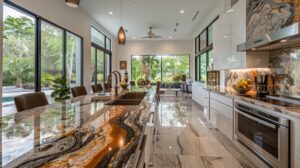
Waterfall edges extend the countertop material vertically down the side of an island or peninsula to the floor, creating a continuous plane that emphasizes material and form. This effect requires larger slab yields and careful seam planning so patterns align visually from top to vertical face, and installers must account for load-bearing structure behind the waterfall to prevent flex. Thick slab profiles—whether actual deep stone or laminated to appear thick—convey a robust, luxury aesthetic while influencing edge detail choices like eased or chiseled profiles. Designers often pair waterfalls and thick profiles with understated cabinetry to let the counter become the visual focal point. These fabrication needs draw directly into finish choices that influence perceived texture and maintenance.
Which leads into why matte, honed, and leathered finishes are increasingly popular across modern palettes.
Why Are Matte, Honed, and Leathered Finishes Popular in 2025?
Matte, honed, and leathered finishes reduce surface sheen to create a tactile, contemporary look that minimizes glare and hides fingerprints, making them attractive for high-use kitchens and darker colorways. Honed finishes offer a smooth, muted appearance, while leathered finishes add subtle texture and a hand-wrought quality that masks small scratches and smudges. These finishes pair well with matte cabinetry and warm metal hardware, supporting the broader modern trend toward tactile, layered materials. Maintenance differs slightly from polished surfaces—recommendations include gentle, pH-neutral cleaners and avoiding abrasive pads—so finish selection should consider how much hands-on care homeowners are willing to perform.
That practical maintenance consideration introduces how color and veining choices function in modern schemes.
What Role Do Bold Colors and Dramatic Veining Play in Modern Kitchens?
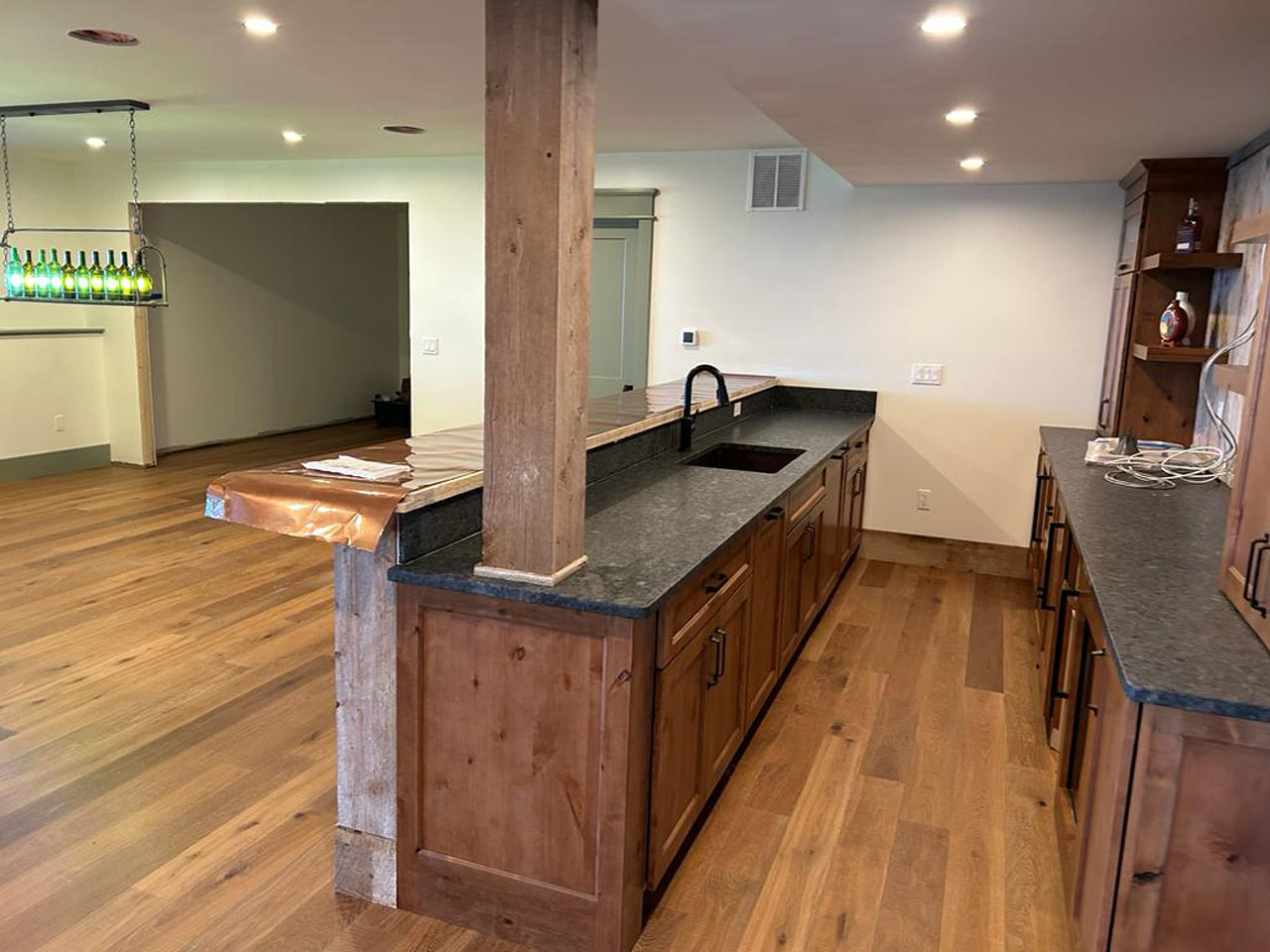
Bold colors and pronounced veining function as focal statements in modern kitchens, allowing a single countertop to dictate palette and accessory choices for cabinetry, hardware, and backsplashes. Dark counters provide dramatic contrast against light cabinetry and perform well under strong task lighting, while dramatic veining can be bookmatched or centered to create sculptural visual lines in islands or full-wall runs. Designers often balance a statement countertop with restrained surrounding finishes to avoid visual clutter and preserve a modern, minimalist sensibility. When deploying bold materials, consider how natural light and artificial lighting will alter perceived depth and contrast over the course of a day.
Integrated sinks and backsplashes build on these design decisions by reinforcing continuity and simplifying cleaning.
How Do Integrated Sinks and Backsplashes Enhance Modern Countertop Design?
Integrated sinks and continuous backsplashes eliminate seams and grout lines, delivering a smooth, hygienic surface that simplifies cleaning and reinforces minimalist aesthetics. Achieving integration requires precise templating and fabrication to ensure water-tight transitions and proper slope for drainage, especially when specifying under-mount or integral sink profiles in stone or porcelain. Material choice matters: non-porous surfaces like quartz and porcelain facilitate watertight integration, while natural stones may require careful sealing at transitions. Integrations enhance the modern clean-line look and reduce maintenance headaches, which connects directly to material selection and fabrication workflows covered later.
Next, we analyze how durability and maintenance demands determine practical modern countertop choices.
How Do Durability and Low Maintenance Define Modern Countertops?
Durability and maintenance expectations drive modern countertop selection by determining lifecycle costs and homeowner satisfaction, with top-performing materials minimizing day-to-day care while resisting stains, heat, and scratches. Modern buyers increasingly prioritize surfaces that sustain heavy use without frequent resealing or specialized cleaning products; this shifts preference toward engineered quartz, porcelain, and high-grade granites. Below is a ranked list of materials from least to most maintenance, followed by a maintenance table that clarifies practical care routines.
- Lowest maintenance: Porcelain slab, Engineered quartz.
- Moderate maintenance: Granite, Recycled/composite surfaces.
- Highest maintenance: Marble and some soft natural stones.
The table below translates these rankings into actionable maintenance guidance, including suitable cleaners and do’s/don’ts for each finish or material category.
| Material/Finish | Stain Resistance | Suitable Cleaners | Do’s and Don’ts |
|---|---|---|---|
| Engineered Quartz | Very High | Mild dish soap, non-abrasive cloth | Do wipe spills promptly; don’t use bleach or high-alkaline cleaners |
| Porcelain Slab | Very High | pH-neutral cleaners, water | Do use non-abrasive pads; don’t drop heavy objects on edges |
| Granite (honed/polished) | High | Stone soap or mild cleaner | Do reseal if recommended; don’t leave oil standing |
| Marble (honed/polished) | Medium | Specialized stone cleaner | Do clean spills immediately; don’t use acidic cleaners |
| Recycled/Composite | Varies | Manufacturer cleaner guidance | Do test cleaners on small area; don’t assume universal care |
This practical maintenance guidance flows into a short checklist homeowners can follow to keep modern countertops looking new.
Which Countertop Materials Offer the Best Resistance to Stains, Heat, and Scratches?
Quartz, porcelain, and many granites lead in combined resistance to stains, heat, and scratches because of their dense composition and engineered or crystalline structures. Quartz’s resin matrix and porcelain’s fired ceramic body provide high stain resistance and scratch hardness, while granite’s natural mineral hardness offers strong heat resistance and scratch durability. Marble and softer natural stones require more vigilance around acidic spills and high-heat contact; sealing reduces but does not eliminate vulnerability to etching. Understanding these material properties helps homeowners select surfaces aligned with their cooking habits and tolerance for maintenance.
Armed with those material distinctions, homeowners benefit from a simple maintenance routine outlined next.
What Maintenance Practices Keep Modern Countertops Looking New?
A practical maintenance routine reduces the need for costly repairs and preserves aesthetic qualities over time. Daily care typically involves wiping counters with a soft cloth and mild detergent, attending to spills—especially oil and acidic liquids—promptly, and using cutting boards and trivets to protect surfaces from mechanical and thermal damage. Periodic maintenance may include resealing natural stones if the manufacturer recommends it, inspecting seams and joins for silicone degradation, and addressing minor scratches per manufacturer guidance. For matte and leathered finishes, gentle cleaning and occasional buffing keep texture consistent without reintroducing high sheen.
These maintenance practices intersect with finish choices—particularly matte surfaces—so we next examine how matte finishes contribute to easy upkeep.
How Do Matte Finishes Contribute to Easy Upkeep?
Matte and honed finishes visually conceal fingerprints, minor scratches, and water marks better than polished surfaces, which makes them advantageous for busy households seeking a lived-in yet refined look. Cleaning matte finishes still requires appropriate, non-abrasive cleaners to avoid altering surface texture, and occasional oiling or manufacturer-recommended treatments can maintain the intended hand-feel. While matte surfaces hide wear, they may show oil residues differently than polished counters, so an initial testing period with chosen cleaners helps set proper expectations. Choosing matte finishes therefore supports both modern aesthetics and realistic upkeep routines.
Having covered durability and maintenance, we move to sustainability and smart integrations shaping countertop innovation.
What Are the Latest Trends in Sustainable and Smart Countertop Solutions?
Sustainability and smart integrations are maturing in countertop design, offering options that reduce embodied carbon, increase recycled content, and integrate modest technology for convenience. Sustainable materials—recycled glass, paper composite, and terrazzo blends—deliver distinct aesthetics and measurable recycled content, while smart countertop features such as embedded wireless chargers or temperature sensors remain nascent but actionable for specialized projects. New England homeowners increasingly consider sustainability as part of resale and occupant health decisions, prompting suppliers to disclose recycled-content percentages and eco-certifications. Below we explore specific sustainable materials and smart uses to help you evaluate adoption.
Which Sustainable Materials Are Gaining Popularity in Modern Countertops?
Recycled glass surfaces present luminous, translucent inclusions that read as artisanal and high-design, while paper composite countertops offer warm, matte textures made from recycled paper and resin suitable for vanities and islands. Terrazzo-style engineered surfaces use recycled aggregates to produce decorative patterns with variable recycled content percentages, providing both visual interest and sustainability narratives. Performance varies by system—some recycled options reach robust durability similar to quartz, while others require more careful heat protection—so homeowners should review recycled-content claims and warranty coverage. For New England projects, local availability and supply chain lead times can affect material choices and timelines.
How Is Smart Technology Being Integrated into Modern Countertops?
Smart countertop integrations are currently modest but growing, with embedded wireless charging pads, touch-sensitive lighting controls, and temperature or humidity sensors appearing in select projects to enhance convenience and safety. Integration demands early coordination with electrical trades and careful moisture management to preserve surface integrity—smart features often require incorporation during fabrication rather than retrofit. Adoption is highest in bespoke projects where owners prioritize tech-forward living and are willing to accept additional complexity and cost. As these systems mature, compatibility and standardization will make smart surfaces easier to specify in mainstream renovations.
This discussion explains why sustainability and smart features factor into regional priorities for New England homeowners.
Why Is Sustainability Important for New England Homeowners Choosing Countertops?
New England homeowners often prioritize durable materials that perform in seasonal climates and support resale value; sustainability considerations add an explicit preference for lower-impact materials and transparent sourcing. Choosing recycled-content countertops can align with local environmental values, reduce landfill demand, and sometimes qualify projects for green building recognition. Practical considerations include verifying local supplier availability, understanding lead times for specialty materials, and confirming warranty and maintenance expectations in a region with varied humidity and temperature cycles. These regional priorities naturally inform decisions about custom fabrication and installation, which we cover in the next section.
How Does Custom Stone Fabrication and Installation Elevate Modern Countertops?
Custom fabrication and professional installation translate material selection and design intent into durable, precisely executed countertops, enabling features like waterfall edges, integrated sinks, and seamless backsplashes. The process coordinates templating, precision cutting, finishing, and on-site installation to ensure tight seams, pattern alignment, and correct support. When fabricators stock premium materials and manage lead times, projects achieve quicker turnaround without compromising quality. Below is a step-by-step overview of the fabrication and installation process followed by a decision checklist to choose the right material.
The numbered list after the process description clarifies the standard sequence from design through sign-off.
- Design & templating: Measure space and document edge, sink, and seam locations.
- Material selection & slab marking: Choose slab or engineered panel and mark for pattern placement.
- Cutting & finishing: CNC cutting, edge profiling, and finish application in the shop.
- Dry fit & installation: On-site dry fit to verify seams, followed by adhesive setting and final adjustments.
- Final inspection & care briefing: Walkthrough with homeowner and provide maintenance guidance.
This process highlights where expertise matters and why professional execution improves final results. The following table translates fabrication phases into expected tasks and typical lead time factors.
| Fabrication Phase | Key Tasks | Lead Time Factors |
|---|---|---|
| Templating | Measurements, mock-ups | Access to space, scheduling |
| Fabrication | Cutting, edging, finishing | Slab availability, shop capacity |
| Shipping/Handling | Transport to site | Distance, slab size |
| Installation | Dry fit, adhesive, sealing | Site readiness, contractor coordination |
Understanding that process helps homeowners choose materials with realistic expectations about timing and outcomes. Next, use the short checklist to narrow material choices for specific home requirements.
What Is the Custom Stone Fabrication Process for Modern Countertops?
Custom fabrication begins with precise templating to capture cabinet offsets, appliance locations, and plumbing fixtures; this step defines seam placement and ensures integrated sinks align with drainage. Fabrication uses CNC routers and skilled stoneworkers to cut slabs, polish or finish edges, and create profiles that meet design specifications, while quality control verifies measurements against the template. Installation involves dry-fitting sections to confirm seam alignment and then permanent setting with appropriate adhesives and mechanical supports where needed. Typical timelines vary by material availability and project complexity, but clear staging—design, templating, fabrication, and install—reduces rework and ensures the finished surface matches the design intent.
This procedural clarity naturally leads to a short decision checklist to help homeowners choose the right material.
How to Choose the Right Modern Countertop Material for Your Home?
Selecting the right countertop depends on use-case, style goals, maintenance tolerance, budget, and local availability; a structured checklist simplifies the choice and aligns expectations before committing to fabrication.
- Assess daily use: Consider heavy cooking, family meals, and wet areas to prioritize heat and stain resistance.
- Set maintenance tolerance: Decide whether you want near-zero maintenance (quartz/porcelain) or accept resealing and careful care (marble).
- Define aesthetic priority: Choose between uniform, engineered visuals or the one-of-a-kind character of natural stone.
- Factor budget and lead time: Verify slab-in-stock options and installation scheduling to avoid delays.
Applying this checklist will often point homeowners toward engineered quartz or porcelain for busy kitchens and marble or special natural stones for accent areas. For New England projects that value local support and quick turnaround, professional installers with stocked materials can significantly reduce timelines.
Why Choose Classic Stoneworks for New England Countertop Installation?
Classic Stoneworks provides custom stone fabrication and installation services across New England from its Londonderry, NH base, offering a premium selection of quartz, granite, marble, and porcelain with in-stock options for quicker turnaround. Their service positions quality fabrication and installation alongside a customer satisfaction focus and a promise of best quality at an affordable price, meeting practical needs for homeowners who want modern designs executed precisely. Classic Stoneworks also supports projects like vanities, fireplace surrounds, shower walls, backsplashes, and bartops, and offers a visualizer tool and portfolio to preview materials and finishes before fabrication. Homeowners seeking coordinated templating, precise edge work, and reliable on-site installation can contact Classic Stoneworks to request a consultation and quote.
This local capability connects directly to common buyer questions about modern countertops and installation, which follow next.
What Are Common Questions About Modern Countertops in 2025?
Answering common buyer questions clearly helps homeowners make faster decisions and positions them to request the right samples and consultations. Below are concise PAA-style answers to frequent queries with brief elaboration and local installation pointers where relevant.
What Makes a Countertop Modern Today?
A modern countertop blends functional performance with clean, intentional design—non-porous or well-sealed materials, integrated details like sinks and backsplashes, and finishes such as matte or leathered that minimize glare and fingerprints. Modernity is expressed through large-format slabs, waterfall edges, thick profiles, and restrained palettes or bold veining used as focal statements. These characteristics emphasize low maintenance, seamless surfaces, and visual continuity between counter and surrounding architecture. Understanding these attributes helps homeowners prioritize which features matter most for their lifestyle and style goals.
Are Quartz Countertops Still Popular in 2025?
Yes—engineered quartz remains a top choice in 2025 due to its non-porous surface, strong stain and scratch resistance, and wide range of color and veining options that replicate natural stone. Manufacturing improvements continue to refine veining realism and pattern repeat, making quartz suitable for both minimalist and dramatic modern schemes. For homeowners, quartz provides a low-maintenance surface that supports integrated sinks and waterfall islands without the sealing needs of marble. These durability and aesthetic gains explain why many designers and installers still recommend quartz for busy kitchens.
What Countertop Material Requires Little to No Maintenance?
Porcelain slabs and engineered quartz top the list for little-to-no maintenance, as both are non-porous, resist staining, and clean easily with mild soap and water. Granite can be low-maintenance if properly sealed and maintained periodically, but marble generally requires more attentive care and occasional sealing to preserve finish. Homeowners should weigh practical use against appearance when choosing low-maintenance options to ensure the material matches daily habits and long-term upkeep willingness.
Are Dark and Bold Countertop Colors a Modern Trend?
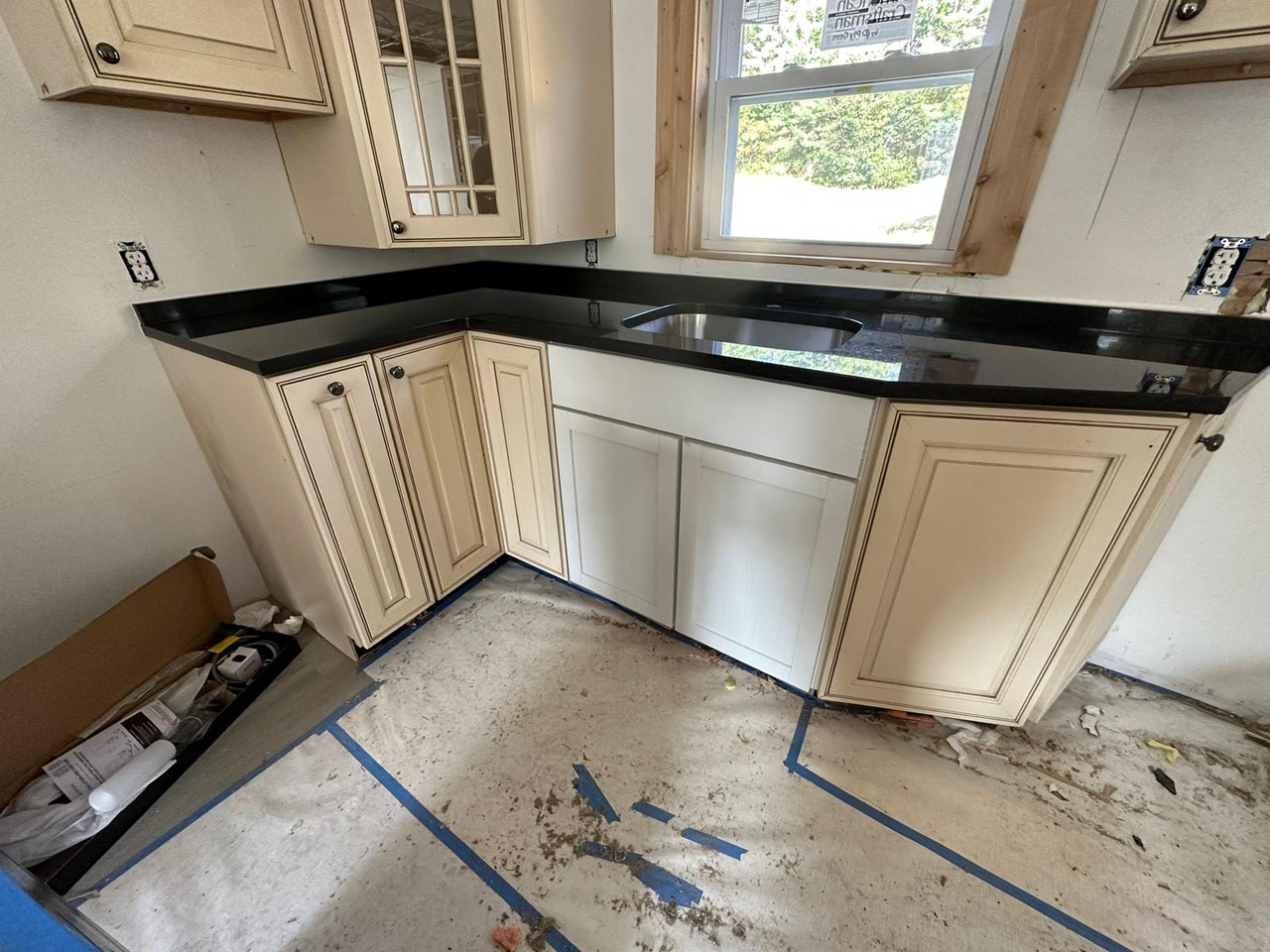
Dark and bold countertop colors are a strong modern trend, used to create drama, contrast, and a grounded visual anchor in kitchens that favor lighter cabinetry or open plan layouts. Designers balance dark counters with adequate task lighting and lighter surrounding finishes to prevent spaces from feeling heavy. When using deep tones or high-contrast veining, consider how natural light and artificial lighting will interact throughout the day and whether the finish (matte vs. polished) will support the desired tactile look. Proper pairing and lighting design keep bold countertops modern and inviting.
How to Use Classic Stoneworks’ Visualizer Tool to Explore Modern Countertop Designs?
The visualizer tool allows homeowners to upload photos or choose room scenes and then apply different countertop materials, finishes, and edge profiles to preview how options look in context before committing to samples or templates. Best results come from using well-lit photos, indicating appliance and sink locations, and testing both light and dark materials to evaluate contrast and reflectance. After narrowing selections, homeowners can request physical samples or schedule a templating appointment to confirm pattern placement and seam locations. Using the visualizer shortens decision time and helps align expectations with the eventual custom fabrication and installation process.