Bathroom Countertop Design Trends 2025 to Transform Your Space
Bathroom countertop design trends for 2025 blend material innovation, practical durability, and refined aesthetics to transform ordinary vanities into architecturally impactful surfaces. We’ll explore the leading trends, compare the most durable materials, outline quartz-specific design and care, and highlight luxury vanity-top options so you can make informed renovation decisions. Many homeowners struggle with choosing a countertop that balances water resistance, maintenance, and aesthetics. This guide offers clear tradeoffs and practical recommendations to simplify your decision. You’ll discover the top trends shaping 2025, how materials like quartz and granite perform in everyday use, selection checklists for different bathroom types, and maintenance routines to prolong your investment. The sections include trend lists for quick scanning, comparison tables that summarize durability attributes, stepwise decision guidance for choosing the right surface, and resource tips for collecting samples and inspiration. We’ve used current design language and material science framing to help you plan a bathroom countertop that performs well and looks contemporary in 2025.
What Are the Top Bathroom Countertop Trends for 2025?
Top bathroom countertop trends for 2025 focus on tactile finishes, sustainable materials, integrated plumbing details, and color palettes that shift toward warm neutrals and soft marbles. These trends matter because they combine function—resistance to moisture and staining—with design, yielding surfaces that feel intentional and age gracefully. Homeowners will see more integrated sinks and matte or hand-textured surfaces that hide water marks while offering a tactile quality that polished gloss cannot. Understanding these trends helps prioritize material selection, finish choices, and fabrication details to match both aesthetics and long-term performance.
Which modern bathroom countertop ideas are gaining popularity?
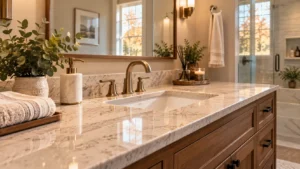
Modern bathroom countertop ideas emphasize seamless integration, slim profiles, and mixed-material pairings that maximize visual impact while maintaining durability. Floating vanities with thin stone slabs create a light, contemporary look and work well in powder rooms where the slab becomes the focal point. Integrated solid-surface sinks and waterfall edges offer continuity between basin and countertop, reducing seams where water can accumulate and simplifying cleaning routines. Combining warm wood cabinetry with cool stone surfaces balances texture and is ideal for transitional master baths seeking a restrained luxury appearance.
How are sustainability and eco-friendly materials influencing designs?
Sustainability in 2025 is shaping countertop choices through recycled-content engineered stones, low-VOC resins, and fabrication practices that minimize waste. While there might be slight tradeoffs in surface textures or pattern consistency compared with fully natural stone, many homeowners embrace the variation for a lower-impact option. Look for suppliers who disclose recycled content and fabrication waste practices to align material selection with sustainability goals without sacrificing durability.
What color palettes and finishes define 2025 trends?
Color and finish trends for 2025 gravitate toward warm neutrals, soft marbles, and muted concrete tones with matte or leathered textures that reduce visible water spots. These palettes pair well with warm brass or matte black fixtures and natural wood cabinetry for a cohesive, contemporary look. Matte and hand-textured finishes age well and conceal minor wear better than high-gloss surfaces in high-use bathrooms. Choosing a finish that complements the room’s lighting and fixture finishes will maximize both aesthetic harmony and practical maintenance.
What Are the Best Bathroom Countertop Materials for Durability and Style?
Bathroom countertop materials for durability and style include quartz, granite, marble, solid surface, and engineered stone, each offering distinct tradeoffs in porosity, maintenance, and visual variability. Material selection hinges on whether you prioritize predictability, low maintenance, or unique natural veining; knowing how each material behaves under moisture and daily use clarifies the right choice. Here, we compare attributes and provide a compact table so you can quickly assess durability, porosity, finish options, and typical cost notes before choosing a surface.
Different materials balance longevity and style in predictable ways, summarized below for quick reference.
| Material | Durability Attributes | Typical Values/Notes |
|---|---|---|
| Quartz | Non-porous, stain-resistant, low maintenance | Engineered consistency, wide color/pattern range |
| Granite | Highly durable, heat-resistant, low abrasion | Requires periodic sealing; one-of-a-kind patterns |
| Marble | Softer, porous, susceptible to etching | Luxurious veining; best in low-traffic areas |
| Solid Surface | Repairable, seamless integration | Integrated sinks possible; less heat resistant |
| Engineered Stone | Predictable performance, recycled options | Good balance of durability and design flexibility |
This comparison clarifies that quartz and engineered options lead on low maintenance while natural stones offer unique aesthetics that require more care and occasional sealing.
Why choose quartz bathroom countertops for modern bathrooms?
Quartz bathroom countertops are engineered from natural quartz aggregates and resins to create a non-porous, stain-resistant surface that combines durability with design versatility. The non-porous nature prevents moisture penetration and bacterial growth, which reduces the need for frequent sealing and simplifies cleaning routines. Quartz also offers consistent patterns—from subtle marbles to bold veining—and supports thin profiles and integrated sink fabrication, making it a favorite for contemporary bathroom designs. For homeowners prioritizing low maintenance, predictable appearance, and longevity, quartz consistently ranks among the top choices.
How do granite, marble, and solid surface compare?
Granite offers high hardness and heat resistance with natural variation, while marble provides timeless veining but demands more careful maintenance due to porosity and etching risk. Solid surface materials excel at seamless integration and repairability but are less heat-resistant and can scratch more easily than natural stone. Each material requires a different maintenance approach: granite typically needs periodic sealing, marble benefits from careful daily care, and solid surface can often be sanded to remove surface damage. Choosing between them depends on whether you value unique natural character, low maintenance, or integrated design features.
What are the benefits of engineered vs. natural stone?
Engineered stone, such as quartz, provides predictable color and pattern consistency and generally requires less maintenance than natural stone, while natural stone offers unique veining and patina that some homeowners prefer. Engineered materials allow more control over slab size, color uniformity, and recycled-content options that support sustainability goals. Natural stones often demand sealing and have variable porosity, which affects long-term maintenance. The decision comes down to whether you prioritize reliable performance and low maintenance or the one-of-a-kind visual depth of natural stone.
How Can Quartz Bathroom Countertops Enhance Your Bathroom Design?
What quartz designs and patterns are trending in 2025?
Quartz designs trending in 2025 include soft marble-look patterns with subtle veining, bold high-contrast veining for statement vanities, and concrete or terrazzo-inspired surfaces that pair well with industrial or minimalist schemes. Soft marbles suit transitional or classic spaces, while bold veining complements large-format slabs and dramatic lighting. Concrete-look quartz works in modern and minimalist bathrooms where a muted palette and tactile finish are desired. Choosing a pattern should align with the room scale and the cabinetry finish to maintain visual balance.
How to maintain and care for quartz vanity tops?
Maintaining quartz vanity tops requires daily wiping with a mild detergent and a soft cloth, immediate cleanup of acidic spills, and avoiding abrasive pads or strong solvents that can dull the surface. Because quartz is non-porous, it resists most stains and does not require sealing, but heat protection is still recommended—use trivets or pads under hot styling tools. For deeper stains or adhesive residue, a gentle non-abrasive cleaner typically restores the surface; persistent damage warrants professional assessment. Regular simple care keeps quartz looking new and preserves its hygienic benefits.
What makes quartz a luxury choice for bathroom countertops?
Quartz reads as a luxury choice due to its consistent, high-gloss or honed finishes, the ability to fabricate seamless integrated sinks, and the precision of custom edge profiles that mimic bespoke stonework. High-end installations use large-format slabs and refined edge details to create a monolithic appearance, and quartz’s durability supports long-term value by minimizing maintenance costs. For homeowners seeking both the polished look of natural marble and the low maintenance of engineered materials, quartz offers a premium aesthetic with practical benefits that align with renovation ROI considerations.
After exploring quartz benefits and care, it’s natural to consider fabrication and installation quality. Classic Stoneworks provides custom quartz fabrication and installation services that focus on precise templating, consistent pattern matching, and careful seam placement to support the design intentions described above. Their team supports sample requests and quotes to help homeowners evaluate quartz patterns, edge profiles, and integrated sink options that best match a bathroom’s style and function.
What Are the Most Stylish Luxury Bathroom Vanity Tops Available?

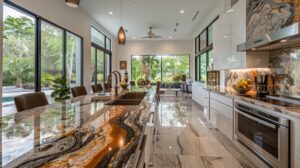
Luxury bathroom vanity tops are defined by rare veining, book-matched stone layouts, honed and leathered finishes, and fabrication techniques that minimize seams and emphasize slab continuity. These elements convey rarity and craftsmanship, creating bespoke, curated interiors. Selecting a luxury surface also requires attention to edge profiles, integration of sinks, and finish choices that work with lighting to highlight the stone’s natural qualities. Understanding the material cues that signal luxury helps homeowners make choices that elevate the entire bathroom scheme.
Which materials and finishes define luxury vanity tops?
Materials and finishes that signal luxury include book-matched marble with continuous veining, honed or leathered finishes on granite that emphasize texture, and high-end engineered quartz with subtle, naturalistic veins. These surfaces pair with warm metal fixtures and fine cabinetry to create cohesive spaces. Finish selection affects both appearance and maintenance: honed surfaces reduce reflectivity and hide minor wear, while polished finishes maximize veining contrast but show water spotting more readily. Luxury also involves fabrication options such as mitered edges and full-thickness slabs for a monolithic look.
How to select luxury vanity tops that complement your bathroom style?
Selecting luxury vanity tops requires matching material scale, color depth, and finish with cabinetry, fixture finishes, and lighting to create a unified composition. For modern bathrooms, choose slabs with strong directional veining and minimal ornamentation to preserve clean lines. In transitional or traditional spaces, softer veins and warm finishes complement classic millwork and warmer fixture tones. Consider the room’s natural and artificial light and select a finish that enhances the stone’s depth without amplifying maintenance burdens; this balance ensures the luxury look endures in daily life.
What are the latest innovations in luxury bathroom countertops?
Recent innovations that enable luxury bathrooms include large-format slabs that reduce seams, invisible seam technology for nearly continuous surfaces, and hybrid materials that combine stone with resin inlays for custom patterning. Integrated solid-surface sinks and under-mount techniques now create near-seamless transitions that simplify cleaning and emphasize clean lines. These fabrication advances allow designers to specify ambitious edge profiles and custom inlays without sacrificing performance. Such innovations expand luxury palettes by making complex designs practical and durable.
Classic Stoneworks has experience handling luxury vanity projects that demand precise edge profiles, complex insets, and high-quality finishes. Their workmanship emphasizes seam invisibility and careful slab matching to deliver the refined surfaces described above while ensuring installation tolerances meet design intent. This soft trust signal highlights fabrication and finishing capabilities that homeowners should consider when planning a premium bathroom countertop project.
How to Choose the Right Bathroom Countertop Design for Your Space?
Choosing the right bathroom countertop design requires aligning the material with room function, moisture exposure, budget constraints, and desired aesthetic to achieve a balanced result. A stepwise checklist helps prioritize needs: evaluate use frequency, determine acceptable maintenance levels, and match material performance to bathroom type. Spatial constraints and fixture choices also impact edge profile and sink integration decisions. Following a clear decision flow reduces costly mistakes and ensures the chosen countertop performs over time.
What factors should influence your countertop material choice?
Factors that should influence material choice include moisture exposure, daily usage patterns, budget, desired maintenance effort, and aesthetic goals such as veining or color consistency. For high-traffic family bathrooms, prioritize non-porous, low-maintenance materials; for guest baths where infrequent use allows for delicate materials, marble may be acceptable. Also consider lifecycle costs—materials that require sealing or specialized cleaners add ongoing expense. Mapping these factors to material attributes ensures choices reflect both short-term desires and long-term practicality.
How to match countertops with bathroom fixtures and cabinetry?
Matching countertops with fixtures and cabinetry hinges on contrast versus tonal harmony, reflectivity, and scale to create visual cohesion. Use warm stone tones with brass or gold fixtures for an inviting palette and pair cool grays with matte black for a contemporary look. Consider the finish: matte stone with glossy fixtures creates a deliberate interplay, while high-gloss stone and satin fixtures can feel more formal. Always test samples together under the bathroom’s lighting to ensure materials behave as expected in situ.
What are expert tips for maximizing space with countertop design?
Maximizing space with countertop design involves using floating vanities, integrated sinks, narrow overhangs, and multifunctional edges that include storage or towel holders. Floating vanities free floor space to make rooms appear larger and allow for under-vanity storage solutions that preserve circulation. Integrated sinks and narrow profiles reduce visual clutter and create continuous planes that make the space feel larger. Complement these choices with large mirrors and layered lighting to expand perceived space and highlight the countertop as a central design element.
| Design Goal | Attribute to Prioritize | Practical Recommendation |
|---|---|---|
| Durability | Non-porous surface | Select quartz or engineered stone |
| Low Maintenance | No sealing required | Choose quartz or solid surface |
| Luxury Appearance | Unique veining and finish | Use book-matched or honed natural stone |
| Small Bathroom | Slim profile, integrated sink | Opt for thin slabs and floating vanity |
This decision table ties common homeowner goals to practical material and design recommendations so you can match objectives with implementable choices.
What Are the Maintenance Tips for Modern Bathroom Countertops?
Maintenance for modern bathroom countertops depends on material, finish, and usage patterns and includes daily cleaning routines, protective behaviors, and signs that indicate the need for repair or replacement. Proper maintenance preserves aesthetics and functionality while extending service life. Here, we provide material-specific cleaning steps, a table summarizing maintenance responsibilities, common mistakes to avoid, and criteria for when to consult a professional fabricator or installer for repairs.
How to clean and protect quartz and natural stone countertops?
Cleaning quartz and natural stone requires using pH-neutral cleaners, soft cloths, and prompt spill cleanup to prevent surface damage; avoid bleach and abrasive pads that can dull finishes. Quartz benefits from daily wiping with mild soap and water and occasional use of a non-abrasive cleaner for stubborn residue. Natural stone usually needs a mild stone cleaner and periodic sealing depending on porosity, with resealing frequency guided by spill behavior and water beading tests. Consistent gentle care preserves surface finish and minimizes staining or etching.
What common mistakes to avoid in countertop maintenance?
Common mistakes include placing hot styling tools directly on the surface, using strong acidic cleaners on sensitive stones, neglecting to reseal porous surfaces, and allowing standing water at seams and joins. These behaviors accelerate wear, create permanent stains, and undermine seam integrity in installed countertops. Preventive measures such as using trivets, selecting appropriate cleaners, and ensuring proper sealing intervals protect both the visual and structural integrity of the countertop. Small repairs are sometimes feasible, but widespread damage may require professional intervention.
When to repair or replace your bathroom countertop?
Repair is appropriate when damage is localized—such as small chips, shallow scratches, or seam lifting that a fabricator can correct—while replacement becomes necessary for deep structural cracks, extensive water damage, or staining that penetrates past the surface. Signs to evaluate include persistent staining after cleaning, visible delamination at seams, or substrate water damage that affects cabinetry. Consulting a professional fabricator or installer helps determine whether refinishing, targeted repair, or full replacement best balances cost and long-term value.
| Material | Recommended Maintenance | Expected Lifespan/Notes |
|---|---|---|
| Quartz | Daily mild cleaning; avoid heat | Long lifespan; low maintenance |
| Granite | Regular cleaning; periodic sealing | Very durable; reseal as needed |
| Marble | Gentle cleaners; limit acidic exposure | Requires care; can etch |
| Solid Surface | Non-abrasive cleaners; sand to repair | Repairable surface; moderate lifespan |
| Engineered Stone | Mild cleaners; avoid high heat | Durable with recycling options |
This maintenance table summarizes the core care actions for each material and sets expectations for homeowners evaluating upkeep versus aesthetic preferences.
Where Can You Find Inspiration for Modern Bathroom Countertop Ideas?
Finding inspiration for modern bathroom countertop ideas involves using a mix of showrooms, fabricator portfolios, design publications, and curated social platforms to gather real-world examples and technical details. Seeing materials in person under actual lighting conditions is crucial to evaluating finish, veining, and color match. Here, we’ll point to the best sources, explain how to use mood boards and samples effectively, and suggest categories of designers and brands to study for innovative applications.
What are the best sources for bathroom countertop design ideas?
The best sources include fabricator project galleries, high-quality design magazines, curated social feeds from designers, and in-person showroom visits where you can view full slabs and finished installations. Each resource provides different strengths: magazines and designer portfolios convey curated aesthetics, social platforms reveal emerging trends and real installs, and showrooms allow tactile inspection of finishes. When researching, focus on full-project images and fabrication details to assess seam placement, edge profiles, and integration quality.
How to use mood boards and samples to plan your countertop?
Use mood boards to collect images, material swatches, fixture finishes, and lighting notes, then place physical samples together in the bathroom to view them under morning and evening light. Label each sample with notes about observed color shifts and compatibility with existing cabinetry and fixtures. Testing full-size samples or large pieces reveals how veining and texture interact at scale, reducing surprises during installation. Documenting choices and taking photographs with notes simplifies communication with your fabricator during templating.
Which designers and brands lead in bathroom countertop innovation?
Research high-end stone houses and engineered surface manufacturers that showcase large-format slabs, hybrid composites, and integrated surface solutions for modern bathrooms. Look for portfolios featuring invisible seams, book-matching projects, and inventive inlay work to gauge what premium fabrication enables. Use these brand and designer examples to inform realistic requests when meeting a local fabricator or showroom so you can translate aspirational images into practical installation plans.
For hands-on evaluation and to advance from inspiration to installation, consider contacting a local fabricator with a strong portfolio of completed bathroom projects. Classic Stoneworks operates as a lead generation and information hub offering custom stone fabrication and installation services; they can provide sample viewing, templating guidance, and a quote to move a design from concept to completion. Requesting a sample or consultation helps align material choice, edge profiles, and seam placement with the design goals you curated during the inspiration phase.
- Collect examples: Save full-room photos that show slab-to-fixture relationships.
- Request large samples: View slabs under your bathroom lighting before deciding.
- Document notes: Record how each sample performs in different light and around fixtures.
These steps create a clear workflow from inspiration to decision-making and reduce the chance of material mismatches during fabrication.
- Prioritize functionality: Match material choices to the room’s use and maintenance tolerance.
- Test in place: Always check samples in-situ under real lighting conditions.
- Engage fabricators early: Bring design examples to fabricators for feasibility and seam planning.
Applying these practical next steps ties visual inspiration to the technical realities of fabrication and installation so your chosen countertop both looks great and performs well.
- Plan for long-term care: Consider maintenance commitments alongside initial aesthetics.
- Specify finishes deliberately: Choose honed or matte finishes for high-use areas to hide wear.
- Coordinate with fixtures: Make sample pairings with actual fixtures to ensure cohesion.
These closing recommendations help finalize decisions and prepare homeowners for a successful countertop installation that aligns with 2025 design trends.
Frequently Asked Questions
What are the key considerations when selecting a bathroom countertop?
When selecting a bathroom countertop, consider factors such as moisture exposure, daily usage patterns, budget, and desired maintenance levels. High-traffic bathrooms benefit from non-porous, low-maintenance materials like quartz, while guest bathrooms may allow for more delicate options like marble. Additionally, think about the aesthetic goals you have, such as color consistency or unique veining, and how these align with the overall design of your space. Balancing these considerations will help you choose a countertop that meets both functional and visual needs.
How can I ensure my countertop complements my bathroom’s overall design?
To ensure your countertop complements your bathroom’s overall design, focus on matching the material’s scale, color depth, and finish with cabinetry and fixtures. Consider whether you want a contrasting or harmonious look; for instance, warm stone tones pair well with brass fixtures, while cool grays suit matte black. Testing samples together under the bathroom’s lighting is crucial to see how they interact. This approach helps create a cohesive aesthetic that enhances the overall design of your bathroom.
What maintenance practices are essential for different countertop materials?
Maintenance practices vary by material. For quartz, daily cleaning with mild soap and water is sufficient, while granite requires regular cleaning and periodic sealing. Marble needs gentle cleaners and careful handling to avoid etching, and solid surfaces can be sanded for repairs. Engineered stones typically require mild cleaners and heat protection. Understanding the specific maintenance needs of your chosen material is essential to preserve its appearance and longevity, ensuring your investment remains in excellent condition over time.
What are the advantages of using large-format slabs in bathroom design?
Large-format slabs offer several advantages in bathroom design, including fewer seams, which creates a more seamless and visually appealing surface. This minimizes the risk of water accumulation at seams, making cleaning easier and enhancing hygiene. Additionally, large slabs allow for bold design statements and can be used to create dramatic focal points in the bathroom. They also provide a modern aesthetic that aligns well with contemporary design trends, making them a popular choice for luxury renovations.
How do I find reliable fabricators for my bathroom countertop project?
Finding reliable fabricators for your bathroom countertop project involves researching local companies with strong portfolios and positive customer reviews. Visit showrooms to see their work firsthand and assess the quality of materials and craftsmanship. Ask for recommendations from friends or family who have completed similar projects. Additionally, inquire about their experience with specific materials and design styles to ensure they can meet your needs. Engaging with fabricators early in the design process can also help clarify feasibility and options.
What trends should I consider for a luxury bathroom countertop?
For a luxury bathroom countertop, consider trends such as book-matched marble, honed or leathered finishes, and integrated sinks that enhance seamlessness. High-end engineered quartz with naturalistic veins is also popular, as it combines durability with a sophisticated look. Pay attention to edge profiles and fabrication techniques that emphasize craftsmanship, such as mitered edges or custom inlays. These elements contribute to a curated, bespoke appearance that elevates the overall design of your bathroom, making it feel more luxurious and personalized.
Conclusion
Embracing the latest bathroom countertop design trends for 2025 can significantly enhance both the functionality and aesthetic appeal of your space. By understanding the benefits of materials like quartz and granite, you can make informed choices that balance durability with style. As you plan your renovation, consider reaching out to a local fabricator to explore your options and receive personalized guidance. Start your journey towards a stunning bathroom transformation today!