Porcelain Shower Wall Panels: What to Know First
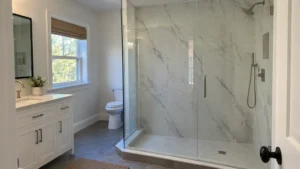
Porcelain shower wall panels are one of the cleanest ways to update a bathroom. Instead of hundreds of small tiles and grout joints, large-format porcelain slabs cover the wall in a few big pieces. This guide explains what to know before you remodel, from material and layout to templating and care.
At Classic Stoneworks, we fabricate and install large-format porcelain shower walls from our shop and slab gallery in Londonderry, NH. Read on, then request a quote or stop by the gallery to see the slabs in person.
What porcelain shower wall panels actually are
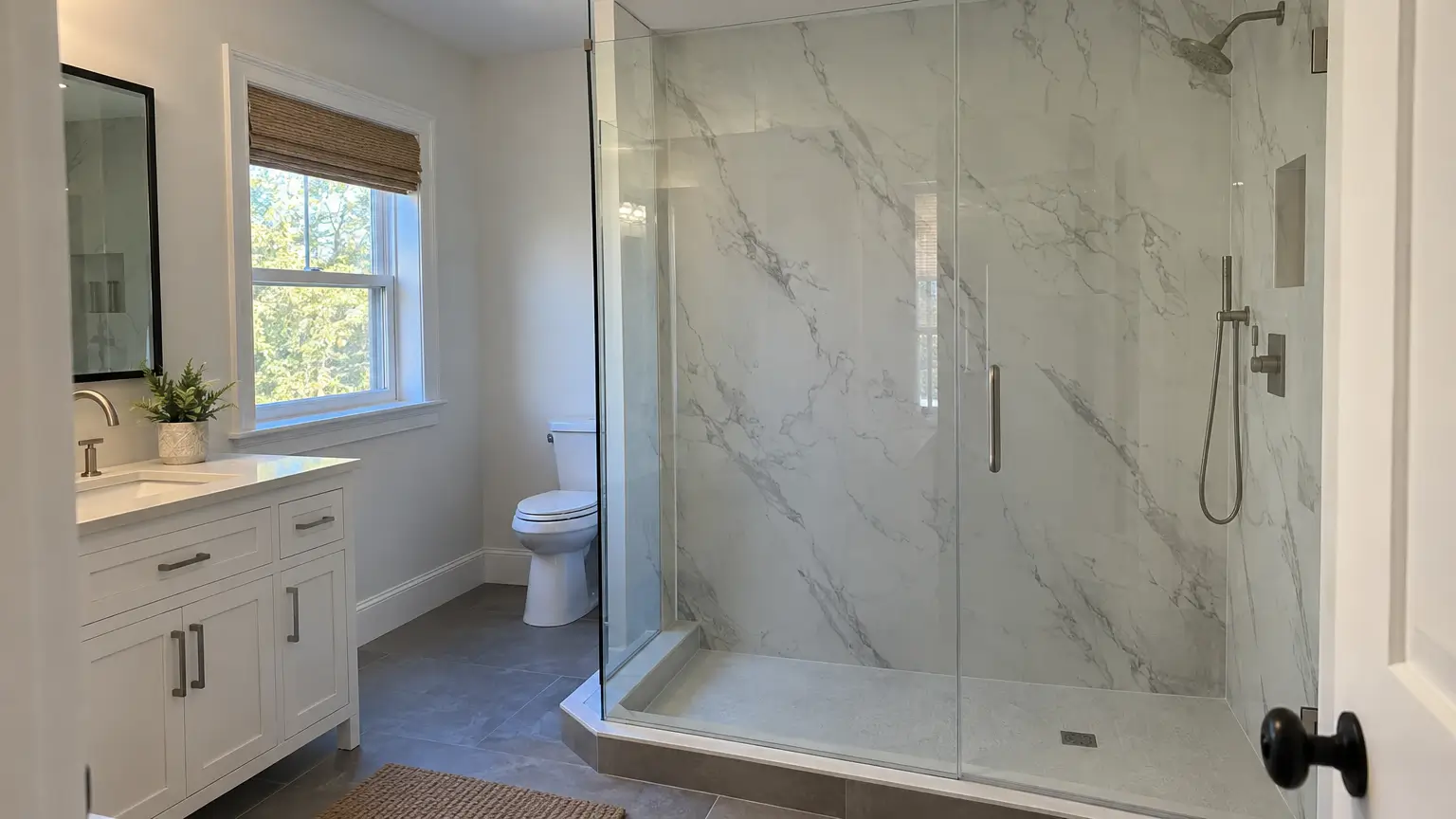
Porcelain panels are large, thin slabs made from fired porcelain. They are sold in sizes much larger than standard tile, so a single piece can cover a big section of a shower wall. The look can range from soft marble veining to concrete, linen, or solid colors.
Because the slab is fabricated, it is cut to your shower’s measurements rather than set piece by piece. That is why the process feels closer to countertop work than traditional tile work. Our team handles templating, fabrication, and installation, so the finished wall fits your space.
Large-format porcelain is also used for kitchen countertops, backsplashes, fireplace surrounds, and tub surrounds. If you want one material to carry through the bathroom and beyond, that flexibility is worth considering.
Why large-format porcelain works in a shower
The biggest draw is fewer seams. With large slabs, there are far fewer grout lines to scrub, which makes daily cleaning simpler. A shower wall with fewer joints also looks calmer and more continuous.
Porcelain also has very low porosity, so water does not soak into the surface the way it can with some natural stones. It handles steam and everyday cleaning well. That makes it a practical choice for a wet room.
Design range matters too. Porcelain can resemble marble, stone, or plaster with less upkeep, so you can get a luxury look that fits a busy household. We always show you the actual slab, so you see the real pattern before you decide.
Porcelain is also a good fit when you want a modern, minimal look. Large slabs let the pattern take center stage rather than the grout lines.
Porcelain vs. quartz, granite, and marble
We work with quartz, granite, marble, and porcelain, so we can talk through each option plainly. Our shower wall service centers on large-format porcelain. Each material has a place in a bathroom.
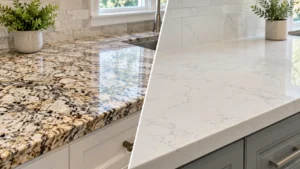
Marble and other natural stones bring unmatched character, but they are more porous and typically need sealing and careful cleaning. Quartz and granite are excellent for vanity tops and countertops, where you may want a matching look. Porcelain sits in a useful middle ground for vertical wet surfaces.
If you are weighing surfaces across the whole bathroom, our post on modern bathroom countertop materials compares options for vanities. For a deeper look at the material itself, read about the benefits of porcelain countertops.
What to decide before you remodel
A porcelain shower wall goes smoothly when the big decisions are made early. The slab, the layout, and the schedule all depend on each other. A few questions up front save you stress later.
Think about your timeline as well. Our materials are kept in stock for quick turnaround, but your bathroom still needs the right sequence of trades.
Choose your slab in person
Photos and small samples can hide the veining, movement, and tone of a large slab. Visit our indoor slab gallery in Londonderry to see the full surface under real light. Bring a photo of your bathroom, your paint or fixture choices, and any measurements you have.
Seeing the slab beside your other finishes helps you avoid surprises. It also lets you ask about pattern direction and where it will fall on the wall.
Plan the layout and seams
Even large slabs have edges, and the size of your shower determines where a seam might fall. Planning the layout lets us place the pattern so veining flows naturally across the wall. Niches, shelves, and corners should be decided before templating.
Fixture locations matter too. The valve, shower head, and any niches need to be marked and confirmed so the slab can be cut accurately. A quick measurement check with your builder or plumber at this stage prevents rework.
Coordinate with your builder and other trades
Porcelain panels go over a properly prepared wall, and the plumbing and wall prep are handled by the trades on your project. We recommend confirming the wall is ready and the fixtures are set before we template. Clear communication keeps everyone on schedule.
We work with homeowners, builders, and designers, so we are used to fitting into a project timeline. If you are working with a contractor or designer, invite them to the slab gallery visit.
How templating, fabrication, and installation work
Our process is simple: choose, template, fabricate, install. First, you pick your slab in our gallery. Then our team templates your shower, capturing exact measurements of the space.
Next, the slab is fabricated in our shop to those measurements, including cutouts for fixtures and niches. Because the cuts are made in the shop, the panels arrive ready to install.
Finally, our team installs the panels with care. We focus on clean, tight joints and a flawless finish. That is the part of the job we take most seriously.
Questions to ask before you commit
Before you sign off, ask how the slab will be templated and who handles each step. A clear answer shows the process is organized from start to finish.
Ask where seams will fall and how the pattern will flow across them. Ask what you need to prepare before install day, and which trades should be on site.
Finally, ask to see the actual slab, not just a photo. You should leave the gallery knowing what you are getting, how it will be installed, and how to care for it. That kind of clarity is what a simple process looks like.
Common mistakes to avoid
The most common mistake is choosing from a small sample. A small square cannot show how veining or movement reads across a full wall. Always view the full slab.
Another is deciding on niches, shelves, or fixture locations after templating. Late changes can affect the slab layout and your schedule. Settle these details first.
A third is skipping care guidance. Porcelain is durable, but harsh abrasive products are not the right tool. A quick read of the care basics keeps the wall looking the way it did on install day.
How to care for a porcelain shower wall
Daily care is simple. A soft cloth or squeegee after showers and a mild, non-abrasive cleaner are usually enough. Avoid harsh scouring pads that could dull the surface.
Because there are fewer grout lines, there is less to scrub. For specifics, read our guide to caring for porcelain surfaces before you choose cleaners.
Carrying the look beyond the shower
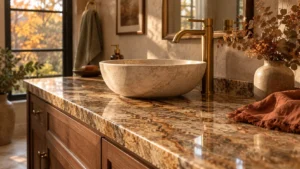
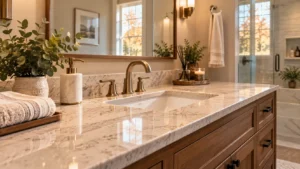
Many homeowners extend the look to a vanity top, tub surround, or backsplash. A matching or complementary stone ties the room together.
If this is part of a larger project, our countertop installation guide explains what to expect before work begins. The same simple process applies from start to finish.
Porcelain shower walls in Londonderry and nearby towns
Our shop and slab gallery are in Londonderry, NH. We serve homeowners, builders, and designers in nearby towns including Derry, Windham, Hudson, Manchester, Nashua, Merrimack, Bedford, and Salem.
We have been serving customers since 2022. Our rating is 5.0 stars across 113 reviews. Come see the slabs in person and ask us anything.
Ready to talk porcelain shower walls? Get a quote or visit our slab gallery in Londonderry, NH. Bring photos and measurements, and we will take care of templating, fabrication, and installation.
Frequently Asked Questions
What are porcelain shower wall panels?
Porcelain shower wall panels are large-format porcelain slabs cut to fit your shower walls. Instead of setting many small tiles with grout, the slabs cover large sections in fewer pieces. The result is a cleaner, more continuous look with far fewer grout lines to clean. They are fabricated from measurements taken at your home.
Are porcelain shower wall panels hard to clean?
No. Large slabs mean far fewer grout joints, so there is less to scrub. A soft cloth or squeegee after showers and a mild, non-abrasive cleaner are usually enough for routine care. Avoid harsh scouring pads, and check our porcelain care guidance for specific products and habits.
Can porcelain be used for a tub or Jacuzzi surround?
Yes. Large-format porcelain is also used for tub and Jacuzzi surrounds, which lets you carry one look across the whole wet area. We template the space first, so the slabs are cut to your exact layout, including any cutouts for fixtures and niches. Ask us about options during your slab gallery visit.
How does the porcelain shower wall process work?
It is simple: choose, template, fabricate, install. You pick your slab in our Londonderry slab gallery, we template your shower, fabricate the panels in our shop, and install them. Coordinating with your builder or plumber beforehand helps keep the schedule on track. Our materials are kept in stock for quick turnaround.
Can I match my vanity top to my shower walls?
Often, yes. Porcelain is used for vanity tops and backsplashes, and we fabricate quartz, granite, and marble vanity tops if you prefer a coordinated mix. Seeing the slabs side by side in our gallery is the easiest way to decide. Bring your tile or fixture choices along.
Where do you install porcelain shower walls?
Our shop and slab gallery are in Londonderry, NH. We serve nearby towns including Derry, Windham, Hudson, Manchester, Nashua, Merrimack, Bedford, and Salem. Reach out to confirm your address is within our service area and to schedule a visit. We are open Monday through Saturday, with shorter hours on Saturday.
What should I bring to the slab gallery?
Bring photos of your bathroom, measurements if you have them, and the finishes you have already chosen, such as fixtures, paint, or flooring. That helps you judge how a slab will look in your space. If you work with a builder or designer, invite them too.