Discover Your Perfect Countertop
Picking the right bathroom countertop means balancing durability, upkeep, appearance and even local climate. This guide walks you through those trade-offs so you can make a confident choice. You’ll learn which materials stand up best in bathrooms, how quartz, granite, marble, porcelain and solid surface compare, and which 2025 trends — like integrated sinks and matte finishes — are worth considering for both looks and longevity. We define practical attributes such as porosity, stain resistance, heat tolerance and fabrication needs, then translate those into straightforward recommendations for high‑use family baths, guest vanities and luxury powder rooms. Along the way you’ll find comparison tables, decision checklists and simple maintenance plans to match material properties to your lifestyle and budget. We also call out regional considerations for New England homes, explain how integrated sinks affect fabrication, and show how visualization tools and slab galleries speed your final decision. Read on for material deep dives, side‑by‑side comparisons, trend pairings for 2025 and clear next steps to finish your selection.
Best Bathroom Countertop Materials for Durability and Style
Countertop materials differ in toughness, upkeep and visual character, so the right pick balances non‑porous surfaces, stain and moisture resistance, and the look you want. Quartz scores for low maintenance and consistent appearance; granite gives distinct natural patterns and good heat resistance; porcelain slabs are extremely durable and work well in thin profiles; marble brings classic luxury but needs more care; and solid surface offers seamless, repairable integrated‑sink options. Finishes, edge details and compatibility with integrated sinks affect both the appearance and everyday cleaning, so consider finish (polished, honed, matte) as part of the choice. The sections below focus on quartz and granite to illustrate the durability vs. style trade‑offs, followed by a quick reference table that links material traits to common use cases.
Why Quartz Is a Go‑To Choice for Bathroom Countertops
Quartz is an engineered stone made from natural quartz aggregates bound with resin. It’s non‑porous and highly stain resistant, so it tolerates moisture and doesn’t require sealing — a big plus for busy bathrooms. Quartz cleans easily with mild detergent and offers consistent colors and patterns, which simplifies matching to cabinets and tile and avoids the wide variation you can see with natural stone. If hygiene, low upkeep and predictable aesthetics matter most, quartz often becomes the practical top choice before you weigh natural‑stone options.
Granite Vanity Tops: Natural Beauty with Real Durability

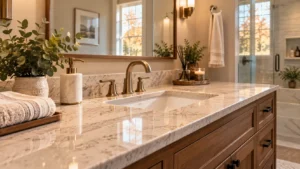
Granite is a natural igneous stone whose crystalline structure gives each slab unique veining and patterning — ideal when you want an authentic, one‑of‑a‑kind look. Its mineral density provides solid heat and scratch resistance compared with many untreated engineered surfaces, making granite a durable everyday option. Because it’s a porous natural stone, granite benefits from periodic sealing (typically annually or per manufacturer guidance) to preserve stain resistance in areas with frequent water or cosmetic spills. When homeowners prioritize true stone character and long‑term resilience, granite often wins — but plan for sealing and slab variability in your timeline and maintenance plan.
Before we lay out side‑by‑side comparisons, the next section provides a compact table to help you weigh durability, maintenance, cost and best use cases.
Materials follow distinct patterns of durability and care that map directly to typical bathroom uses.
| Material | Durability | Maintenance | Typical Cost Range | Best Use Cases |
|---|---|---|---|---|
| Quartz | High — non‑porous engineered stone | Low — no sealing required; regular cleaning | Mid to high | Family bathrooms, condo vanities, projects needing consistent appearance |
| Granite | High — natural stone with good heat resistance | Moderate — periodic sealing and stain care | Mid to high | Signature vanities, spaces where authentic stone matters |
| Marble | Moderate — softer stone, prone to etching | High — frequent sealing and careful cleaning | Mid to high | Low‑use powder rooms, luxury aesthetics |
| Porcelain (slab) | Very high — vitrified ceramic, stain & heat resistant | Low — non‑porous, minimal upkeep | Mid | Thin‑slab installations, modern minimalist vanities |
| Solid Surface | Moderate — repairable acrylic blends | Low to moderate — resists staining; can be sanded for repairs | Low to mid | Integrated sinks, accessible designs, budget‑friendly remodels |
This quick table shows how maintenance and durability align with cost and common installations, helping you narrow candidates before diving into fabrication and visual choices. Next we’ll explain how to weigh these trade‑offs for your household and budget.
How to Compare Countertop Materials: Pros, Cons and Care
Compare materials by porosity, stain resistance, heat tolerance and consistency of appearance — these factors determine upkeep and service life. Porosity decides whether a surface needs sealing: non‑porous options like quartz and porcelain minimize absorption and microbial growth, while natural stones such as granite and marble require sealers and occasional reapplication. Appearance consistency matters for coordinated designs — engineered quartz delivers predictable patterns, while natural stone offers unique veining that can elevate a space but complicate matching. Below we summarize the key attributes and provide a short checklist and comparison table to link material features to real‑world bathroom scenarios.
Ask about use frequency, local climate (humidity and seasonal swings) and whether you prefer a uniform look or natural variation; those answers guide your choice between engineered and natural stone. The short checklist that follows focuses the decision.
Consider these four practical factors before you decide:
- Frequency of Use: For daily high‑traffic baths, pick non‑porous surfaces like quartz or porcelain.
- Cleaning Habits: If you want low‑effort upkeep, avoid marble and favor quartz or porcelain.
- Design Priorities: Choose natural stone for unique veining when visual drama outweighs uniformity.
- Budget and Lifecycle: Weigh upfront cost against long‑term maintenance — engineered stones often lower lifetime expense.
Those points narrow your options fast. The table below maps each material’s typical durability and care expectations for quick reference.
Use these material attributes to match options to your lifestyle and budget in the following section.
| Material | Durability | Maintenance Frequency | Typical Cost Range | Best Use Cases |
|---|---|---|---|---|
| Quartz | High | Low — routine cleaning only | Mid to high | Family bathrooms, high‑use vanities |
| Granite | High | Moderate — reseal annually to every few years | Mid to high | Signature vanities, heat‑exposed spots |
| Marble | Moderate | High — frequent sealing; avoid acidic cleaners | Mid to high | Luxury powder rooms, low‑use vanities |
| Porcelain | Very high | Low — non‑porous, color‑through options | Mid | Contemporary designs, slim‑profile counters |
| Solid Surface | Moderate | Low to moderate — can be sanded for repairs | Low to mid | Integrated sinks, budget‑conscious remodels |
This comparison highlights engineered stones’ maintenance advantages and porcelain’s growing role as a highly durable, low‑maintenance slab option. Next we’ll translate these technical differences into lifestyle recommendations to help you pick the right material for daily use and long‑term expectations.
Bathroom Countertop Trends to Consider for 2025
Design and fabrication trends for 2025 emphasize seamless integration, tactile finishes, sustainability and bolder color choices — each affects material selection and how your fabricator will work the slab. Integrated sinks and slim porcelain slabs create a clean modern silhouette; matte finishes and deeper colors shift visual weight from cabinetry to the countertop. Sustainability — recycled content and low‑emission fabrication — matters more for eco‑minded homeowners and pairs well with engineered lines that use reclaimed aggregates. The subsections below explain integrated sinks and matte/bold finishes, and the trends table links each trend to material compatibility and practical design tips.
Understanding these trends helps you choose materials that will stay relevant in 2025 and beyond. Next, we explain integrated sinks and why they matter during fabrication.
Integrated sinks

Integrated sinks are fabricated as part of the countertop to create a seamless basin — reducing seams where water and grime collect. Making an integrated sink requires precise templating and fabrication to ensure proper drainage slope, consistent finish and watertight joins; quartz, solid surface and porcelain are commonly compatible for a continuous surface. The result is simpler cleaning, a minimalist aesthetic and better hygiene — especially useful in family bathrooms or shared spaces. When you want an integrated sink, confirm your fabricator has the tooling and finishing experience to execute the detail correctly, since technique directly affects long‑term performance and appearance.
Matte finishes and bold colors
Matte finishes and stronger color choices move bathroom design away from glossy, reflective surfaces toward tactile, low‑sheen looks that hide water spots and soften light. You can now find matte options across quartz, porcelain and some solid surface lines, offering a modern feel while requiring gentler cleaning — avoid abrasive cleaners that can change texture. Bold colors and deep veining make a vanity the room’s focal point; coordinate color with hardware and tile. Darker surfaces hide wear but can show soap residue; lighter matte finishes reveal stains more easily. Choosing the right finish is a balance of aesthetics and practical cleaning; the trends table that follows clarifies compatibility and design tips.
Match material properties to current trends to get both style longevity and practical performance.
| Trend | What It Means | Material Compatibility | Design Tip |
|---|---|---|---|
| Integrated sinks | Seamless countertop‑to‑basin fabrication | Quartz, Solid Surface, Porcelain | Use a single slab or continuous material to minimize seams |
| Matte finishes | Low‑sheen surface treatment for a modern look | Quartz, Porcelain, Select Solid Surfaces | Pair with warm hardware to soften contrast |
| Bold colors & deep veining | Strong visual focal points for the vanity | Quartz, Porcelain, Natural Stone | Balance with neutral walls and understated fixtures |
| Sustainability & recycled content | Lower embodied carbon or recycled aggregates in materials | Engineered stone lines with recycled mixes, recycled‑glass options | Ask about certifications and responsible sourcing during selection |
This trends overview helps you pair materials with the look and function you want for 2025. Next, we’ll match materials to common household use patterns and lifestyles.
Choose Countertops Based on Lifestyle and Bathroom Use
Real‑world countertop choices map material traits to family size, cleaning habits and whether the bathroom is a daily workhorse or an occasional showcase. High‑traffic family bathrooms do best with non‑porous, low‑maintenance surfaces that stand up to cosmetics, humidity and quick cleanups. Guest or powder rooms can highlight higher‑maintenance luxury materials like marble, where visual impact matters more than everyday wear. Think about color and pattern for hiding wear, edge profiles that resist chipping, and integrated sinks that simplify cleaning — these details should guide your final pick. Below are persona‑based recommendations to translate choices into next steps for budgeting and scheduling.
Match your use case to these material recommendations before moving to measurement and fabrication planning.
- Busy family bathroom: Quartz or porcelain for durability and low upkeep.
- Shared master bath: Granite or premium quartz for a balance of durability and luxury.
- Powder room or guest bath: Marble or bold quartz for strong visual impact with lighter use.
- Accessible or aging‑in‑place bath: Solid surface or matte‑finished quartz for seamless edges and easy repairs.
These persona‑aligned picks make material selection faster and show where to invest for longevity versus aesthetics. Below are simple style pairings and budget tiers to help you match countertops to your design and cost goals.
- Modern: Matte quartz or porcelain slabs with waterfall edges for clean lines.
- Traditional: Polished granite or honed marble to complement raised‑panel vanities.
- Transitional: Mid‑toned quartz with eased edges to bridge modern and classic elements.
These pairings help you achieve cohesive interiors while keeping maintenance and cost in mind. Next, we explain how Classic Stoneworks turns your material choices into finished vanities through fabrication and installation.
Why Classic Stoneworks for Bathroom Countertop Fabrication and Installation?
Classic Stoneworks gives New England homeowners local access to in‑house fabrication and installation, an indoor slab gallery and interactive planning tools that simplify material selection. Our team works with trusted brands — Cambria, Silestone, LG Viatera, Pental Quartz and MSI™ Stone — offering engineered and natural stone solutions tailored to bathroom projects. We coordinate templating, integrated sink routing and finish selection in‑house to control fit and finish, and our installers follow documented checks to ensure proper seams, drainage and edge detailing. For homeowners who need regionally informed advice — especially important in New England’s humid summers and cold winters — our showroom and fabrication capability reduce surprises and align materials with local performance needs.
Let us help you visualize options and plan your project — request a visit or estimate to get started.
We encourage prospective clients to preview slabs in our indoor gallery, try the Bathroom Visualizer to compare materials and finishes, and request an estimate to understand timelines and fabrication needs. Our process emphasizes sampling and in‑person confirmation before templating to reduce decision regret, and working with trusted brands makes it easier to match warranty terms and fabrication expectations. The following sections explain our quality controls and how the Bathroom Visualizer supports confident decisions from sample to installation.
How Classic Stoneworks Maintains Quality and Customer Satisfaction
We manage fabrication and installation in‑house to keep quality consistent and minimize field adjustments during installs. Our checks include confirming slab selection against templates, verifying integrated sink dimensions when specified, and ensuring edge profiles meet the chosen finish standard — steps that reduce fit issues at installation. Customer satisfaction practices include showroom previews and visualization tools so homeowners can see materials under different lighting and with selected vanities before committing, which usually shortens decision time and improves outcomes. Because local climate and household habits affect material choice, Classic Stoneworks applies regional experience from Londonderry, NH to recommend sealing schedules and finishes that suit New England homes.
These quality measures tie directly to the practical guidance below about using visualization tools to finalize your selection.
How to Use the Bathroom Visualizer to Pick Your Countertop
Our Bathroom Visualizer lets you try materials, finishes, edge profiles and integrated‑sink layouts digitally so you can narrow options before visiting the showroom. Start by uploading or approximating your vanity dimensions, then apply different materials and finishes to see how veining, color intensity and edge profiles change the look. The visualizer makes it easier to compare quartz versus porcelain on the same vanity and to preview integrated sinks or waterfall edges — then you can visit our slab gallery to confirm texture and veining in person. Digital preview plus fabrication consultation helps ensure the plan converts cleanly to a successful installation.
Below we answer the most common questions buyers ask when narrowing countertop choices.
Frequently Asked Questions
What are the key factors to consider when selecting a bathroom countertop?
When choosing a bathroom countertop, consider durability, maintenance requirements, aesthetic preferences, and the specific use of the bathroom. High-traffic areas benefit from non-porous materials like quartz or porcelain, which resist stains and moisture. Additionally, think about your design style, budget constraints, and the long-term upkeep costs associated with each material. These considerations will help you select a countertop that aligns with your lifestyle and enhances your bathroom’s functionality.
How do different countertop materials compare in terms of maintenance?
Maintenance varies significantly among countertop materials. Quartz requires minimal upkeep, needing only regular cleaning with mild soap. Granite needs periodic sealing, typically once a year, to maintain its stain resistance. Marble demands more frequent sealing and careful cleaning to prevent etching. Porcelain is low-maintenance and non-porous, while solid surfaces can be sanded for repairs. Understanding these maintenance needs is crucial for keeping your countertop in optimal condition.
Are there sustainable options for bathroom countertops?
Yes, there are eco-friendly countertop options available. Many engineered stones incorporate recycled materials, such as glass or aggregates, and some manufacturers utilize low-impact production processes. When prioritizing sustainability, inquire about the recycled content, certifications, and low-VOC manufacturing practices of the materials you are considering. This way, you can choose a countertop that meets your environmental values without compromising on performance.
What advantages do integrated sinks offer in bathroom countertops?
Integrated sinks provide a seamless transition from the countertop to the basin, minimizing seams where dirt and water can accumulate, which simplifies cleaning. They create a modern, minimalist aesthetic and enhance hygiene, especially in busy bathrooms. When opting for an integrated sink, ensure your fabricator has the necessary experience and tools to achieve proper drainage and a watertight finish, as these factors are crucial for long-term performance.
How can I choose the right color and finish for my countertop?
Choosing the right color and finish involves balancing style with practicality. Light colors can make a space feel larger but may show stains more easily, while dark colors can hide wear but might reveal soap residue. Matte finishes are modern and hide water spots, requiring gentler cleaning methods. Consider how the countertop will coordinate with cabinetry, tiles, and fixtures to create a cohesive look that aligns with your overall design vision.
Which materials are best suited for small bathrooms?
For small bathrooms, materials that enhance light and scale are ideal. Quartz and porcelain are excellent choices due to their non-porous nature and availability in various colors and patterns. Light tones can reflect light, making the space feel larger, while thin-profile slabs or integrated sinks help maintain a clean and streamlined visual field. Selecting the right material can significantly impact the overall perception of space in smaller bathrooms.
How can I visualize my countertop choices before making a purchase?
Utilize digital visualizer tools to experiment with different materials, colors, and finishes in your vanity layout. This allows you to see how various combinations will look together. After narrowing down your options digitally, visit a showroom to confirm the texture, veining, and true color of the slabs in person. Combining digital previews with physical samples ensures you make an informed decision that meets your aesthetic and functional needs.
What should I consider when choosing a bathroom countertop material?
Focus on durability, maintenance, aesthetic goals and how the bathroom is used. High‑traffic bathrooms do best with non‑porous surfaces like quartz or porcelain that resist stains and moisture. Also think about the design style you want, your budget and the long‑term upkeep costs for each material. Clear answers to these points will help you choose a countertop that fits your lifestyle.
How do I care for different bathroom countertop materials?
Care varies by material. Quartz needs minimal upkeep — regular cleaning with mild soap and water. Granite benefits from periodic sealing (often once a year) to keep stains at bay. Marble requires more frequent sealing and careful cleaning to avoid etching. Porcelain is low‑maintenance and non‑porous, while solid surface counters can be sanded to remove scratches. Knowing each material’s care needs helps you keep your countertop looking its best.
Are there eco‑friendly countertop options?
Yes. Engineered stones that include recycled glass or aggregates are increasingly common, and some manufacturers use lower‑impact processes. When sustainability matters, ask about recycled content, certifications and low‑VOC manufacturing to select a material that aligns with your environmental priorities without sacrificing performance.
What are the benefits of integrated sinks?
Integrated sinks create a seamless transition from countertop to basin, reducing seams where grime and water collect and making cleaning easier. They offer a modern, minimalist look and improve hygiene in busy bathrooms. Confirm that your fabricator has the experience and tooling to ensure proper slope, watertight joins and a consistent finish for a lasting result.
How do I pick the right color and finish?
Balance style with practicality. Light colors open a space but can show stains more easily; dark colors hide wear but may show soap residue. Matte finishes hide water spots and feel modern but need gentler cleaners; gloss reads as more traditional. Consider how the countertop will coordinate with cabinetry, tile and fixtures to create a cohesive look.
Which materials work best in small bathrooms?
For small bathrooms, choose materials that enhance light and scale. Quartz and porcelain are excellent — they’re non‑porous and available in many colors and patterns. Light tones reflect light to make the room feel larger, and thin‑profile slabs or integrated sinks help keep the visual field clean and streamlined.
How can I visualize countertop choices before installation?
Use digital visualizer tools to try combinations of materials, colors and finishes in your vanity layout, then verify choices in a showroom. Seeing slabs in person lets you confirm texture, veining and true color. Combining digital previews with physical samples gives the most reliable result.
What Is the Best Bathroom Countertop for Durability and Low Maintenance?
For most homeowners, quartz is the best overall option for durability and low maintenance — it’s non‑porous, resists stains and doesn’t need periodic sealing, making it ideal for daily‑use bathrooms. Quartz’s consistent appearance also simplifies matching to cabinetry and multiple vanities. If you want repairability and seamless integrated sinks, solid surface is a practical alternative (though it’s less heat resistant than stone). For very high heat or heavy wear, porcelain slabs combine excellent heat and stain resistance with very low upkeep — choose based on how you balance aesthetics and maintenance.
This recommendation ties back to the comparison tables and maintenance schedules elsewhere in the guide for homeowners who want more detailed care plans.
Which Countertop Material Offers the Best Value in New England?
In New England, quartz often represents the best value when you balance upfront cost, low maintenance and reliable performance through seasonal humidity and temperature changes. Quartz avoids the sealing needs of natural stone while offering strong visual options, and local availability of reputable brands and in‑house fabrication helps control lead times and installation costs. Porcelain slabs have also become more cost‑competitive for thin‑profile contemporary designs that need minimal upkeep. When evaluating long‑term value, include sealing and maintenance costs for natural stone and consider solid surface repairability; request a local estimate and confirm slab availability at our showroom to finalize your budget.
Request a visualizer preview or an in‑person slab review to confirm final choices and schedule fabrication.
Let Classic Stoneworks help you plan the next steps and turn design ideas into a successful project.
Conclusion
The right bathroom countertop improves both function and style. By understanding the strengths of quartz, granite, porcelain and other options, you can pick a material that fits your daily habits and design goals. Explore our selection of premium materials, try the Bathroom Visualizer or visit our showroom to find the perfect fit for your bathroom. Ready to get started? We’re here to help bring your project to life.