Which Modern Bathroom Countertop Material Fits Your Style? A Practical Guide to Quartz, Granite, and Marble Vanity Tops
Picking the right bathroom countertop is a balance of looks, longevity, and everyday use. This guide focuses on the three leading stone choices — quartz, granite, and marble — so you can match material to modern design goals. We explain each stone’s defining traits, how they hold up in humid New England bathrooms, and which finishes and edge profiles pair best with minimalist, industrial, and luxury styles. At Classic Stoneworks, our indoor slab gallery and interactive visualizer make it easier for local homeowners to compare real slabs and plan fabrication and installation. Read on for a straight‑forward comparison of pros and cons, maintenance expectations, 2025 trends like matte finishes and integrated sinks, and a concise decision checklist to help you choose the right vanity top. Start with the quick material comparison below for an at‑a‑glance view before we dive into care and style guidance.
What Are the Best Modern Bathroom Countertop Materials for Style and Durability?
Modern bathroom tops must look good and perform. Quartz, granite, and marble each trade visual character against long‑term durability in different ways. Quartz is an engineered, non‑porous surface that resists stains and moisture — a practical pick for busy family bathrooms and powder rooms where low maintenance matters. Granite brings natural variation plus strong scratch and heat resistance, though it needs periodic sealing to stay stain‑resistant — a good match for contemporary or industrial schemes that value unique texture. Marble offers unmatched veining and a luxe look but is softer and more prone to etching and staining, so it’s best for lower‑traffic vanities or well‑protected areas. Knowing these differences helps you set expectations for appearance, longevity, and upkeep before you choose finishes and fabrication details.
Use this compact comparison to quickly weigh the main attributes.
| Material | Durability | Maintenance | Finish Options | Ideal Use-Case |
|---|---|---|---|---|
| Quartz | High — non‑porous and stain‑resistant | Low — no sealing required; mild cleaners | Polished, matte, honed | Busy family baths, powder rooms, modern minimalism |
| Granite | High — scratch and heat resistant; natural variation | Moderate — periodic sealing recommended | Polished, honed, leathered | Industrial and high‑contrast contemporary designs |
| Marble | Moderate — softer, more prone to etching | Higher — regular care and sealing advised | Polished, honed | Luxury focal vanities, low‑traffic master baths |
The table highlights quartz as the low‑maintenance, high‑durability choice, while granite and marble offer distinct visual benefits in exchange for more care. If you want to see slabs in person or verify color and movement, visit our indoor gallery — we fabricate and install locally so you can confirm choices before committing.
Quartz holds up particularly well where moisture and stains are common. Its engineered mix of quartz and resins creates a consistent, non‑porous surface that resists discoloration. That engineered construction explains why quartz is often the practical go‑to for contemporary vanity tops that need predictable color and repeatable patterns. Quartz can read uniform and clean or carry pronounced engineered veining that mimics marble — without many of marble’s care requirements. Below we explain why quartz fits certain bathroom types and which finishes and routines keep it looking its best.
Why Choose Quartz Bathroom Countertops for Modern Vanity Tops?
Quartz is made from natural quartz aggregates bound with polymer resins, producing a non‑porous surface that resists stains and microbial growth. Because the material is engineered, you get consistent color and controlled veining — ideal for minimalist bathrooms that favor clean lines and visual calm. The practical upside is low maintenance: a regular wipe with mild detergent keeps quartz looking new, and you won’t need to seal it. For small powder rooms or high‑use family baths, quartz delivers both aesthetic flexibility and everyday resilience across finishes from polished to matte.
Selection tips: choose a matte or honed finish to reduce visible fingerprints, and pair it with eased or mitered edges for a streamlined silhouette. Those finish and edge choices influence both the look and how easy the surface is to keep clean, and they help you decide if you want the uniqueness of natural stone like granite instead.
How Do Granite Bathroom Countertops Enhance Contemporary Bathroom Designs?

Granite is an igneous stone whose mineral makeup and veining produce one‑of‑a‑kind slabs. That natural variation gives contemporary and industrial bathrooms a sense of authenticity and texture. Granite’s crystalline structure also provides strong scratch and heat resistance, so it’s a durable option where surfaces see thermal stress or heavier contact. Because granite is microscopically porous, it benefits from routine sealing to keep stains at bay — a simple maintenance step that preserves the finish. Designers often pair bold granite slabs with matte cabinetry and metal hardware to highlight contrast and material presence.
- Key considerations: slab variation, sealing frequency, and pairing options.
- Choose granite when natural, one‑off patterning drives the design.
- Plan for periodic sealing and select finishes that complement cabinetry and fixtures.
Those points set up the next section, where we look more deeply at marble’s balance of luxury and practicality.
How Do Marble Bathroom Countertops Combine Luxury and Practicality in Modern Bathrooms?

Marble brings dramatic veining and a luminous surface that instantly elevates a bathroom’s look, but its calcite composition makes it vulnerable to etching from acids and staining without careful care. The chemistry — calcium carbonate reacting with acids — is why marble needs attentive cleaning and protective habits to keep its polished appearance. For statement master vanities and feature islands, marble’s visual payoff can justify the extra maintenance when owners are prepared to follow a care routine and choose finishes like honed or leathered to reduce glare and hide minor wear. Practical measures — tray placement, prompt spill cleanup, and scheduled sealing — help balance marble’s luxury with day‑to‑day use in contemporary spaces.
What Are the Unique Aesthetic Features of Marble Vanity Tops?
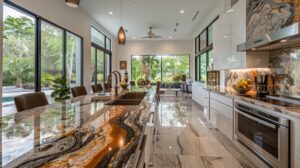
Marble’s distinctive veining and color variation create a dynamic focal point that adds refinement and a handcrafted feel to a bathroom. Because veins form across large slabs, designers can bookmatch or orient pieces for continuous flow across a vanity, producing a dramatic, bespoke look. Finish matters: polished marble heightens color and shine for maximum glamour, while honed or leathered surfaces soften the look and hide water marks for a more restrained contemporary finish. Pair marble with minimal hardware and matte cabinetry to let the slab’s movement take center stage.
How Should You Care for and Maintain Marble Bathroom Countertops?
Marble care starts with daily gentle cleaning using pH‑neutral products and immediate wiping of acidic spills to prevent etching — avoid acidic cleaners altogether because acids dull the finish. Regular sealing adds a sacrificial barrier against stains; test the seal by dropping water and watching for quick absorption, but remember sealing won’t stop etching. For light etching or stains, professional honing or poultice treatments can bring the surface back to uniformity, though prevention is the most reliable approach. Thoughtful design choices — integrated trays, dedicated soap dishes, and defined use areas — reduce exposure to damaging substances and extend a marble vanity’s life.
These care steps feed into the decision framework below, which helps match materials to durability and maintenance expectations.
What Key Factors Should You Consider When Choosing a Modern Bathroom Countertop Material?
Choosing a countertop means weighing durability, maintenance, aesthetics, budget, and installation complexity so the result fits both your lifestyle and design goals. Durability covers resistance to moisture, staining, scratching, and thermal shock — and those priorities shift depending on whether a room is a high‑traffic family bath or a low‑use powder room. Maintenance expectations affect long‑term satisfaction: non‑porous surfaces like quartz reduce routine care, while natural stones need scheduled sealing and careful cleaning. Budgeting should include material cost plus fabrication and installation, especially for integrated sinks or waterfall edges that require more precise work. The sections that follow map these attributes to clear recommendations and practical maintenance actions.
Use the table below as a decision checklist for modern bathroom use.
| Attribute | Recommendation | Suitability |
|---|---|---|
| Porosity | Prefer non‑porous or properly sealed surfaces in humid areas | Quartz (best), Porcelain (good), Granite/Marble (with sealing) |
| Scratch Resistance | Choose harder minerals or protective finishes for heavy use | Granite (high), Quartz (high), Marble (moderate) |
| Heat Resistance | Allow for moderate heat exposure; avoid placing hot pans directly | Granite (high), Marble (moderate), Quartz (depends on resin content) |
How Important Is Durability and Longevity in Bathroom Countertops?
Durability impacts everyday use and long‑term value. Quartz scores highly for durability thanks to its non‑porous engineered surface, while granite offers strong scratch and heat resistance but needs sealing to protect against stains. Marble has moderate durability and calls for careful use; yet in low‑traffic luxury settings, a well‑maintained marble top can deliver long‑lasting visual return. Consider who uses the bathroom — children, daily grooming routines, or guests — and choose materials that prioritize either easy upkeep or visual drama accordingly.
Next we compare practical maintenance needs for quartz, granite, and marble.
What Are the Maintenance Requirements for Quartz, Granite, and Marble?
Maintenance varies by material. Quartz usually needs only routine cleaning with mild, non‑abrasive cleaners and does not require sealing, making it a low‑effort pick for most homes. Granite benefits from periodic sealing — often annually depending on porosity — and daily cleaning should avoid harsh acids that can wear down sealers. Marble requires more attentive care: pH‑neutral cleaners, regular sealing, immediate cleanup of acidic spills, and occasional professional polishing to address etching; together these steps preserve marble’s luxury finish. A simple schedule — daily wipe‑downs, monthly inspections, and annual sealing as needed — will help any chosen surface perform well over time.
- Daily cleaning preserves finish and appearance across all materials.
- Periodic sealing is a straightforward task for granite and marble.
- Quartz minimizes long‑term upkeep, making it a smart choice for busy households.
With maintenance in mind, let’s look at how 2025 design trends affect material and finish decisions.
What Are the Latest 2025 Trends in Modern Bathroom Countertop Styles and Finishes?
For 2025, expect tactile matte surfaces, bold veining used as focal points, integrated sinks for seamless profiles, and waterfall edges that visually continue the countertop into cabinetry or flooring. Matte and honed finishes hide fingerprints and reduce glare while fitting minimalist and industrial palettes, often pairing nicely with warm metal hardware. Bookmatched slabs and bold patterns create dramatic statements in larger baths, and integrated sinks or waterfall treatments require precise fabrication. Sustainability is also rising in importance — recycled composites and responsibly sourced materials are gaining traction among homeowners who want design without a heavy environmental footprint.
| Trend | Material Impact | Design Tip |
|---|---|---|
| Matte/Honed Finishes | Hides fingerprints; softens overall look | Pair with warm metals or textured cabinetry for balance |
| Bold Veining & Bookmatching | Showcases slab uniqueness | Use on large vanities or feature walls to avoid visual clutter |
| Integrated Sinks & Waterfall Edges | Requires tight fabrication tolerances | Coordinate with your fabricator early for slab layout and plumbing |
How Are Matte Finishes and Bold Patterns Shaping Modern Bathroom Designs?
Matte and honed surfaces reduce glare and mask minor water spots, giving a cleaner, tactile feel that suits minimalist spaces. Bold veining creates a focal point; designers use it selectively — on a single vanity wall or against neutral surroundings — so the pattern reads as intentional rather than overwhelming. Material choice matters: engineered quartz can reproduce bold, consistent patterns, while marble offers authentic depth and complexity at the cost of higher maintenance. The right finish balances your aesthetic goals with practical concerns like cleaning frequency and slab availability.
Those finish decisions lead directly into fabrication choices for integrated sinks and waterfall edges, covered next.
Why Are Integrated Sinks and Waterfall Edges Popular in Contemporary Vanity Tops?
Integrated sinks deliver a seamless surface that’s easier to clean by removing seams and rims where grime gathers. Waterfall edges carry the countertop material down the sides for a continuous, architectural look. Both details require precise templating, careful slab selection, and experienced fabrication to ensure proper drainage, clean seams, and color continuity. They’re high‑impact features that add fabrication complexity and cost, but they work beautifully with minimalist cabinetry and modern fixtures. If you’re considering these options, involve your fabricator early to confirm slab size, seam placement, and installation logistics.
- Integrated sinks and waterfall edges prioritize seamless looks and simpler cleaning.
- Fabrication precision is essential; plan these elements early in design and budget.
- In smaller bathrooms, simplified integrated details can give similar visual continuity at lower cost.
How Can You Match Bathroom Countertop Materials to Your Modern Style Preferences?
Matching countertop material to style is about how color, pattern scale, finish, and edge profile work with cabinetry, fixtures, and room size. Minimalist rooms benefit from uniform, low‑contrast surfaces like solid quartz or honed porcelain with eased edges to preserve clean sightlines. Industrial looks pair bold granite or concrete‑look quartz with matte metal hardware and deeper tones to emphasize texture. Luxury designs often choose veined marble or premium quartz that mimics marble, combined with waterfall edges or integrated sinks and refined hardware to highlight craftsmanship. Balancing pattern scale, finish, and edge profile with room proportions and fixtures ensures the countertop completes the room instead of competing with it.
Use this short shopping checklist to guide decisions and keep aesthetics aligned with practical limits.
- Pick material by use case: prioritize quartz for high‑use baths; reserve marble for low‑traffic, statement vanities.
- Match finish to style: honed or matte for minimalist/industrial looks; polished for high‑gloss luxury.
- Confirm slab scale: save bold patterns and bookmatching for larger spaces or designated feature walls.
Which Countertop Materials Suit Minimalist, Industrial, and Luxury Bathroom Styles?
Minimalist bathrooms typically use uniform, restrained materials such as solid‑color quartz or honed porcelain with slim edges to emphasize negative space. Industrial schemes favor textured materials — bold granite or concrete‑look quartz with matte finishes and thicker edges — for a built, tactile aesthetic. Luxury bathrooms lean toward veined marble or high‑end marble‑look quartz, often paired with waterfall edges or integrated sinks and refined hardware to underline a handcrafted feel. The right choice balances pattern scale, finish, and edge profile to fit the room and fixtures.
How Do Color, Pattern, and Edge Profiles Influence Your Bathroom’s Look?
Color changes perceived volume — light surfaces visually expand small rooms, while dark slabs add drama and intimacy in larger suites. Pattern scale should match the vanity size: fine, subtle veining works well on compact tops; large, dramatic veins need enough backdrop and simple fixtures to avoid competing focal points. Edge profiles communicate style: eased or mitered edges read contemporary and sleek, while waterfall and thicker edges feel architectural and bold. Balancing these elements ensures your countertop complements cabinetry, hardware, tile, and lighting rather than fighting them for attention.
Why Choose Classic Stoneworks for Your New England Modern Bathroom Countertop Needs?
Classic Stoneworks is a New England stone services partner that pairs skilled fabrication and installation with a customer‑first approach. Our indoor slab gallery and interactive visualizer simplify selection and planning, and our Londonderry, NH location keeps logistics local so you can verify color and finish in person. We focus on clear timelines, competitive pricing, and reliable scheduling so projects finish on plan. Below we outline our fabrication checks and show how the visualizer supports good decisions.
How Does Classic Stoneworks Ensure Quality Fabrication and Installation?
We follow a straightforward, quality‑driven process: careful slab selection, precise templating, and controlled fabrication to deliver tight seams and consistent edge work that meet modern design expectations. Our checkpoints include slab inspection in the indoor gallery, accurate measurements and templating, and close installer coordination to confirm joints, sink locations, and edge profiles. Serving New England locally reduces logistical friction and allows fast, responsive scheduling and on‑site adjustments — essential when executing integrated sinks or waterfall edges that need exacting attention.
How Can You Use the Interactive Bathroom Visualizer to Select Your Ideal Countertop?
Our interactive visualizer helps you preview materials, finishes, and edge profiles in a simulated bathroom before you visit the slab gallery. Try this three‑step approach: pick the bathroom layout, choose candidate materials and finishes, then tweak edge profiles and integrated sink options to see the overall effect. Save and share the visualizer results with our team so slab selection and templating line up with your expectations. Pairing the visualizer with an in‑person slab inspection at our gallery is the most reliable way to finalize choices and ensure a smooth installation.
Frequently Asked Questions
What are the environmental impacts of choosing different countertop materials?
Environmental impact varies by material and manufacturer. Natural stones like granite and marble involve quarrying and transport, which carry a larger carbon footprint. Engineered quartz can have a lower footprint depending on resin content and production methods, and many makers now offer recycled or low‑impact options. If sustainability matters to you, ask about material sourcing, recycled content, and third‑party certifications when reviewing slabs.
How do I choose the right edge profile for my bathroom countertop?
Edge profile shapes the final look: eased edges feel modern and streamlined; mitered edges create a refined, thicker appearance; waterfall edges extend the surface vertically for an architectural effect. When choosing, consider the material’s thickness, the cabinet style, and how the edge will integrate with your fixtures. We’ll help you visualize options in the gallery or with our visualizer so you can see how each profile reads in your space.
Can I use different materials for my bathroom countertop and vanity?
Absolutely. Mixing materials — for example, a durable quartz countertop over a warm wood vanity — is a popular way to add contrast and character. The key is coordination: match tones and textures so the materials complement one another, and confirm practical considerations like weight, mounting, and moisture resistance with your fabricator.
What are the best practices for cleaning and maintaining quartz countertops?
Quartz is easy to care for: clean daily with warm water and mild detergent and a soft cloth. Avoid harsh chemicals and abrasive pads that can dull finishes. For stubborn spots, a non‑abrasive pad and a gentle cleaner usually do the trick. Use cutting boards and trivets to protect the surface from scratches and heat, and inspect periodically for any signs of wear.
How do I determine the right thickness for my bathroom countertop?
Standard thicknesses typically run from about 1.25″ to 2″, with thicker slabs available for a more substantial look. Thicker profiles suit luxury designs; slimmer profiles fit minimalist schemes. Consider the supporting structure and the overall design aesthetic, and consult with our team to confirm slab availability and installation requirements.
What trends should I consider when selecting a bathroom countertop for 2025?
For 2025, look to matte and honed finishes that hide fingerprints and create a subtle, tactile feel; bold veining and bookmatching for dramatic focal points; integrated sinks and waterfall edges for seamless, modern lines; and sustainably sourced or recycled materials for an eco‑aware approach. Choose trends that align with how you use the space so form and function stay in balance.
Conclusion
Your countertop choice affects both the look and daily life of a bathroom. Understanding the strengths and trade‑offs of quartz, granite, and marble helps you pick the material that fits your style and maintenance needs. At Classic Stoneworks, we combine local fabrication, an indoor slab gallery, and design tools to guide homeowners through confident selections and smooth installations. Ready to see slabs in person? Visit our gallery or contact us to get started on your bathroom update.